Aramis — JHL
Essence
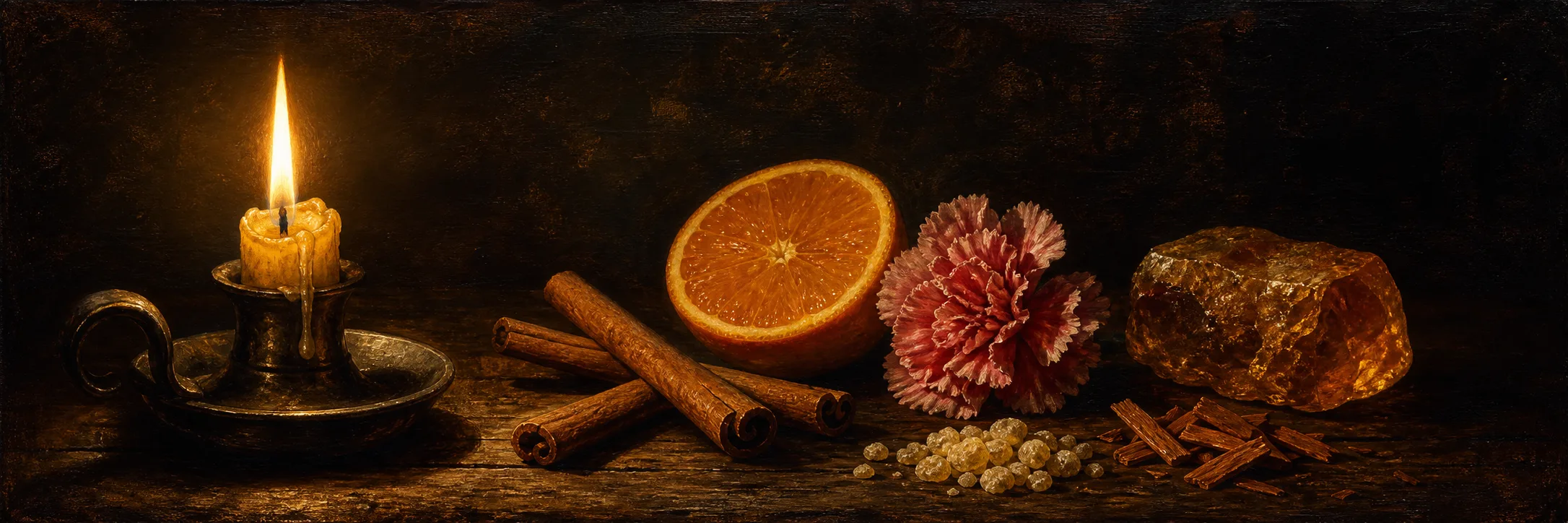
JHL is Aramis’s ornate spicy amber: cinnamon, carnation, benzoin, labdanum, musk, powder, and formal warmth. It was made as a masculine counterpart to Estee Lauder Cinnabar and named for Joseph H. Lauder, which gives the fragrance both collector interest and genuine house lore.
Scent Profile
The opening gives a short flash of aldehydes, citrus, and a peachy fruit nuance, with a faint herbal or fir edge. It is not the main event; JHL quickly turns toward spice. The heart is the defining act: honeyed cinnamon and clove-like carnation, surrounded by powder, rose, jasmine, ylang-ylang, and a resinous glow. It is warmer and more ornate than a leather chypre, but less floral than Cinnabar. The tone is old-school dress fragrance, not modern edible amber. The base is ambered and persistent: benzoin, labdanum, sandalwood, musk, patchouli, and vanilla. Musk gives it warmth, labdanum gives it a leathery shadow, and patchouli keeps the sweetness from becoming flat. It mellows rather than transforming, carrying cinnamon-carnation warmth for hours.
Performance
JHL is strong and long-lived. It can last through a full evening and cling to fabric well after skin projection has eased. Sillage is above average, so restraint matters. In warm weather or with heavy spraying, it can become cloying; in cold air, the spice and resin are much more flattering.
Wearing Context
This is an autumn-winter evening fragrance for formal or dressed-up use. It suits someone comfortable with vintage spice, powder, and amber. It does not aim for freshness, sportiness, or easy office discretion. The best context is a cool room, tailored clothing, and a light hand.
Comparisons & DNA
Cinnabar is the key reference: JHL keeps the cinnamon-carnation amber but makes the base woodier, muskier, and more masculine-marketed. YSL Opium, Youth Dew, and Tabu define the surrounding spicy-amber family. Calvin Klein Obsession and Obsession for Men are later descendants in the same broad genre. Habit Rouge and Mitsouko are useful for the brief citrus-peach opening rather than the main body.
Reception
JHL is loved by classic amber devotees and polarizing for almost everyone else. Praise focuses on the richness of the cinnamon-carnation heart, the musk, and the fragrance’s formal elegance. Criticism focuses on volume, powder, sweetness, and gender coding: some smell a refined gentleman’s amber, while others smell an older feminine spice bomb in masculine dress. Pricing has also changed reception. Once a bargain reissue, it is now a collectible bottle, so sampling is far more sensible than blind buying.
Versions & Reformulation
The early-1980s vintage is the collector reference. The 2009 Gentleman’s Collection reissue is structurally close but generally lighter, and it appears to have had limited availability. JHL is discontinued again. There is no major EDP or extrait branch to track.
Acquisition Notes
Expect secondary-market prices and careful version checks. Vintage bottles often carry Custom Blended Cologne language, while the 2009 release uses Gentleman’s Collection packaging. Because prices can be high, decants are the safer route. Counterfeit risk rises with scarcity, so buy from sellers who can document bottle and box details.
Notable Facts & Lore
- JHL stands for Joseph Harold Lauder, Estee Lauder’s husband and business co-founder.
- The fragrance was created as a masculine answer to Cinnabar’s spicy amber language.
- Joseph Lauder died shortly after the launch, giving JHL a memorial aura.
- The catalog credit is Bernard Chant, while some accounts emphasize Josephine Catapano’s Cinnabar and Youth Dew lineage.
- Its 2009 Gentleman’s Collection return made it briefly affordable before collector prices rose.