Lalique — Encre Noire
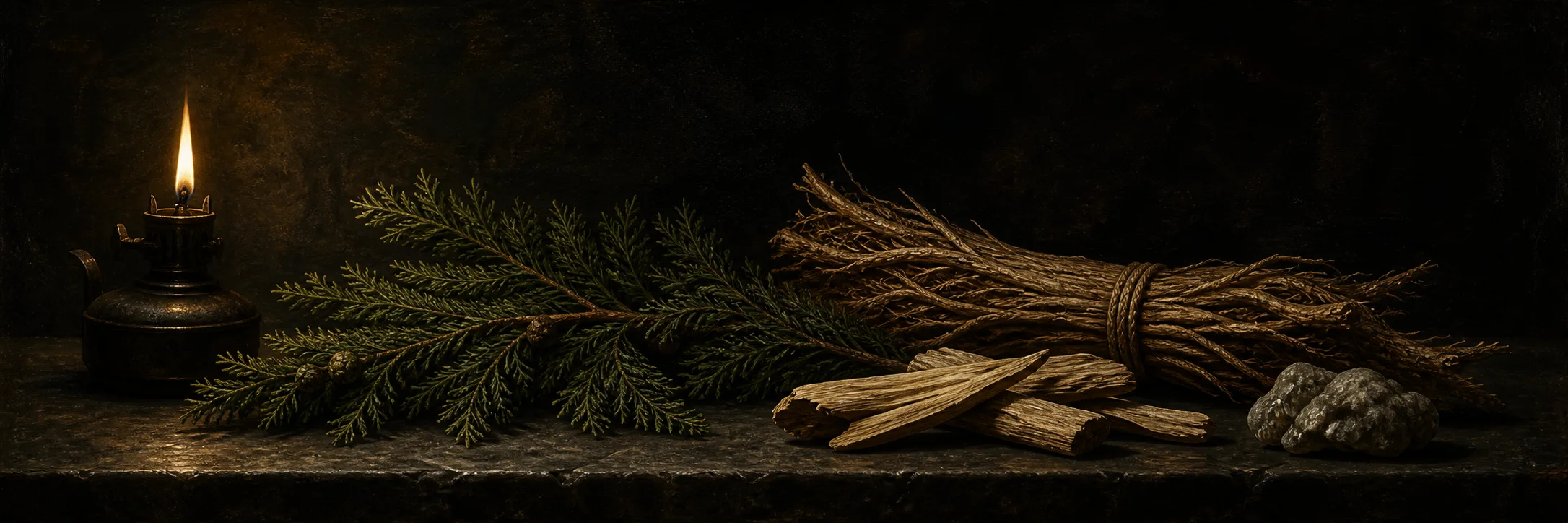
Essence
Encre Noire is Nathalie Lorson’s ink-black vetiver for Lalique: a stark 2006 EDT built from cypress, rooty vetiver, cashmere wood, musk, and a powerful radiant-wood effect. It is famous because it smells more severe and deliberate than its price tier suggests. Instead of bright citrus, sweetness, or plush amber, it offers a cold mineral line: wet bark, pencil shavings, dark roots, and the aura of black ink.
Scent Profile
The opening is sharp and medicinal. Cypress arrives first, piney and camphorous, with a bitter edge that can feel almost herbal-liqueur-like. Under it, vetiver is already present, not grassy or cologne-bright but charred, rooty, and faintly licorice-like. The cold metallic impression comes from the radiant-wood structure showing itself before the vetiver fully warms.
After about thirty minutes, the cypress steps back and the vetiver becomes the main voice. This middle stage is dry earth, damp bark, pencil shavings, and a distant bonfire effect. The scent’s famous “ink” character comes from a graphite-mineral facet between the cypress shadow and the vetiver root: wet stone, uncapped India ink, and dark polished wood.
The base does not change direction. Cashmere wood smooths the rougher edges, while musk gives a pale dry texture. The drydown stays linear: vetiver husk and quiet radiant woods close to skin. It never turns sweet, powdery, ambered, or cozy.
Performance
Projection is moderate for the first hour, then settles close to skin. Skin longevity usually runs six to eight hours, with a longer woody tail for people who smell the radiant-wood material clearly. Fabric can hold it into the next day. Two sprays are usually enough; overspraying turns the structure into a flat woody hum.
Wearing Context
Encre Noire is best in autumn and winter, especially cool dry weather. It suits evenings, serious offices, solitary walks, reading, and inward moods. It is poorly suited to beaches, gyms, tropical heat, weddings, or bright social occasions. Although marketed masculine, it often reads unisex in wear because its drama comes from austere woods rather than conventional masculine freshness.
Comparisons & DNA
Guerlain Vetiver is brighter, fresher, and more bergamot-led; Encre Noire is darker, drier, and more herbal. Chanel Sycomore is the closest luxury sibling, sharing the dark smoky vetiver idea but adding a richer sandalwood polish. Frederic Malle Vetiver Extraordinaire is airier and more ozonic, while Tom Ford Grey Vetiver is sweeter and grapefruit-forward. Within Lalique, Encre Noire a l’Extreme is denser, smokier, and resinous; Encre Noire Sport is the brighter citric inversion.
Reception
The consensus is unusually respectful for a low-priced designer fragrance. Wearers praise the seriousness of the composition, the sculptural bottle, and the sense that it smells like a clear creative decision rather than a trend-chasing masculine. The split is personal rather than technical. Some find the radiant-wood material hard to smell; others smell too much of it. Some love the rooty darkness; others read it as swampy, especially in heat. Value sentiment is strongly positive, but climate and material sensitivity make it a risky blind buy for some noses.
Versions & Reformulation
The original 2006 EDT is the reference version. The line later added Encre Noire Pour Elle, Encre Noire Sport, and Encre Noire a l’Extreme, each a distinct composition rather than a replacement. No major reformulation event is clearly documented, although longtime wearers sometimes describe newer bottles as slightly thinner than older ones.
Acquisition Notes
Encre Noire sits in the designer tier and is sold in 50 ml and 100 ml bottles, with the 100 ml black-capped cube as the iconic format. Official pricing is much higher than the common market price, so sampling is easy and full bottles are often bought without treating it like a luxury risk. Counterfeits are not a major practical issue, but bottle weight, atomizer alignment, and batch code are still worth checking.
Notable Facts & Lore
- Nathalie Lorson’s concept was to make vetiver feel suave and languid rather than bracing.
- The bottle reworks Rene Lalique’s 1913 inkwell design, which explains the Black Ink name.
- The scent is often rumoured to use an unusually high radiant-wood dose.
- It helped establish dark vetiver as a credible designer category.
- Its low price made it a common gateway fragrance for people exploring austere woods.