Montblanc — Legend
Essence
Montblanc Legend (2011) is one of the defining mainstream men’s crowd-pleasers of the 2010s: a fresh fruity-aromatic fougere whose reputation rests on being an affordable, more refined cousin to Abercrombie & Fitch Fierce. Composed by Olivier Pescheux, it sets a juicy, slightly synthetic pineapple-apple fruitiness against a barbershop lavender-and-coumarin spine and a clean mossy drydown. Its appeal is wearability and value rather than originality, and it cemented Montblanc as a serious player in designer fragrance.
Scent Profile
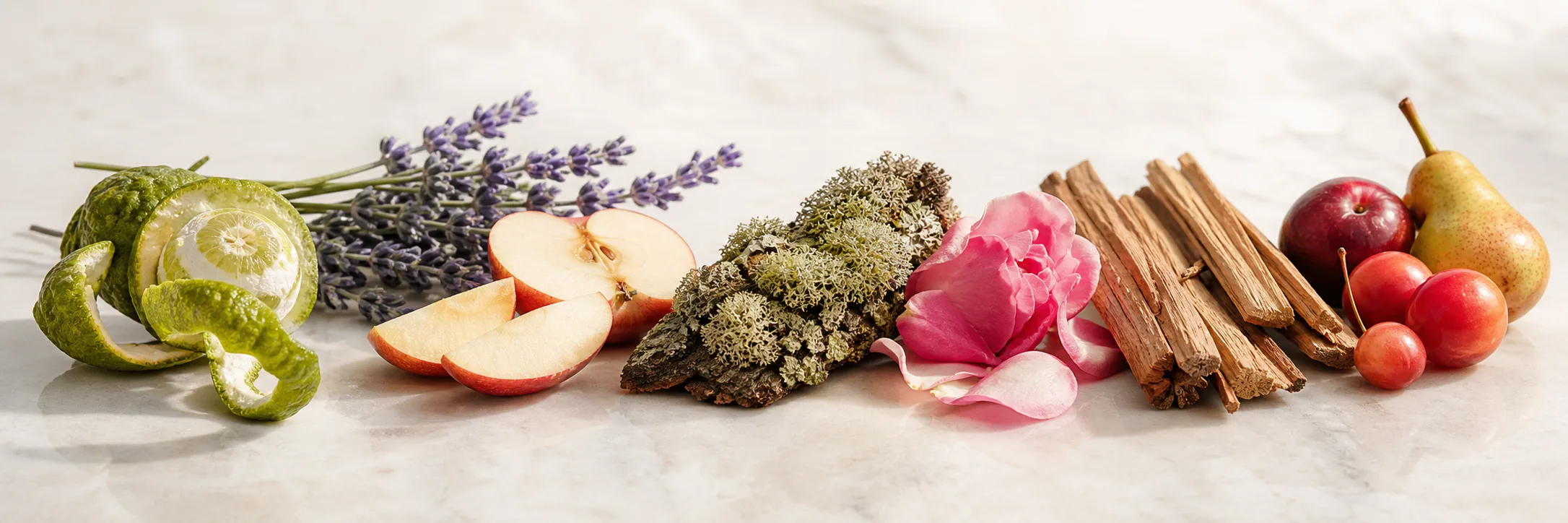
The opening is the most-loved phase: a bright, fresh-fruity burst of bergamot and lemony verbena around a distinct, juicy pineapple, the note that draws frequent Aventus comparisons even though the two diverge within minutes. Classic barbershop lavender sits underneath from the start.
The heart turns fruity-aromatic. Apple and the Pomarose material drive a sweet, slightly retro fruitiness, while geranium, coumarin and a sliver of IFRA-compliant oakmoss supply the fougere’s green, mossy texture. One critic tied the apple-and-geranium effect to early-1990s designers like Burberry for Men and Tommy Hilfiger.
The base is a semi-sweet, creamy accord of tonka and sandalwood. The “oakmoss” is largely rendered by the synthetic evernyl, which some sharper-nosed wearers feel lacks the richness of real oakmoss and can read soapier in newer batches. On some skin the drydown amplifies a soapy, metallic facet that wearers compare to Chanel Platinum Egoiste.
Performance
Performance is the most common complaint and is genuinely divisive. The typical read is moderate longevity and moderate sillage, with projection strongest in the first hour or two before settling close to the skin. A representative estimate puts it around six hours of wear with a couple of hours of stronger projection, but reports range from a near-disappearing act inside an hour to all-day wear on receptive skin. Much of the spread reflects batch variation over a long production run. The widely endorsed strategy is to apply generously and spray on clothing; it also performs better in warm weather.
Wearing Context
Legend is the definition of versatile and inoffensive: office, school, errands, casual daytime and low-stakes dates, across essentially all seasons with a mild lean to warmth. It reads young-to-mid-adult and “safe,” the kind of scent meant to project trust rather than seduction, “discovered, not announced.” Anyone seeking originality, a unique signature or strong room-filling projection will find it underwhelming. A recurring social note is the Abercrombie association — some find it evokes the entrance of an A&F store or a shopping mall, which reads nostalgic to some and cheap to others — yet it remains one of the more reliable compliment-getters in the affordable tier.
Comparisons & DNA
The defining reference is Abercrombie & Fitch Fierce: Legend is widely heard as the more contemporary, more refined take, less synthetic but lower in projection. Chanel Platinum Egoiste comes up for the soapy, slightly metallic aromatic facet. Creed Aventus is invoked for the pineapple opening, but the resemblance fades within minutes. Parfums de Marly Percival is a higher-quality, more complex relative in the same fresh-fruity-aromatic vein. Within its own line, Legend Intense (2013) is the stronger, fruitier evening version, Legend Spirit (2016) the lighter aquatic-woody cousin, Legend EDP (2020) a smoother leathery-violet reinterpretation, and Legend Blue (2024) the minty modern take.
Reception
Reception is a study in “good but generic.” Praise is remarkably consistent: clean, masculine, versatile, inoffensive, great value and a strong compliment-getter, especially from women. Criticism clusters on three axes — a lack of originality often summarized as “smells like a shopping mall,” weak or inconsistent performance, and a synthetic feel centered on the moss in later batches. The split is essentially hobbyist-versus-everyman: enthusiasts often find it boring while general wearers and gift-buyers love it. Even detractors tend to land on a mild thumbs-up. The blind-buy verdict is favorable for a man who simply wants to smell good and well put together, with the caveat to manage performance expectations.
Versions & Reformulation
This is a heavily flankered, long-running line; the subject here is the original 2011 eau de toilette. Documented relatives include Legend Intense (2013), Legend Spirit (2016), Legend Night, Legend Red (discontinued), Legend EDP (2020) and Legend Blue (2024). There is no single officially acknowledged overhaul, but batch variation is widely reported, with differences in fruity strength and drydown longevity across years, and the moss has long been carried by evernyl rather than restricted real oakmoss. Older bottles may run slightly richer, but expect broadly the same scent.
Acquisition Notes
Legend is firmly value-tier and one of the most discount-available designer scents, offered in 30, 50 and 100 ml (with 200 ml spotted at discounters). While the 100 ml lists above $100 at full retail, it is routinely found well under $40-60, and authentic stock is widely available through major fragrance discounters, where deep discounts are normal rather than a warning sign. Because the line is so heavily duped, buy the genuine article from reputable sellers if authenticity matters.
Notable Facts & Lore
- Launched in April 2011 as a tribute to Montblanc’s heritage, with a bottle designed to evoke a fountain pen and ink bottle in the spirit of the Meisterstuck.
- The black-and-white launch campaign featured British model Simon Clark, photographed by Peter Lindbergh.
- It became cultural shorthand for the “affordable Fierce” and a perennial pick in best-cheap-men’s-fragrance discussions.
- It is one of the most frequently duped designer scents on the market.
- Perfumer Olivier Pescheux also composed Paco Rabanne 1 Million and Dior Fahrenheit Parfum.