Stéphane Humbert Lucas — God of Fire
Essence
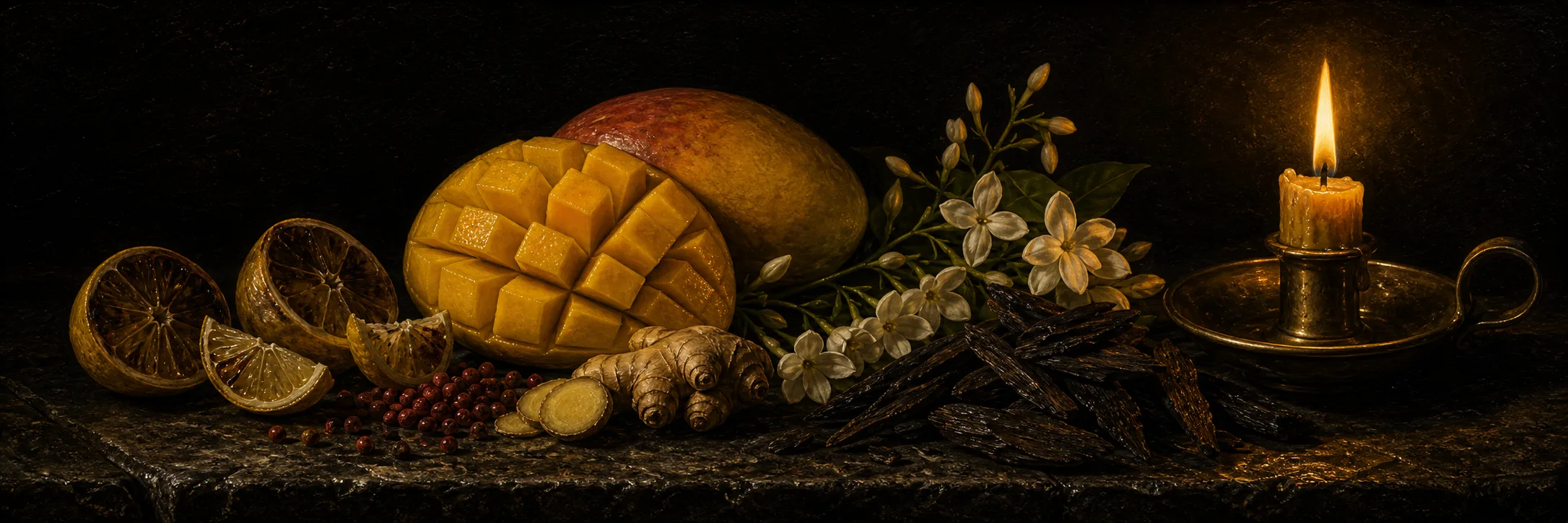
God of Fire is SHL’s mango blockbuster: a bright, sweet, gingered tropical fruit scent over airy amber-musk woods. It is loud, sunny, and built for attention rather than for dark oud seriousness.
Scent Profile
The opening is the whole hook: mango, lemon, ginger, pink pepper, and a berry-like lift create a juicy tropical burst. The mango can read ripe and candied on some skins, or greener and sourer on others, which is one reason the fragrance divides wearers. The heart warms with blue coumarin, jasmine, and dry woods. Coumarin gives a hayed almond-vanilla softness, while jasmine stays light. The base moves into amber, musk, cypriol, oud, and dry woods, though the oud is more a shadow than a dominant natural-oud statement. The drydown is sweet, musky, and amberwoody, close enough to modern airy amber DNA that comparisons to Baccarat Rouge 540 recur.
Performance
Expect strong early projection and long wear, but not an unstoppable extrait cloud. The first hour is the loudest phase, after which God of Fire settles into a steady amber-musk trail. Warm weather helps the mango bloom but also makes over-application risky, so a light hand is smarter than chasing maximum projection.
Wearing Context
This is a spring and summer daytime fragrance: beach trips, casual dates, bright social settings, and playful warm-weather wear. It is unisex, though the ripe mango sweetness can lean feminine to some noses. It is less convincing as a formal evening oud or office scent.
Comparisons & DNA
Baccarat Rouge 540 is the key structural reference because of the airy amberwood drydown, not because God of Fire smells like a direct clone. For mango, the useful contrasts are Xerjoff Cruz del Sur II for creamier fruit, Vilhelm Mango Skin for fresher realism, and By Kilian Moonlight in Heaven for gingered coconut-rice brightness. Within SHL, Mango Kiss is creamier and quieter; God of Fire is spicier, louder, and more mass-attention-grabbing.
Reception
Reception is polarized around hype. Fans praise the vivid mango, radiance, and instant recognizability. Critics hear synthetic mango drink, gummy amberwood, or a price that outruns the material impression. The recurring debate is whether its loud fruity-amber style feels exhilarating or merely over-marketed.
Versions & Reformulation
The dossier describes one composition with no known reformulation. The concentration is disputed at the catalog layer: retail and wearer sources consistently describe it as Eau de Parfum, while the current catalog says Extrait.
Acquisition Notes
This is a luxury niche 50 ml fragrance in the mid-hundreds. The turquoise serpent bottle adds collector appeal, but the scent is divisive enough that decants or samples are the right first step. Authorized stockists are the safest full-bottle path.
Notable Facts & Lore
- The name refers to Xiuhtecuhtli, the Aztec god of fire, light, and warmth.
- The turquoise serpent imagery on the bottle links the fragrance to the deity’s mythic symbolism.
- God of Fire is widely treated as SHL’s breakout bestseller.
- Its visibility was fueled by the broader mango-fragrance trend and creator attention.