Blend Oud — Safari
Essence
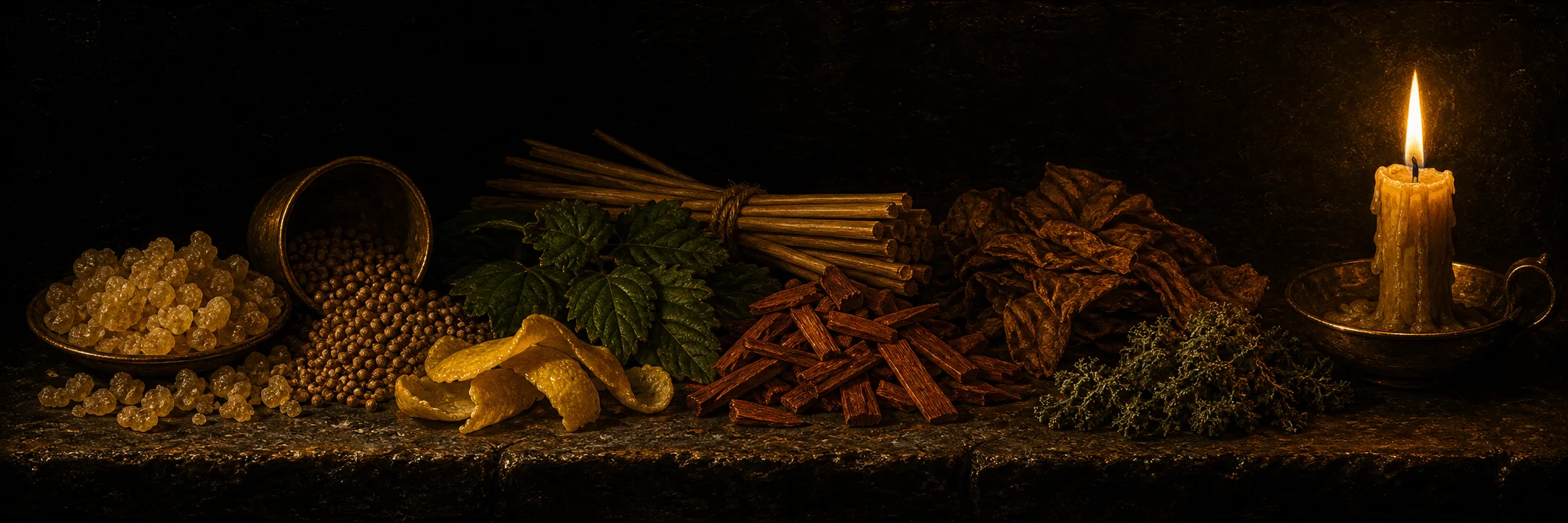
Safari is a dry, green, herbal take on oud from Blend Oud, an Italian-owned niche house that frames its catalog as reviving Arabic perfumery heritage. Where the oud genre often runs sweet or barnyard-animalic, Safari goes the other way: its defining gesture is an unusual papyrus note layered over agarwood, patchouli, oakmoss and tobacco, with a spicy coriander-and-incense top. The result aims at a classic chypre architecture updated with oud — a connoisseur-leaning, papery-woody composition that is more interesting than it is crowd-pleasing.
Scent Profile
The opening is spicy and green. Coriander, incense and lemon give a bright, faintly sour-sweet entry, though some wearers experience it instead as hay and dry, papery accords from the first minutes. Either way, the citrus is brief and the mood is aromatic and rugged rather than fresh.
The heart is where Safari makes its case. Papyrus is the most-discussed material here, interlocking with patchouli, agarwood and palisander rosewood. On some skins the papyrus amplifies dramatically and reads almost like wet papier-mache against a slightly medicinal oud; on others it settles into a cleaner sequence in which the papery note leads early and the woody patchouli phase becomes pronounced as tobacco and oud emerge.
The drydown is dry tobacco and oakmoss. The tobacco reads more as a smoky, bonfire-like trail than a sweet pipe tobacco, and the oakmoss supplies a bitter-green chypre anchor that outlasts everything above it. Linearity is moderate: the arc runs green-spicy, then papery-woody, then dry mossy-tobacco. Coriander is the wildcard, herbaceous to the point that one wearer compared it to parsley before it eventually recedes.
Performance
Performance is the clearest point of agreement. Longevity is above average and can be considerable, with strong reports on both skin and clothing; one enthusiastic wearer claimed it survived on fabric for over a week and argued the concentration should have been labeled parfum or extrait. Skin results are more skin-dependent, and at least one skeptic found it collapsing to a thin, woody-aromatic base after about an hour. Projection is best characterized as moderate, with longevity outrunning sillage. A light hand suits it: this is a potent, oil-rich composition that rewards restraint.
Wearing Context
Safari sits naturally in cool-weather territory. The dry, woody-mossy, oud-and-tobacco construction points toward autumn and winter and toward evening or lower-stakes settings, and away from hot weather or office-light wear. It is catalogued and worn as unisex, though its rugged, smoky-dry character can read slightly masculine on some wearers. Think of it as a niche pick for cooler months and relaxed occasions where a distinctive papery-woody trail is welcome rather than as an everyday signature.
Comparisons & DNA
The recurring named reference is Jovoy Incident Diplomatique, which shares Safari’s herbal-green-woody, cocktail-of-herbs-and-woods character. The contrast is real, though: Safari foregrounds papyrus and a dry oakmoss-tobacco base, where the Jovoy is more of a fruity-herbal-woody blend — directional kinship, not a dupe relationship.
More broadly, Safari is best understood by what it avoids. Despite the oud-chypre framing, it does not chase the Western rose-oud template of houses like Mancera and Montale, nor the sweet, ambery Arabian oud style. Its closest descriptive anchors are not other fragrances at all but textures: papier-mache, dry oud-laced wood, hay, and herbal-spicy coriander. Within its own house it belongs to the Private Collection tier.
Reception
Reception is genuinely mixed and relatively sparse. Admirers love the papyrus-to-patchouli development, the tobacco-and-oud finish, and the strong longevity. Skeptics split two ways: some find the papyrus unpleasant, reading it as wet papier-mache; others feel the promised oud, patchouli and tobacco never fully materialize, with one dismissing the drydown as generic synthetic woodiness. Even a favorable assessment arrived backhanded, recommending it for those who like oud, coriander and spicy scents — with the caveat that oakmoss-averse wearers should stay away. There is little critical press coverage of Safari, which itself signals a deep-niche release. The fair summary: a polarizing, papyrus-forward dry oud-chypre that a small group of woody-chypre fans genuinely prize and others find thin or synthetic.
Versions & Reformulation
Safari launched in 2016 as an Eau de Parfum within Blend Oud’s Private Collection and is offered only in a 60 mL bottle — a size several wearers wish were larger. No flankers, alternate concentrations, or reformulations of Safari are documented. The house, founded in Italy in 2014 with French production, organizes its catalog across several lines (Original, Private, Reserve, Voyage and Voyage Memories), with Safari in the Private tier. As of mid-2026 it remains nominally in production.
Acquisition Notes
Safari is a 60 mL Eau de Parfum priced from roughly $110 at independent retailers up to about $175 at the official boutique, where Private Collection bottles often show as sold out. Availability is patchy: nominally in production but frequently out of stock through official channels. Sampling first is strongly advised, since the papyrus note behaves very differently from skin to skin and makes a blind full-bottle purchase a real gamble. Buy from the official site or established niche retailers. Note that several unrelated fragrances also carry the name Safari, so confirm the house before purchasing.
Notable Facts & Lore
- Safari’s defining structural quirk is leading an oud composition with papyrus, the single most-discussed and most divisive feature in its reviews.
- The house frames every release as reviving thousand-year-old Arabic perfumery recipes “handed down from father to son,” though its corporate home is Milan and production is in France.
- Parent company HIC Beauty also owns the niche houses Moresque and The House of Oud.
- The brand’s own concept for Safari is freedom and untamed nature — a race through “unspoiled nature of incense, rosewood, oud and oakmoss.”
- Performance is its most consistently praised trait, with longevity strong enough that one wearer argued it deserved a parfum or extrait label.