Cartier — Must de Cartier
Essence
Must de Cartier is Cartier’s first fragrance and one of early-80s perfumery’s strangest grand gestures: a green galbanum-aldehyde opening fused to a plush vanilla-amber-civet oriental base. The result is not polite nostalgia. It is a difficult, glamorous, divided thing, prized by vintage lovers for exactly the clash that makes others recoil.
Scent Profile
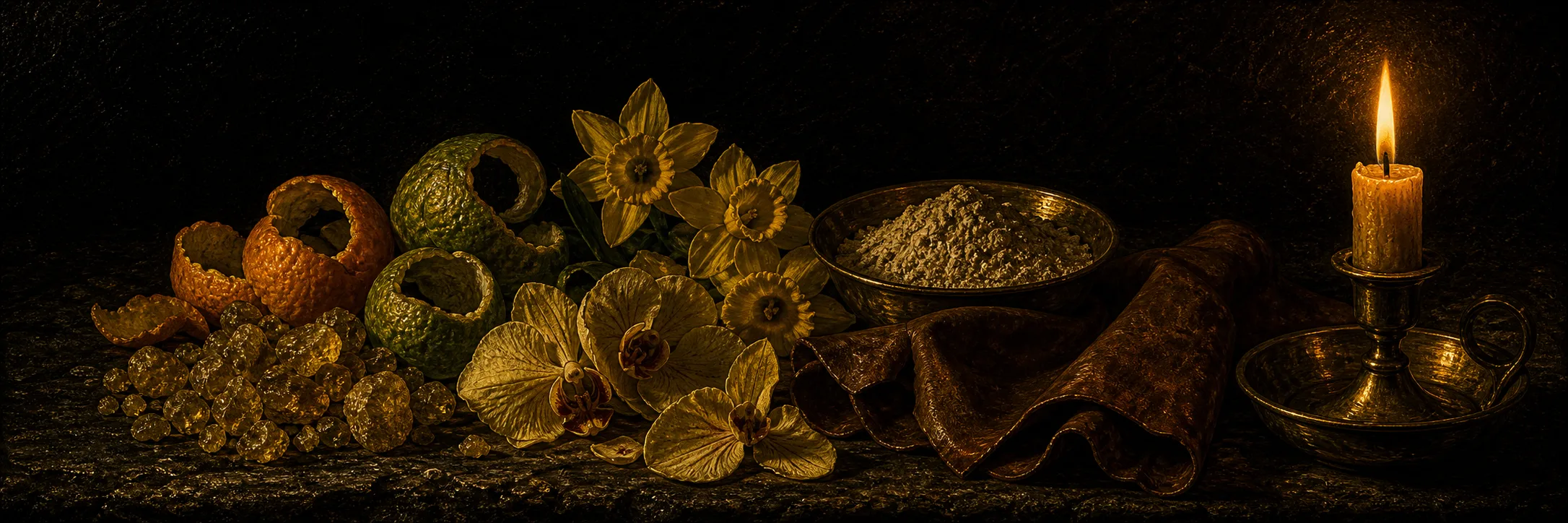
The opening is all glare: galbanum, aldehydes, citrus, pineapple-peach sweetness, and a green bite that can feel almost masculine. It quickly turns floral, with narcissus, jasmine, carnation, rose, ylang and orris creating a yellow, powdery, slightly feral heart.
As it dries, the oriental half takes over. Vanilla, amber, sandalwood, tonka and civet become warmer and more enveloping, while the green top keeps vibrating underneath. The best readings feel like vintage fur, lacquered wood and ambered skin; the harder readings emphasize harsh galbanum, civet and a strange chocolate-like sweetness.
Performance
Must is a strong vintage-style perfume, especially in parfum. Projection is assertive and the base lasts very well on skin and clothing. Apply sparingly: a dab of parfum or a light spray is enough, while heavier application pushes the green and animalic facets into screech.
Wearing Context
This belongs to cool weather, evenings and dressed occasions. It suits a confident wearer who enjoys vintage opulence, not someone seeking a clean office floral. Though marketed feminine, the green-animalic structure can read unisex, especially to noses comfortable with old-school chypres and orientals.
Comparisons & DNA
Shalimar is the clearest ancestor through the animalic vanilla base, while Aliage explains the fierce galbanum top. Obsession is the obvious 80s comparison, though Must is greener, less straightforward and more eccentric. Opium is the foil: hotter and spicier, where Must is cooler, stranger and more reserved.
Reception
Reception is famously polarized. Luca Turin’s severe critique became part of the perfume’s mythology, but devotees defend Must as a warm, elegant, animalic oriental with a superb base. The recurring fault lines are the sharp green opening, the civet, batch and concentration differences, and whether its retro grandeur feels majestic or dated.
Versions & Reformulation
The parfum or extrait is generally treated as the definitive form. The vintage EDT can smell like a different, sharper scent, and later reformulations are often described as cleaner and thinner. Cartier’s modern reissue focuses on parfum format, while older EDTs and ornate refillable bottles circulate mostly through vintage channels.
Acquisition Notes
Buy by concentration and era, not just by name. Vintage parfum is the safest route to the celebrated Must character; EDT bottles can be rewarding but are more variable. Current or recent parfum is easier to source through Cartier or established retailers, while vintage should come from reputable sellers or decanters.
Notable Facts & Lore
- Must was Cartier’s first fragrance, launched in 1981.
- Jean-Jacques Diener reportedly fused a fresh daytime idea with a seductive oriental brief.
- The galbanum-and-vanilla contrast is the scent’s central drama.
- The line’s red-and-gold refillable flacons became part of its luxury identity.
- Turin’s notorious takedown helped make Must a permanent argument among perfume lovers.