Cartier — Pasha Cartier
Essence
Pasha de Cartier is a 1992 woody-aromatic fougere that gives the end of the powerhouse era a tailored finish. Lavender, mint, spice, oakmoss, and sandalwood create a cool, polished masculine with more classic structure than sweetness or spectacle.
Scent Profile
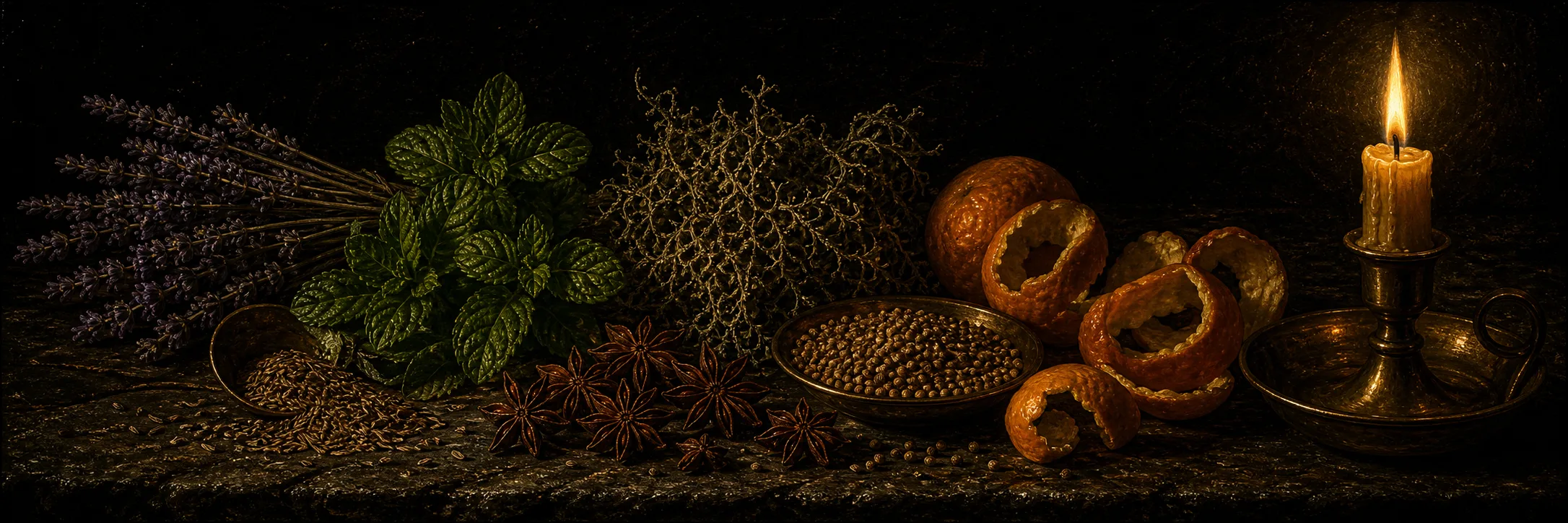
Lavender arrives first, bright and herbal, with mint adding a cool almost barbershop-clean edge. Caraway and anise bring a savory, licorice-tinged warmth, while mandarin keeps the opening rounded rather than aggressively citrusy. The effect is recognizably European and deliberately traditional for its release period. Coriander and Brazilian rosewood smooth the center into a soft, faintly soapy wood accord. Oakmoss, sandalwood, patchouli, and labdanum then make the base mossy, powdery, and lightly resinous. It has a real development, but not a theatrical one: the opening settles and the aromatic base remains coherent for the rest of the wear. Modern bottles are cleaner than older ones because the oakmoss emphasis has been reduced. That change makes the lavender, mint, and spice more legible, while preserving the fragrance’s identity as a classic aromatic fougere.
Performance
Pasha performs solidly for an EDT, with a clear early trail and several hours of wear before it becomes closer to the skin. Projection is moderate, not room-filling. A moderate application is best, since too much can turn the herbal-mint top into a soapy aftershave effect. Cool weather gives the mossy base the most depth.
Wearing Context
Autumn and winter are its best seasons, with spring also workable; high summer is the least sympathetic setting. It suits offices, business dinners, weddings, and evening plans where a groomed, adult style fits. The mood is formal-leaning but not stiff, and it works for a wearer who prefers character over contemporary sweetness.
Comparisons & DNA
YSL Jazz and Jazz Prestige are the clearest reference points: they share a late-classic lavender-aromatic framework, while Pasha adds its own mint and mandarin detail. Cerruti 1881 Pour Homme sits nearby as a slightly softer stylistic relative, and Azzaro Pour Homme or Tsar give useful context for its old-school spicy masculine profile. Beau de Jour shows a later, cleaner lavender-fougere take on related barbershop DNA. Pasha de Cartier Parfum should not be treated as a direct concentration upgrade: it turns toward sweet woods and resins rather than reproducing the EDT’s lavender-and-oakmoss structure.
Reception
Pasha is respected by classic-aromatic wearers as one of Cartier’s more complete masculine compositions. Its blend of moss, spice, and controlled freshness can feel unusually composed beside sweeter current releases. The value proposition is often favorable for a long-running designer classic. Its divide is largely stylistic. Those who want modern loudness or sweetness may find it dated, soapy, or restrained, while those drawn to late-1980s and early-1990s fougeres often find it timeless and characterful. It is most persuasive as a deliberate taste choice, not as a generic crowd-pleaser.
Versions & Reformulation
The 1992 EDT is the reference. Oakmoss restrictions led to multiple formula changes, leaving newer bottles cleaner and less dense than earlier stock. Numerous flankers followed; the 2020 Parfum is a contemporary reimagining with a sweeter wood-and-resin foundation rather than a duplicate of the EDT.
Acquisition Notes
The EDT is a mainstream classic and is generally easy to sample in its standard 100 ml presentation. Older bottles attract collectors who want the denser earlier moss effect, while current bottles are a straightforward choice for regular wear. The ribbed bottle, gold band, and black-cabochon cap are characteristic parts of the Pasha watch-inspired design.
Notable Facts & Lore
- The fragrance is tied to Cartier’s Pasha watch story.
- Its name refers to the watch, not an Ottoman ruler.
- The cap is modeled on a Cartier watch crown.
- The bottle architecture references the Trinity ring and Cartier’s red-box design language.
- Its 1992 release came immediately before aquatic masculines became dominant.