Courrèges — Courreges in Blue
Essence
Courrèges in Blue is a 1983 floral-aldehydic chypre by Edouard Fléchier, composed the year before his career-defining Dior Poison. It is a deliberately understated, slightly metallic take on the big 1980s floral: where the decade tended to shout, In Blue murmurs — a green, soapy, aldehyde-lifted bouquet over an oakmoss-and-patchouli chypre floor. As the gentlest member of the Courrèges chypre trilogy, it is often recommended as a gateway green chypre because it lacks the heavy soap and earthiness of the genre’s older specimens.
Scent Profile
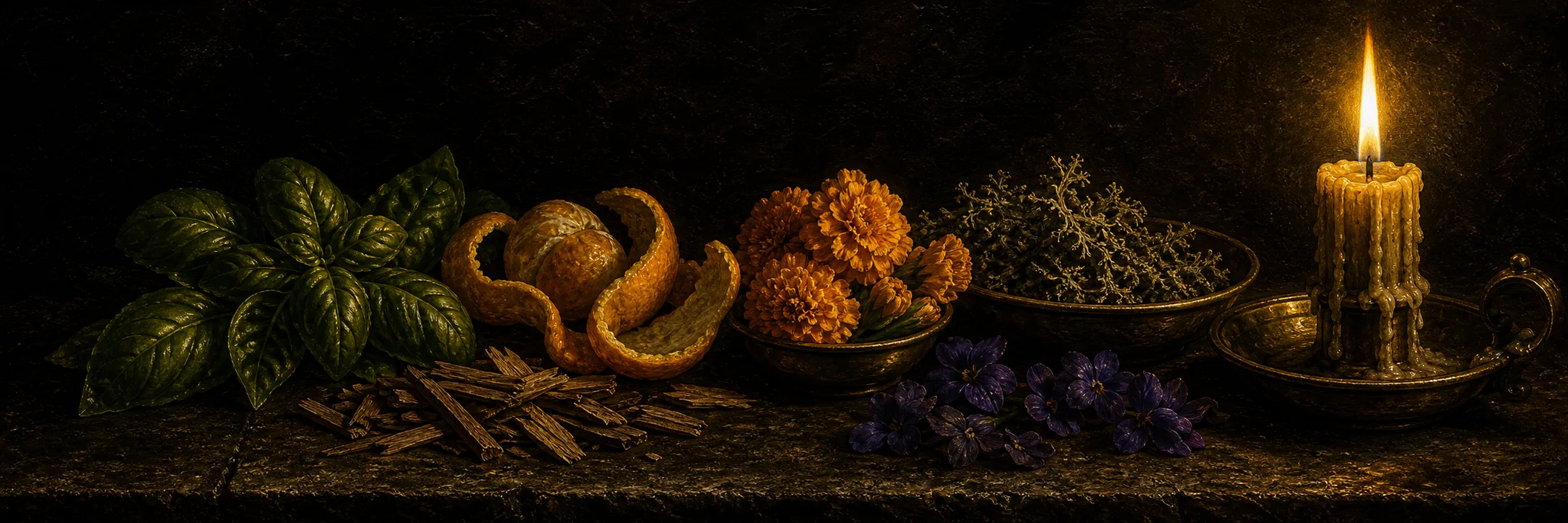
The opening is cool and aromatic: aldehydes with a bitter-green basil and coriander accent over citrus, giving a spicy-green lift that several wearers compare to the elegant aldehydic opening of Estée Lauder White Linen. A marigold note — more interesting than seductive — runs through it, laced with a metallic, dry coolness that keeps the fruit in check.
The heart is a restrained 1980s floral: rose, jasmine, tuberose, peony, violet, and orange blossom, none of them over-emphasized, with a tart blackcurrant and a soft peach sweetening the blend but staying largely in the background. The effect is a clean, composed bouquet rather than a heady flower-bomb.
The drydown is the chypre payoff — oakmoss, patchouli, vetiver, cedar, and a touch of clove and amber — dry, crisp, and powdery rather than warm. Interestingly, the scent is often said to go orangey on skin despite reading “light blue” on paper. Concentration matters: the vintage parfum is richer, creamier, and more powdery, while the EDT runs greener and more herbal. Throughout, the fragrance teeters between feminine and androgynous, refusing to settle into either.
Performance
Performance depends heavily on which version you have. The vintage EDT is unusually strong for its concentration — one wearer logged about seven hours and called it a record for her skin, another reports two sprays lasting all day, and the vintage juice is repeatedly described as thick and long-lasting with substantial sillage. The 2011 reformulation is the opposite: widely panned as faint and close to the skin, with one wearer noting they could hardly smell it without pressing nose to wrist. Judge performance by version and bottle condition rather than by name.
Wearing Context
This is a spring and cool-weather daytime fragrance, framed by admirers as a spring smile or a bouquet just after a spring rain shower, and once memorably as autumnal springness — spring’s freshness carried on cold November air. Its restraint and soapy-powdery cleanliness make it well suited to the office and to daytime wear. It skews mature and elegant rather than youthful and sweet, and its semi-androgynous coolness means it reads as more interesting than a conventional date-night feminine floral.
Comparisons & DNA
The most useful reference is Hermès Amazone in its second, Jean-Claude Ellena version, which shares the blackcurrant-green restraint — though Amazone is classier and far less thick and loud. Estée Lauder White Linen is the touchstone for the aldehydic-elegant opening, but In Blue diverges by staying dry and powdery where White Linen warms up with amber and benzoin. Within the house it is softer than the leathery Empreinte, with which it shares a moss-and-aldehyde accord, and more floral than the crisp Eau de Courrèges. Pierre Cardin’s Cardin de Cardin gets a passing mention for a comparable spicy-clove floral feel. The overall DNA is a green-leaning floral-aldehydic chypre of the early-80s school, in the family of Calandre-style dusty florals but softer and fruitier.
Reception
Sentiment is warm but niche. Devotees call the vintage a particularly composed masterpiece that not everyone can wear, prizing its complexity, coolness, and the thick, rich quality of the original juice, and many describe hunting down vintage bottles for years as a signature scent. Detractors find it dated — smelling like an 80s scent because it is one — or simply hard to connect with. The decisive fault line is vintage versus reformulation: blind-buying the current version tends to disappoint anyone who knows the original. The consensus blind-buy verdict is that it is acceptable given the low price, but the real experience lives in the vintage.
Versions & Reformulation
Several iterations exist and are a recurring source of confusion. The 1983 original came as both EDT and parfum in etched rectangular glass with a gold cap, with the parfum creamier and more powdery than the greener EDT. In 2011, after the Courrèges license changed hands, In Blue was relaunched as an EDP and a thinner EDT in cobalt cylindrical packaging; though credited again to Fléchier, this version is widely judged soapier, weaker, and less complex, with one writer dismissing it as an aftershave lotion diluted in cold water. A further 2014 release exists, and the 2011 EDT even carries a partly different note list — adding galbanum, ginger, and chamomile — reflecting the reformulation.
Acquisition Notes
This is a discontinued bargain-tier classic. The 2011-era EDP can turn up very cheaply on the secondhand market, sometimes around $22, while the vintage EDT and the rarer parfum are the prizes and command more through auction and vintage channels. The single most reliable era marker is the bottle: the etched rectangular gold-cap glass is the sought-after vintage, while the cobalt cylinder is the later, lesser relaunch. No formal batch-code authentication guidance is documented, so buy by version, condition, and seller clarity.
Notable Facts & Lore
- Edouard Fléchier composed In Blue immediately before Dior Poison (1985) — wearers enjoy the irony that the two could hardly be more different.
- It is the softest, most floral statement in the Courrèges chypre line, following the animalic leather chypre Empreinte.
- André Courrèges was the Space Age couturier who helped popularize the miniskirt before shifting toward more feminine work in the 1970s.
- The fragrance is often said to smell “light blue” on paper yet turn orangey on skin.
- The vintage and the 2011 relaunch are so different that fans treat them as effectively separate scents.
- André Courrèges died on 7 January 2016, aged 92, prompting renewed retrospective attention to the line.