Diptyque — Orphéon Eau de Parfum
Essence
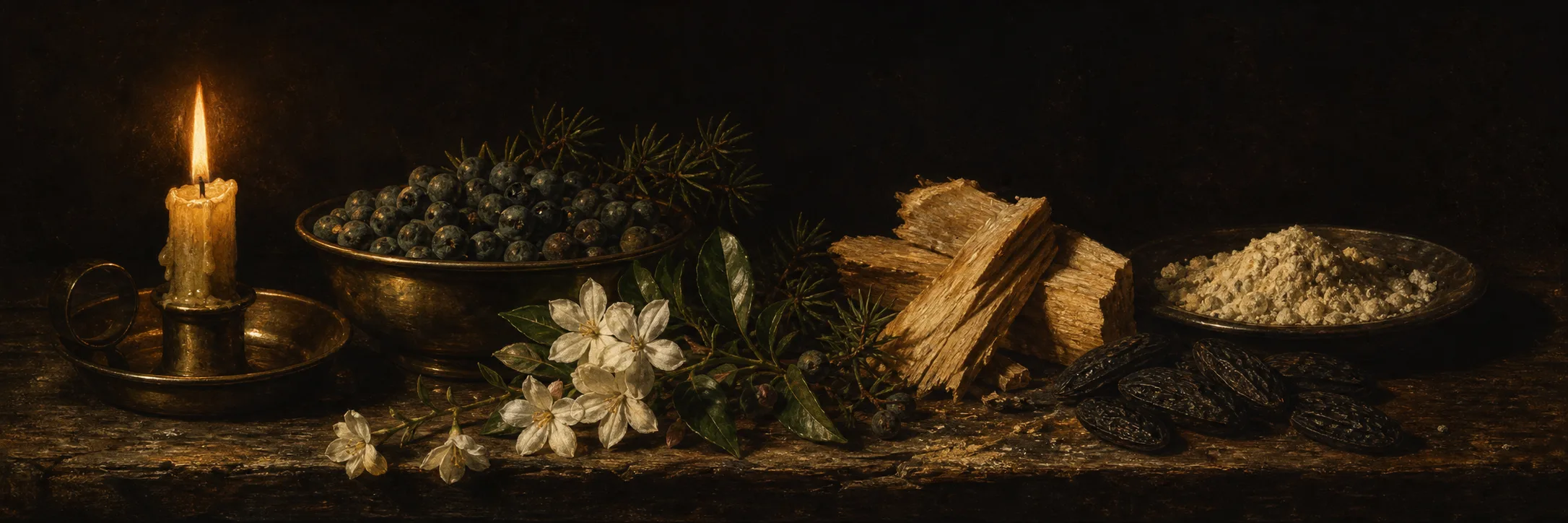
Orpheon EDP is Diptyque’s powdery woody tribute to a 1960s Paris jazz bar: juniper like gin and tonic, clean jasmine, cosmetic powder, tobacco atmosphere, cedar, and tonka. Olivier Pescheux created it for the house’s anniversary, and it became a modern signature scent because it balances atmosphere with wearability: smoky in concept, but clean, soft, and quietly elegant in practice.
Scent Profile
The opening is bright juniper berry, fizzy and green, with a gin-and-tonic sparkle. It can seem sharp or slightly medicinal for a few minutes, but that aromatic snap is what prevents the later powder from feeling generic.
The heart pivots toward cosmetic powder. Jasmine is airy rather than indolic, and the tobacco/bar-smoke idea is subtle: more atmosphere than literal smoke. The texture is velvety, clean, and slightly sweet-spicy, with polished wood underneath.
The drydown is cedar, tonka, and soft powder. It becomes creamy, warm, and intimate, like a memory of makeup, wood panels, unlit tobacco, and a drink left on the bar. The signature is juniper over cosmetic powder and polished wood.
Performance
Orpheon is one of Diptyque’s stronger performers. It usually lasts well on skin, clings to clothing, and leaves a moderate trail without becoming room-filling. It is more present than the house’s quietest skin scents but still office-safe when applied with restraint.
Wearing Context
This is a true all-rounder: office, dinner, cool evenings, signature-scent daily wear, and sophisticated casual settings. It works across seasons, though spring, autumn, and cool nights suit it especially well. The risk is powder: some wearers read it as chic and comforting, others as old-fashioned, soapy, or too feminine.
Comparisons & DNA
Fleur de Peau is the closest in-house comparison for powder and musk, but Orpheon adds juniper, wood, and barroom atmosphere. Glossier You sits nearby in the clean-powdery skin-scent field. Creed Baie de Genievre is the sharper juniper reference; Orpheon is softer and powderier.
Its social role is often compared with Le Labo Santal 33: a recognizable, stylish modern signature, but with Diptyque’s powdery-woody language instead of sandalwood leather.
Reception
Orpheon is widely loved for uniqueness, versatility, the gin-juniper opening, and better-than-expected Diptyque performance. The dissent is clear: powder-sensitive wearers find it old-fashioned, soapy, cloying, or less smoky than the marketing suggests. It is a relatively safe sample for clean powdery woody tastes, but not a safe blind buy for powder haters.
Versions & Reformulation
The 2021 EDP is the icon. The solid perfume is softer and waxier. A later EDT is a substantially different citrus-aromatic composition with yuzu, mandarin, juniper, ginger, magnolia, rose, cedar, and musk; it shares the name but not the EDP’s powdery tonka-cedar core. No EDP reformulation is documented.
Acquisition Notes
Orpheon is luxury-niche priced and widely sold through Diptyque and authorized retailers in 75 ml, 30 ml, solid, and travel-related formats. Decants are worth using because the powder accord divides people. Diptyque counterfeits exist, so avoid implausibly cheap listings and buy from reliable channels.
Notable Facts & Lore
- Orpheon is named for the real bar near Diptyque’s original Saint-Germain boutique.
- The scent memorializes the founders’ late-night world of jazz, smoke, gin, powder, and polished wood.
- It launched for Diptyque’s anniversary and later became a viral modern signature.
- The bottle illustration reworks a founder pattern.
- Its celebrity and social-media associations helped make it a quiet-luxury reference point.