Rasasi — Shaghaf Pour Homme
Essence
Shaghaf Pour Homme is a 2018 Rasasi release best understood as a summer-friendly reinterpretation of the house’s more famous Shuhrah: the same broad woody-floral-fruity DNA with the smoky leather backbone removed, the fruit and florals amplified, and a sweet-aquatic sheen laid on top. Whether that reads as a creative spin or a watered-down version is the central question wearers debate. Its notes are given as a single blended list rather than a pyramid, which matches how it actually wears: a cloud, not a staged progression.
Scent Profile
The opening is a dense, sweet, syrupy fruit-floral blast, often likened to a juiced-up tropical fruit cocktail with a faintly synthetic edge. There is an aldehydic-fruity character and a brief grapefruit-pepper accent in the first minutes. Ylang-ylang is prominent and supplies the tropical-floral signature, reading banana-creamy-yellow rather than narcotic-white, with rose present but understated.
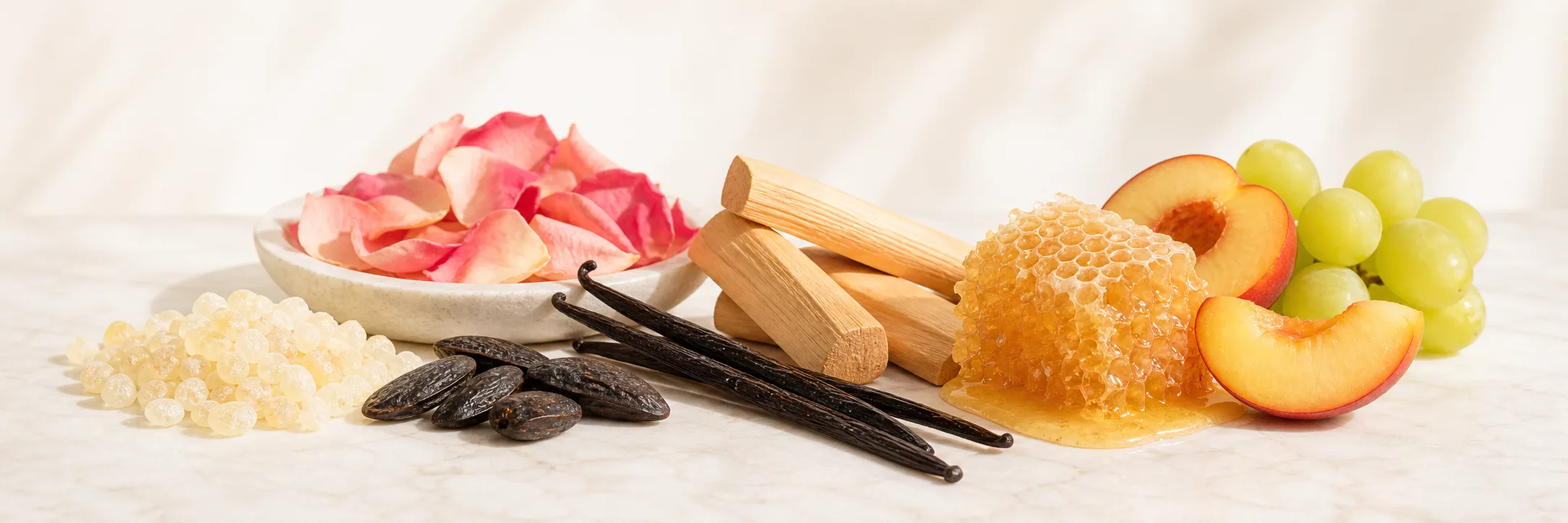
The heart introduces a synthetic-aquatic facet, a marine-clean transparency layered under the fruit and florals that is not in the official notes but is widely reported. This is what separates Shaghaf from Shuhrah, whose heart is dry, smoky, and leathered; Shaghaf stays sweet, watery, and floral throughout. The base of vanilla, musk, tonka, and sandalwood is creamy and lightly gourmand, with patchouli adding a touch of green-earthy depth, while orchid stays more conceptual than perceptible.
The composition is largely linear after the first hour, with the volume of the sweetness shifting more than its character. Notably, the marketing claim of a rich woody-leathery accord does not hold up in wear, where leather reads as nearly absent.
Performance
Performance is a strong point: above-average longevity, often eight hours or more, with strong projection in the first few hours. A single spray tends to be enough, since overspraying can push the syrupy fruit-floral into cloying territory. It performs best in heat, where it earns its “summer beast” reputation. Some wearers report post-2020 batches running noticeably weaker, with longevity nearer six to eight hours, pointing to batch variance or reformulation.
Wearing Context
This is a hot-weather fragrance: late spring through summer, especially humid heat that makes the fruit-floral-aquatic profile cohere. It suits casual daytime, going out, vacation, and club or party settings where the dense sweetness reads as energetic and social. It is a poor fit for the office (too sweet), formal evenings (too youthful), and cool weather (the composition falls flat without heat). Though marketed for men, it is frequently described as feminine-leaning, with the ylang-ylang and floral sweetness pushing it toward what many noses read as a feminine register; wear it with that context in mind.
Comparisons & DNA
The defining reference is Rasasi’s own Shuhrah, of which Shaghaf is widely called the leather-free, summer version. One wearer summarized it as roughly sixty percent Shuhrah and forty percent Hawas, the latter being Rasasi’s Versace-adjacent fougere. Outside the house there is no clean clone: the Invictus-style sweet-aquatic-floral structure shares some kinship but Shaghaf is not an Invictus clone, and one wearer reached for Faconnable Face a Face as a vibe match. Broadly, it sits among fruit-floral-musk men’s compositions, with stronger ylang-ylang and a budget price, occupying an unusual middle ground too sweet for the fresh-aquatic crowd and too tropical for the traditional oud-rose crowd.
Reception
Reception is polarized but mostly positive. Praise centers on strong performance for the price, an unusual fruit-floral-aquatic profile that stands apart from the usual Middle Eastern oud-rose direction, and reliable summer compliments. Criticism centers on a synthetic, cloying quality to Western noses, a “cheap clone of Shuhrah” verdict from Shuhrah loyalists, and a youthful feel that older wearers find dated. A clear axis of disagreement is regional: wearers outside the Gulf more often find it too sweet, synthetic, or feminine, while those familiar with Khaleeji perfumery tend to read it more favorably. At its budget price it is a relatively safe blind buy, though the genre is not universal, so sampling first is wise.
Versions & Reformulation
Shaghaf has a meaningful version history. The original 2018 release came in a green bottle and was reportedly richer and stronger. Rasasi later renamed and reformulated it as Nafaeis Al Shaghaf Pour Homme, switching the bottle from green to blue, and many wearers consider this a downgrade, describing the blue version as a watered-down take on the green original. The two names share one composition lineage in two versions, with the original green bottle regarded as the better juice and now flagged as discontinued and harder to source than the current Nafaeis Al Shaghaf release.
Acquisition Notes
Budget tier, typically $30–45 for 100 ml for the current Nafaeis Al Shaghaf release. Original green-bottle Shaghaf bottles are harder to find and carry modest aftermarket premiums, while decants from splitters are easy to source. Counterfeiting is a moderate concern given Rasasi’s popularity, so buying from authorized Rasasi retailers or established Middle Eastern fragrance e-tailers is the safer path. Several wearers note the juice improves noticeably with a few weeks of maceration after purchase.
Notable Facts & Lore
- “Shaghaf” translates roughly as “passion” or “intense love” in Arabic; the “Nafaeis Al Shaghaf” rename adds a sense of “precious” or “treasures of passion.”
- The rebrand from Shaghaf to Nafaeis Al Shaghaf appears tied to the reformulation, but Rasasi has not publicly documented the change.
- It became a recurring budget-summer pick on Indian and Middle Eastern fragrance video channels.
- No major Western critic, celebrity, or viral moment is attached to the release.
- It exemplifies how Rasasi targets the gap between traditional Khaleeji attar-oud perfumery and Western sweet-fresh-fruit-floral styles.