The Body Shop — Dewberry Fragrance Mist
Essence
The Dewberry Fragrance Mist is a 2026 release, but Dewberry is one of the most emotionally loaded names in British high-street fragrance — a cult perfume oil that defined teenage life in the late 1980s and 1990s before being discontinued and mourned for two decades. The mist is a genuinely new format, the first time Dewberry has ever been sold as a spray, launched on 27 January 2026 as the lightweight, layerable counterpart to the reformulated Perfume Oil. Its identity is double: a brand-new product and a long-petitioned nostalgic revival.
Scent Profile
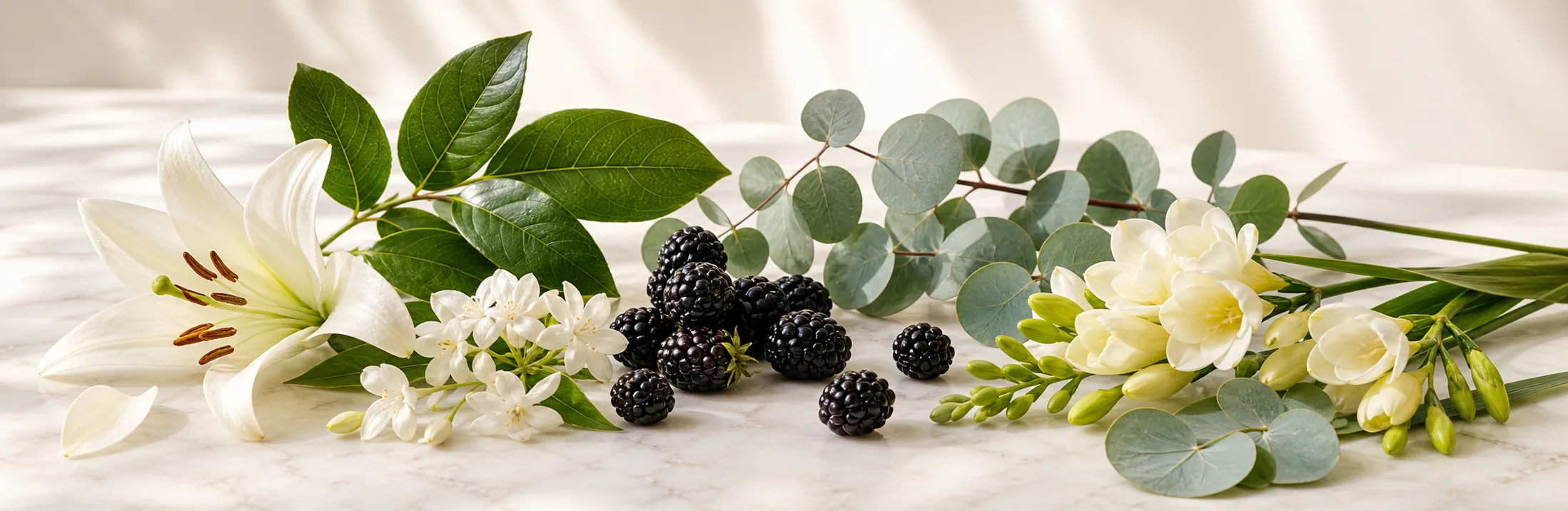
The mist opens on a bright, slightly green-fruity burst: the “dewberry” accord is a stylized dark-berry and blackcurrant idea rather than any literal botanical, cut with crisp green leaves and a cool eucalyptus lift that keeps the sweetness in check. The heart is a soft white-floral bouquet of jasmine, freesia and white lily, and the base settles into a light cedarwood-and-musk skin scent. Compared to the legendary oil, the mist reads markedly greener and fresher, with the lily, freesia and jasmine more prominent in the opening and the deeper cocoa-butter and syrupy overripe facets of the vintage largely absent. Several wearers note that it runs herbal and green up top, needing several spritzes to coax out the berry.
Performance
As a fragrance mist rather than an EDP, expectations should be modest, and the reality matches. The companion perfume oil was tested at around three hours before a top-up; the mist is lighter still, with one tester finding it faded within thirty minutes to a skin scent and recommending layering it over the matching body butter or balm to extend wear. A newspaper reviewer was more impressed, reporting that “it’s quite strong at first… but this is impressive for a lightweight mist,” with scent lingering hours later. The honest synthesis: pleasant immediate projection, short-to-moderate longevity, best deployed within the range’s layering ritual.
Wearing Context
This is an everyday, daytime, warm-weather spritz — uncomplicated, youthful and bright. The brand and reviewers frame it as an all-over layering staple, a fresh pick-me-up to refresh after the gym or carry in a bag. It carries obvious nostalgia appeal for Gen X and older millennials who wore Dewberry as teenagers, but its lightness and unisex framing make it broadly wearable. It is not an evening, cold-weather, or statement fragrance.
Comparisons & DNA
- Vintage Dewberry Perfume Oil is the essential reference: sweeter, denser and more syrupy, where the 2026 mist is a lighter, greener reinterpretation of the same DNA.
- The Body Shop White Musk is the sibling touchstone — Dewberry’s co-defining 1990s scent, itself revived in 2021, anchoring the brand’s nostalgia-revival playbook.
- Tommy Girl by Tommy Hilfiger sits in the same green-floral, 1990s-revival conversation reviewers place Dewberry within.
- Clinique Happy is cited alongside it as another 1990s fruity-fresh name enjoying renewed attention.
- Lalique Amethyst is the most frequently cited near-match that vintage-oil hunters reach for, with Australis Waterberry mentioned in the same breath.
Reception
Reception is a genuine “Marmite” split, as one beauty editor called it — “a Marmite of a relaunch, but nevertheless, a bit of a landmark.” Press coverage skewed warmly nostalgic, with a Gen X editor describing a first dab that “took me right back… instantly recognisable” and praising a “nuzzly, slightly musky, velvety dry-down.” Wearer reaction was harsher and more divided: complaints clustered around weakness and artificiality, with descriptions like “screechy, artificial air freshener” and “super WEAK and lollipop sweet,” and a flat verdict that “this is not the same scent as the beloved Dewberry from the 90s.” Yet other longtime fans were reconciled, finding it “close to the original… softer, gentler and fresher than the vintage.” The fairest reading is a faithful-in-spirit but lighter, greener revival that delights nostalgic optimists and disappoints purists.
Versions & Reformulation
Dewberry originally launched in 1988 and became, alongside White Musk, one of The Body Shop’s two defining scents through the 1990s, sold most iconically as a dab-on perfume oil at the in-store “Perfume Bar.” It was discontinued in 2002, prompting years of petitions. The 2026 relaunch, tied to the brand’s 50th-anniversary period, brought back a full range: the reformulated signature Perfume Oil, bodycare, and, for the first time ever, this Fragrance Mist. The Body Shop states the new formula was “updated to meet modern regulations” while preserving the original scent profile. In practice the documented new pyramid (green, dewberry, eucalyptus; white lily, jasmine, freesia; cedar, musk) is greener and less fruity-sweet than the historic oil, consistent with wearer reports.
Acquisition Notes
The Fragrance Mist is current and widely available through The Body Shop online and in stores, at £13 for 100ml — among the most affordable ways into the range. Buyers wanting the closest match to the nostalgic original are steered toward the Perfume Oil or Body Butter rather than the mist, and toward layering the mist over the bodycare for longevity. There is no need to pay any premium for the current mist; it is a cheap, in-production high-street product, while discontinued 1990s oil bottles change hands at collector prices.
Notable Facts & Lore
- Dewberry was founded into cultural memory at The Body Shop’s in-store “Perfume Bar,” where glass jars with glass dippers let customers sample oils and decant favourites into pocket-sized bottles.
- The 2026 campaign leaned hard into nostalgia, with imagery of cassette tapes and corded telephones and the taglines “The 90s called” and “Bold then. Bold again.”
- The Body Shop’s Global CMO said the company was “honestly not sure why that decision was taken” to discontinue Dewberry, calling it “our most requested product.”
- The name is a misnomer: a “dewberry” is a real bramble fruit, but the fragrance contains none and is built around a blackcurrant idea reviewers have long described as blackcurrant rather than blackberry.
- Founder Anita Roddick’s legacy looms over the revival, framed by commentators as something she “would, we think, be thrilled” by.