Xerjoff — Casamorati Mefisto
Essence
Casamorati Mefisto is Jacques Flori’s 2009 citrus-floral-aromatic, released as part of Xerjoff’s revival of the historic 19th-century Bologna house Casamorati. Despite a name borrowed from the devil-figure Mephistopheles in Goethe’s Faust, it is one of the gentlest things in the Xerjoff catalogue: a luminous Italian citrus-lavender-rose-iris on a clean musky-cedar base, often described as the closest legitimate niche analogue to Creed Silver Mountain Water without the metallic ink. It is also the rare bright floral citrus that genuinely projects.
Scent Profile
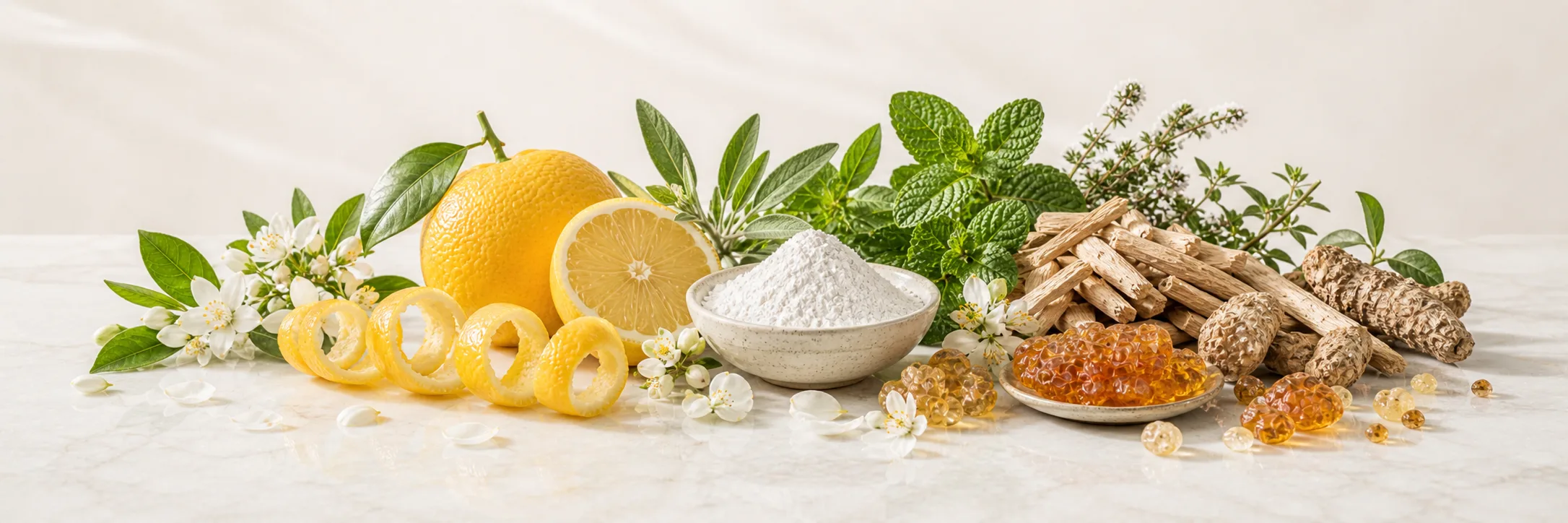
The opening runs about ten to twenty minutes: a sun-drenched Italian citrus accord of Amalfi lemon, bergamot, and grapefruit forming a juicy, slightly green wedge. The bergamot pulls green and herbal, the grapefruit adds a pithy bitterness, and the lemon brings brightness without sharpness. Many wearers catch a faint metallic, almost ozonic shimmer in the first sprays that recalls Silver Mountain Water’s flintiness, though here it is softer and lacks SMW’s polarising inky facet.
The heart, roughly one to three hours in, is where Mefisto declares itself. The lavender turns powdery and floral rather than barbershop-aromatic, bridging the citrus into a rose-iris core. Rose absolute grows increasingly assertive over time, while a cool, slightly buttery Florentine iris adds a powdery, orris texture without veering lipsticky. The notes are blended enough that no single floral asserts unambiguously; the effect is a soft, expensive-feeling floral haze, and this rose-iris-lavender triangle is what separates Mefisto from the more straightforwardly citrus-aquatic Creed reference point.
After hour three the drydown settles into a clean, slightly synthetic base of Mysore-styled sandalwood, Virginia cedar, soft amber, and white musks. This is the formula’s quietest and most criticised stage: pleasant and unobjectionable, but less complex than the heart that precedes it. The arc overall is a clear citrus-to-floral bloom followed by a long, linear musky-woody close.
Performance
Projection is moderate-to-strong in the first sixty to ninety minutes, making this one of the louder Casamorati releases, with a generous three-to-four-foot trail through the opening and heart. After hour three it drops to a skin scent and turns intimate. Longevity on skin lands around seven to ten hours for most wearers, with outliers past twelve hours and a minority reporting four to six hours on more recent batches; on clothing it can carry into the following day. Heat amplifies the citrus pleasantly without turning it sour, so two sprays suit a casual warm day and three give projection in cooler weather. Spray to neck and chest rather than clothing for the best citrus-to-floral evolution.
Wearing Context
Mefisto is built for spring and summer, with spring shoulder-season arguably its sweet spot; the citrus-lavender-rose triangle has the brightness to cut through heat without amplifying unpleasantly. It works year-round but loses some of its purpose in deep winter and reads best from morning to early evening rather than at night. It is one of the most office-appropriate niche options under $400 and suits warm-weather casual, smart-casual dinners, daytime weddings, and travel. It reads neutrally unisex and can confuse audiences expecting an obvious men’s cologne, and it falls flat in club settings. The overall impression is refined and slightly preppy, and it wears as comfortably at twenty-five as at sixty-five.
Comparisons & DNA
Creed Silver Mountain Water (Olivier Creed, 1995) is the inescapable reference: Mefisto is widely heard as a smoother, more floral, less metallic reading of the same DNA, with better longevity and projection but slightly less of its own identity. Mefisto Gentiluomo (Xerjoff, 2018) is the in-line flanker, more masculine and barbershop-classical with a more prominent herbal lavender, where the original leans unisex-floral. Creed Aventus Cologne and Creed Millesime Imperial sit in the same expensive-bright-fresh territory but diverge in structure, the former fruitier and the latter more salty-aquatic. Among budget analogues, Ajmal Silver Shade and Armaf Club de Nuit Sillage chase the shared Silver Mountain Water direction rather than Mefisto specifically, and both give way in the base.
Reception
Among Xerjoff and Casamorati releases, Mefisto sits in the upper range of wearer sentiment, generally placed above Lira and Italica and beside Bouquet Ideale and Dama Bianca, though below the cult favourites Naxos and Erba Pura. Praise centres on ingredient quality, the expensive feel of the rose-iris heart, the balance of projection against cleanness, and the Silver-Mountain-Water-without-the-ink positioning. The recurring criticisms are the price, the relative simplicity of the base, and the persistent SMW comparison that makes some wonder whether the markup over Creed-style clones is justified. The polarisation lands on three axes: whether it is its own composition or simply SMW done better, whether the performance justifies a $300-plus price, and whether the rose dominance reads feminine or refined-masculine.
Versions & Reformulation
Mefisto exists as an EDP only; there is no EDT, parfum, or extrait, and the 2018 Mefisto Gentiluomo is a related but distinct flanker rather than a concentration variant. Some long-time wearers report performance variation across batches, with releases made after 2020 sometimes called slightly weaker on longevity, though Xerjoff has not publicly acknowledged a reformulation. The Casamorati sub-line has kept its original ornate baroque flacon across all production runs, even as other Xerjoff lines moved to a standard bottle, a deliberate choice to preserve its identity.
Acquisition Notes
This is niche-luxury pricing: 100 ml retails at roughly $290 to $330 from authorised sellers, with 30 ml around $130 to $150. Both sizes are widely available, and given the price and the polarisation a sample is strongly advised before committing. Counterfeits exist and are rising as Xerjoff gains visibility; the solid-walnut presentation box, a crisp “Casamorati 1888” engraving, and a laser-etched batch code on the bottle’s underside are the usual authenticity tells.
Notable Facts & Lore
- Casamorati was a 19th-century Bologna perfume house founded by Claudio Casamorati, who filed the double-C trademark on 17 April 1888; Xerjoff acquired the rights in 2009 and revived the brand around the original flacon and logo.
- Xerjoff frames Mefisto as a recipe recovered from surviving Casamorati samples, “relatively unchanged from the original recipes of over a century ago,” rather than a modern composition.
- The name comes from Mephistopheles, the devil-figure in Goethe’s Faust, a pointed contrast with one of the gentlest scents in the catalogue.
- Perfumer Jacques Flori is a Xerjoff workhorse credited on classics such as Nio and Fiero and on Casamorati La Tosca and Bouquet Ideale.
- The baroque flacon with its shoulder epaulets and cloth-tassel neck-cord is one of the few Xerjoff sub-lines spared the brand’s consolidation to a standard bottle.
- The line’s enduring debate is the Silver Mountain Water comparison and whether Xerjoff pricing is justified for what many hear as a refinement of Creed’s DNA.