Xerjoff — XJ 1861 Renaissance
Essence
Renaissance is Xerjoff’s high-resolution Italian lemon cologne - a citrus-aromatic launched in 2011 to mark the 150th anniversary of Italian unification (1861), later relaunched in 2015 as the opening installment of the “XJ 1861” trilogy alongside Naxos and Zefiro. The composition pairs a strikingly natural Amalfi-lemon top with a mint-laced floral heart and a soft musk-cedar-amber base. Its signature claim is that the lemon does not vanish - it is held aloft by a strong white-musk scaffold and a hint of amber, producing a lemon-granita-on-a-bed-of-mint impression that has made it a favorite warm-weather Xerjoff.
Scent Profile
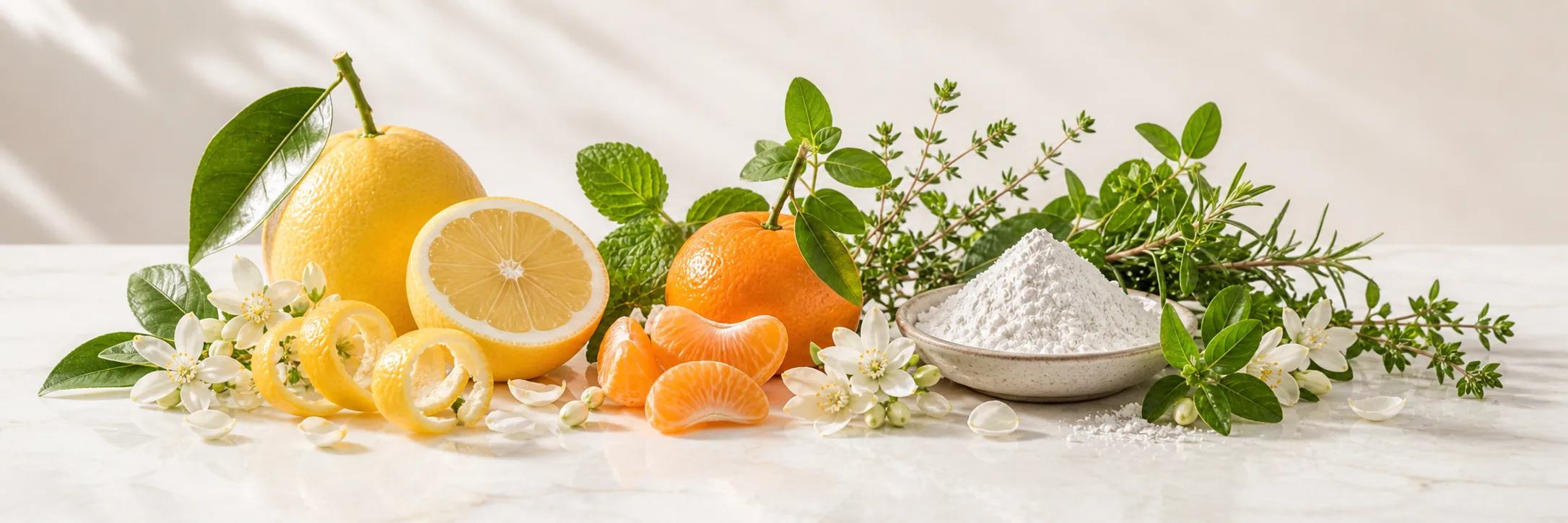
The first ten minutes is a wide-spectrum citrus opening - bright Amalfi lemon at the center, with bergamot and tangerine on either side and petitgrain adding bitter-green twiggy lift. This is genuinely a high-quality citrus accord; multiple reviewers note the lemon reads as fresh-zested peel rather than as candy-lemon or cologne-aromachemical. There is a faint galbanum-like greenness in the opening (wearer discussion specifically flags a lime-and-galbanum twang) that prevents the brightness from going pedestrian. Within the first quarter-hour the mint begins emerging from below - not the dominant spearmint of Torino21, but a softer peppermint that reads as a cooling overlay rather than a stated note. The one-to-three-hour heart phase is where Renaissance differentiates itself from generic citrus colognes. Lily-of-the-valley provides a dewy floral lift - clean, fresh, slightly powdery - and the Bulgarian rose is felt as a textural softness rather than as recognizable rose.
Performance
Projection is moderate in the opening hour and moderate-to-light thereafter - Renaissance is not a screaming citrus the way Creed Aventus or Orto Parisi compositions are. Sillage is polite. Longevity is the surprise: eight to ten hours on skin is typical, with some reviewers reporting 12+ hours, which is exceptional for a citrus-dominant fragrance and is the direct result of the heavy musk-amber scaffold. On clothing it can last 24+ hours, with the deep musky-cedar base recognizable on a worn shirt the next day.
Wearing Context
Spring and summer daytime is the obvious window, with autumn shoulder-season utility. It works for office daytime (clean, refined, non-distracting), brunch, lunch meetings, smart-casual events, and warm-weather travel. It excels in linen-and-cotton wardrobes and in Italian-coast or Mediterranean settings - the lemon-granita association is repeatedly invoked. Daytime is the dominant register, though it carries fine into early evening.
Comparisons & DNA
Within Xerjoff, Renaissance sits in the XJ 1861 trilogy alongside Xerjoff Naxos (the sweet honey-tobacco that became Xerjoff’s blockbuster) and Xerjoff Zefiro (a drier, mossier woody-aromatic representing Rome). It is the fresh-citrus member of the family. Xerjoff Erba Pura is the sweeter, fruitier, more universally crowd-pleasing cousin; Xerjoff Erba Gold sits between. Compared to the later Xerjoff Torino21, Renaissance is more floral and less mint-dominant, with a heavier musk base.
Reception
Wearer consensus is solidly positive, with Renaissance frequently appearing on “best Xerjoff citrus” and “best summer Xerjoff” lists. Common praise: the realism and persistence of the Amalfi lemon, the elegance of the mint-floral heart, the impressive longevity for a citrus, and the overall refined Italian-cologne character. Common criticism: the opening sometimes reads as cleaning-product or household-cleaner (a recurring minority criticism that flags the mint-citrus combination negatively), the relative simplicity of the composition for the price, and the moderate projection that some find inadequate. Polarization axes are: (1) whether the floral-mint reads as elegant barbershop or as Pledge, and (2) whether Renaissance is “the best of the XJ 1861 trilogy” - a position several wearer discussions voices take, arguing post-reformulation Naxos has lost ground - or simply a refined niche freshie. Reviewers who find the floral-mint divisive read the opening as cleaning-product rather than barbershop, and a minority calls it overpriced and not unique enough.
Versions & Reformulation
Renaissance has a notable naming/repackaging history. Originally launched in 2011 as simply “1861” or “Renaissance,” it was repositioned and repackaged in 2015 - debuted at Esxence Milan that year - as “XJ 1861 Renaissance” alongside the new XJ 1861 Naxos and XJ 1861 Zefiro as a unified trilogy honoring the 150th anniversary of Italian unification (2011 marking the sesquicentennial of 1861). Detailed analysis has specifically noted that 1861 Renaissance and XJ 1861 Renaissance are the same juice - only the packaging and line identity were updated for the trilogy launch. No major reformulation has been formally announced for Renaissance itself.
Acquisition Notes
Luxury bracket, sitting in Xerjoff’s mid-range - approximately $200 - 280 for 50ml and $290 - 400 for 100ml at authorized retail, though some wearers report finding 100ml at heavily discounted grey-market prices around $150, which represents notably better value than typical Xerjoff. Authorized carriers include Twisted Lily, Luckyscent, Bergdorf Goodman, Harrods, and the Xerjoff e-boutique.
Notable Facts & Lore
- Renaissance is anchored to the 1861 unification of Italy, which the XJ 1861 trilogy was designed to honor for its 150th anniversary - launched 2011, formally trilogy-presented in 2015 at Esxence Milan.
- Each member of the trilogy maps to a region or theme: Renaissance celebrates Florentine-Italian cultural heritage, Naxos celebrates Sicily, and Zefiro celebrates Rome.
- The 2011 “1861 Renaissance” and the 2015 “XJ 1861 Renaissance” are the same juice; only the packaging and line identity were updated.
- Naxos went on to become Xerjoff’s mainstream blockbuster, leaving Renaissance and Zefiro as the connoisseur’s picks within the trilogy.
- Specific perfumer attribution has not been publicly disclosed, consistent with pre-2015 Xerjoff practice; co-founder Sergio Momo has historically guided composition direction.
- The “Italian lemon granita” descriptor has propagated organically across reviews and become the de facto shorthand for the composition’s effect.