Yves Rocher — Ispahan
Essence
Ispahan is a vintage Yves Rocher oriental — a soft, spicy, ambery floriental named after the Persian city of Isfahan — that built an outsized emotional legacy far beyond its humble mail-order origins. For a generation of wearers, especially across the former Soviet Union, Finland, and continental Europe, it was a first “real” perfume, affordable and exotic-smelling. Today it is discontinued and quietly mourned, frequently described as Yves Rocher’s budget answer to YSL Opium, though devotees insist it carries a gentler, fluffier character of its own.
Scent Profile
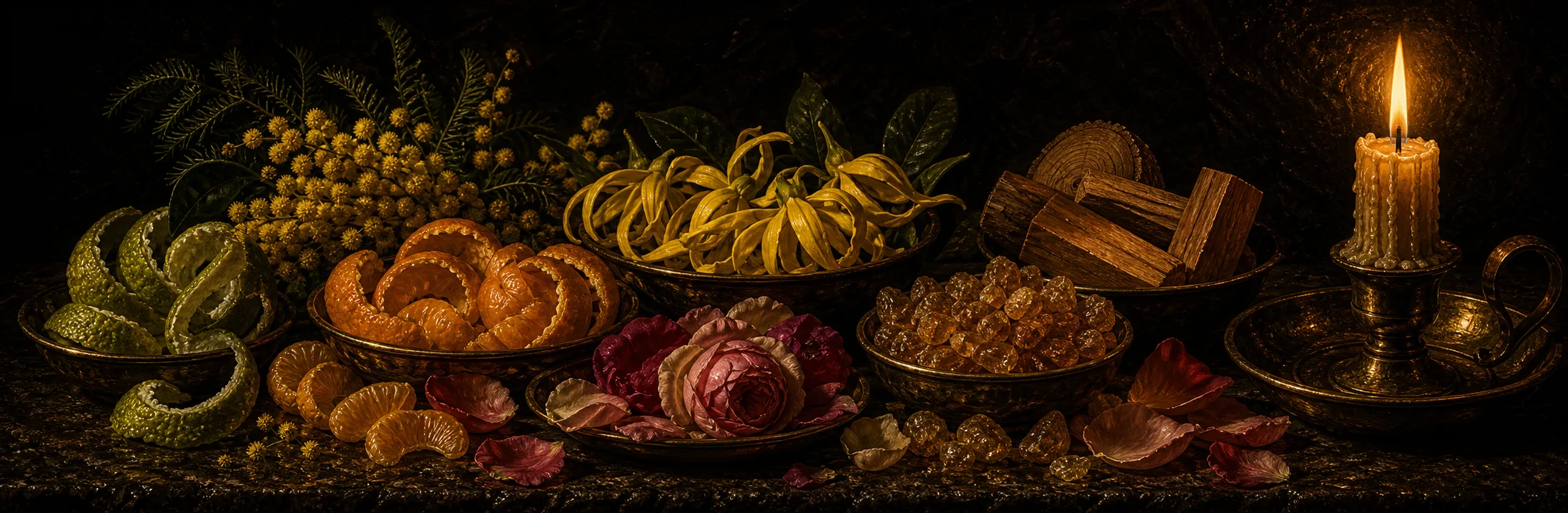
Ispahan opens with a lively, aldehydic citrus shimmer of bergamot, mandarin, and ripe fruit that signals the orientalist drama to come. The heart is a powdery, full-bodied floral bouquet, with clove and cinnamon dusting rose, jasmine, ylang-ylang, mimosa, and waxy magnolia, plus a slightly sharp green lily-of-the-valley lift. The base is where fans linger: a warm amber-incense accord of benzoin, vanilla, tonka, frankincense, tolu balsam, sandalwood, patchouli, and musk, with a faintly animalic undertone in the extrait. The overall impression is soft, spicy, ambery, and comforting rather than aggressive — warm, mysterious, and faintly erotic. The extrait concentration is the standout expression: even a single drop delivers the presence of several sprays of a lighter formulation.
Performance
Performance here is heavily concentration- and formulation-dependent. The Parfum/extrait is reported as a genuine powerhouse, with strong, far-reaching projection and above-average longevity that carries into the next day. The EDT is far more variable: some find it rich and long-lasting, while others — particularly with later, reformulated bottles — describe it as strikingly weak and fast-fading. This split most likely reflects the fragrance’s long reformulation history rather than simple skin-chemistry differences, with vintage bottles generally performing best.
Wearing Context
This is a cool-weather, evening, mature-skewing oriental, framed by wearers as suited to an experienced woman who draws attention with a smile rather than a statement. It belongs to fall and winter, evenings, and intimate settings — deeply personal rather than a scent broadcast to a room, in explicit contrast to how Opium is often described. Many wearers found it too heavy or too oriental in their youth and grew into appreciating it later; the extrait’s drier, spicier register reads as unisex-leaning.
Comparisons & DNA
The defining comparison, almost certainly intentional on Yves Rocher’s part, is YSL Opium — positioning Ispahan as an accessible take on that era’s blockbuster oriental. Wearers also invoke Estée Lauder Cinnabar and Youth-Dew, and the general consensus is that Ispahan reads softer, fluffier, and less sweet than Opium, described by one fan as what you’d get “if vintage Opium and vintage Byzance had a baby.” It is not to be confused with Yves Rocher’s later, unrelated Rose Ispahan, a sweet vanilla-rose gourmand from the late 1990s.
Reception
Ispahan is warmly and often nostalgically beloved among fans of vintage orientals, with consistently favorable reception across a substantial body of reviews. Praise centers on its soft, sensual, spicy warmth and its striking emotional resonance — one feature piece documented its cult status among those who came of age wearing it. Dissent comes mainly from two camps: those who encountered weaker, later reformulations and found them lifeless, and those who simply don’t connect with the Opium comparison or find the style dated. Collectors actively discuss telling reformulated bottles apart from earlier, stronger ones.
Versions & Reformulation
Ispahan existed in multiple concentrations — an EDT, a separate Parfum/extrait in a 15 ml bottle, and matching body products — and was reformulated repeatedly over its decades-long run, which explains the wide range of performance reports. Yves Rocher issued a limited “Ispahan Réédition Collection” around 2007–2008 in cubic bottles, offering a lighter, vanilla-benzoin-forward interpretation; these reissue bottles now command meaningful prices on the collector market. The original formula is long discontinued.
Acquisition Notes
Finding Ispahan today means a vintage hunt through secondhand and specialist sellers, typically as 15 ml minis, partial bottles, or the rarer sealed extrait. Buyers should prioritize the extrait/parfum as the most complete expression of the fragrance, watch for label variations associated with reformulation, and be cautious of refilled or otherwise inauthentic bottles. Because performance varies so much by era, provenance matters more here than with most discontinued scents.
Notable Facts & Lore
- Ispahan is widely credited to perfumer Maurice Roucel with a 1977 launch date, though Roucel’s own account of starting his perfumery career in 1978–79 makes this specific attribution uncertain; some sources instead date his work on it to around 1982.
- The city Isfahan was historically called “half the world” by Persians, a fitting namesake for an orientalist fantasy few Western buyers had actually visited.
- Its enduring lore is generational: for many European and former-Soviet wearers, it was remembered as a formative first “grown-up” perfume.