Yves Rocher — Noix de Coco de Malaisie
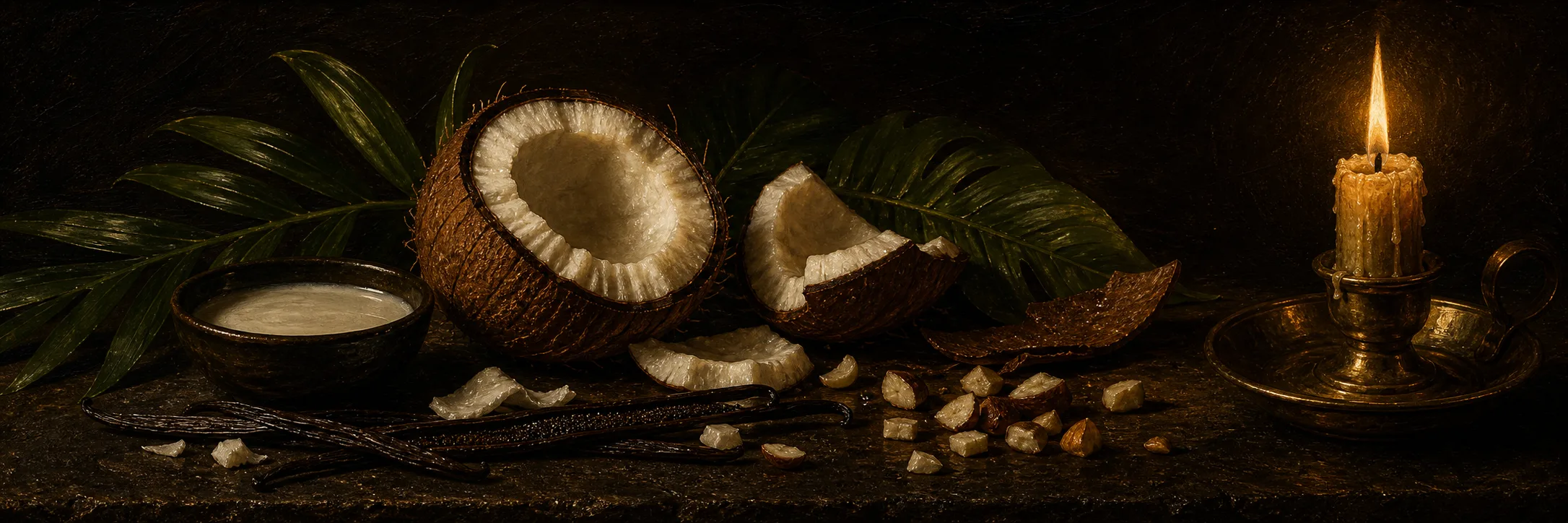
Essence
Noix de Coco de Malaisie is a discontinued single-note coconut Eau de Toilette from French botanical-beauty brand Yves Rocher, dating to around 2000 and belonging to the brand’s “Les Plaisirs Nature” line. Its perfumer is undocumented. It is exactly what its name promises: an uncomplicated, affordable, true-to-life coconut soliflore with a vanilla-sugar tint. It never aimed to be ambitious, and its lasting affection rests entirely on doing one simple thing well and cheaply.
Scent Profile
The composition is essentially coconut from top to drydown, described by reviewers as coconut in its purest sense throughout its wear, with an unlisted vanilla lending a faintly gourmand warmth. Opinions divide on character: many find it creamy and sweet, like freshly grated coconut, while others read it as cleaner and less sweet, closer to a coconut-milk shampoo. A frequently noted flaw is a sharp alcohol sting on application that fades almost immediately. It generally reads as more natural and less suntan-lotion-like than typical coconut fragrances.
Performance
Performance reports are inconsistent, as is typical for an inexpensive EDT. Some wearers find longevity poor, going through a bottle quickly, while devotees claim it lasts all day with real projection. One vivid account describes a schoolmate recognizing the wearer’s arrival each morning by its coconut scent, suggesting genuine sillage when applied liberally. The honest read is modest-to-moderate performance that rewards generous application, with notable skin-chemistry variance.
Wearing Context
This is a summer and warm-weather staple first and foremost — beach, casual, daytime wear — though a vocal minority wear it in winter for its comforting, soothing quality. It is widely praised as a layering tool, used to add coconut creaminess to citrus scents or vanillas and to smooth the harsher openings of other perfumes. Reviewers describe it as inappropriate for business settings, better suited to leisure than the office.
Comparisons & DNA
Within Yves Rocher’s own range it is compared to, and sometimes confused with, the brand’s later, simpler “Noix de Coco” from 2016 and the older “Cap Nature” coconut, with earlier versions generally remembered as milkier and creamier. Outside the brand, the most-cited comparison is Demeter Coconut, considered an almost-identical scent profile and a ready substitute, while The Body Shop’s coconut offering is judged clearly inferior. More aspirationally, it is positioned as a budget stand-in for vacation-style coconuts like Tom Ford’s Beach Walk, doing the job without quite the same airy polish.
Reception
Affection runs high among coconut lovers, with nostalgia as the dominant emotional register — reviews are full of teenage memories and pleas for the fragrance’s reinstatement. The main criticism beyond performance is that it can read as too strong or sweet for those who don’t love coconut, and that quality dropped across later reformulations and reissues, with some finding those versions artificial and barely resembling the coconut character they remembered.
Versions & Reformulation
The coconut lineage at Yves Rocher is genuinely confusing and a frequent source of frustration. There is the older “Cap Nature” coconut, this “Noix de Coco de Malaisie” from around 2000, and a later “Noix de Coco” from 2016 listing both coconut and coconut milk. Reviewers consistently report the earliest versions were creamier and that the line was progressively simplified before the EDTs were discontinued in favor of a body and hair mist fans say bears little resemblance to the earlier fragrances. Exact reformulation dates are not reliably documented.
Acquisition Notes
This fragrance is discontinued and now a secondary-market item, historically sold in small formats including a 20 ml miniature and a 100 ml EDT spray at very low prices. It is found today mainly through resale channels, sometimes alongside matching shower gel and body lotion. Given its low original price and single-note profile, it holds little collectible value, and coconut fans seeking the same effect may find the widely available Demeter Coconut a practical substitute.
Notable Facts & Lore
- The “de Malaisie” (Malaysian) naming is largely marketing flourish rather than a documented sourcing claim.
- The matching body lotion and shower gel were frequently recommended for layering and considered part of the full experience.
- Its enduring appeal is a good example of how a simple, inexpensive single-note fragrance can generate devoted nostalgia rivaling far more expensive releases.