Atelier Versace — Safran Royal
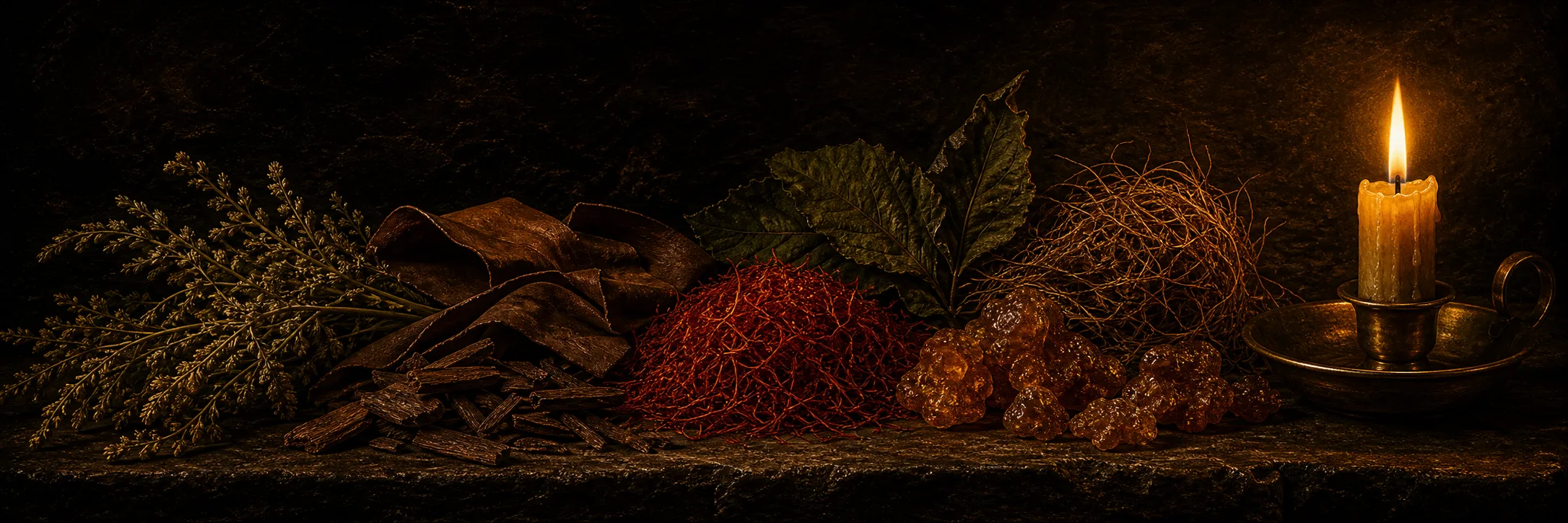
Essence
Safran Royal is Versace’s bid for the modern saffron-leather throne - a category effectively codified by Tom Ford Tuscan Leather and By Kilian Straight to Heaven, then colonized by Middle Eastern niche houses. Composed by Givaudan’s Jordi Fernandez, a self-taught Catalan perfumer who splits his time between Barcelona and Dubai labs and has been nicknamed “master of oud” by the trade, it pairs the bittersweet, hay-and-iodine facet of a saffron overdose with a polished, blonde-leather accord and a smoky, root-cellar cypriol drydown.
Scent Profile
The opening is dominated almost immediately by the saffron-wormwood axis: a dry, slightly metallic, hay-and-tincture brightness that reads more medicinal than gourmand, more Persian carpet than spice market. There is an aromachemical lift in the first three minutes - multiple wearers identify an ambrocenide-style “loud, brash, almost gasoline-like” radiance reminiscent of Louis Vuitton Ombre Nomade, plus a separate boozy, sour-fruit shimmer that the listed notes do not name but that most wearers report. Wormwood is present but submerged - you read its bitter edge against the saffron rather than identifying it discretely. By the thirty-to-ninety-minute mark, the fragrance settles into its core proposition: a suede-leaning leather accord - not the tar-and-birch leather of Knize Ten, but the supple, slightly powdery, almost makeup-bag suede that has become the modern designer standard - wrapped in a warm amber. This is the “saffron cloud” that wearers describe: a soft, enveloping halo where the spice and the leather have fused rather than alternating. Faint rose-ish and fruity facets surface here that are not in the official top-to-base list but are widely reported, a consequence of standard saffron-accord construction; Safraleine and Safranal materials carry inherent leathery-rosy-jammy facets. Three hours in and beyond, cypriol (nagarmotha) and patchouli take over as the architecture: dark, earthy, faintly smoky, with cistus adding a resinous, ambergris-adjacent labdanum sweetness that keeps the base from going strictly austere. The saffron never fully leaves - it ghosts above the woods for the duration - but the drydown is decisively a smoky-woody-ambery skin scent rather than a spice fragrance.
Performance
Projection is moderate-to-strong for the first ninety minutes - an arm’s-length cloud that two to three sprays will push into the room without being aggressive - then drops to a moderate aura by hour three and a close-skin scent by hour five. Sillage tracks projection, and wearer scoring corroborate that this performs above the designer average while staying below the “beast mode” budget-saffron heavyweights.
Wearing Context
This is a cool-weather, late-day fragrance first and a transitional-season fragrance second. Autumn and winter are home turf - the leather and amber want a wool coat to bloom against. Spring works if you are headed somewhere indoors in the evening; high summer is the weakest setting, where the spicy facets can curdle and the smoky base feels overdressed.
Comparisons & DNA
Safran Royal sits in a dense and crowded family, and a handful of triangulations map it well. Frederic Malle’s Promise (Dominique Ropion, 2017) is the closest respectable reference point; one wearer puts it bluntly: Safran Royal is essentially a leathery, more spice-forward version of Promise without Promise’s overt rose. Promise is more sophisticated and more original; Safran Royal is louder and warmer. Xerjoff’s Deified / Tony Iommi (2022) is sibling-close on the saffron-leather-spice axis - wearer split roughly evenly on which is better, and Safran Royal preceded Deified and is arguably the cleaner execution. Louis Vuitton’s Ombre Nomade (Jacques Cavallier, 2018) shares the same brash, ambrocenide-driven radiance, but Safran Royal tilts away from raspberry-incense toward leather and dry spice; Ombre Nomade is sweeter, larger, and considerably more expensive.
Reception
Wearer group aggregates rate Safran Royal’s scent strongly, with the bottle praised higher still and value-for-money the weakest sub-score - a consistent pattern across the Atelier line. wearers skew positive but polarized: enthusiasts describe a “hidden gem” and call it date-night material, while detractors variously call it a “scrubber,” “bitter,” “old lady leather,” or a near-clone of Oud Satin Mood that does not justify its price. The most common axes of disagreement are whether the geraniol-saffron opening reads as elegant or sour, and whether the price is acceptable for what is essentially a polished but unoriginal entry in a crowded category. Broader enthusiast-forum treatment is thin - Safran Royal has never generated a dedicated megathread, and most mentions are passing references in saffron-comparison threads, where it is acknowledged as competent but rarely championed.
Versions & Reformulation
Single composition, no known reformulations. Safran Royal launched in October 2021 in one concentration - Eau de Parfum - and one size, 100 ml, as part of the second wave of Atelier Versace fragrances that expanded the line from six to twelve scents. There is no EDT, no Parfum, no Intense flanker, and no limited edition. The juice has been on the market in essentially identical form since launch; batches differ, but no compositional change has been reported by wearer trackers.
Acquisition Notes
Safran Royal sits in the luxury-designer pricing tier - above mainstream designer, below true niche - with a list price around $330 for the 100 ml, though street prices run far below that. The bottle comes in 100 ml only: no 50 ml or 30 ml option and no travel-spray program, both friction points relative to true niche peers.
Notable Facts & Lore
- Safran Royal launched in October 2021 as part of the six-fragrance wave that doubled Atelier Versace from six scents to twelve.
- Jordi Fernandez composed Safran Royal, Encens Supreme, Gingembre Petillant, and Iris d’Elite in that wave; Olivier Cresp handled Fleur de Mate and Marie Salamagne handled Tabac Imperial.
- No celebrity endorsement, viral moment, or cultural-reference hook is tied to the scent beyond the standard luxury-saffron framing.
- The black sculptural Atelier bottle and hand-finished Medusa cap are often praised more consistently than the juice.