Clive Christian — XVII Baroque Siberian Pine
Essence
XVII Baroque Siberian Pine is a discontinued, Russia-exclusive citrus chypre from Clive Christian’s Noble Collection XVII line, a series themed around aromatic ingredients of the Russian landscape and the visual extravagance of the Russian Baroque period. It is a niche curio: limited distribution, high price, and - by the standards of a house that trades on “world’s most expensive perfume” hype - a notably restrained, well-blended green-woody scent rather than an opulent showpiece.
Scent Profile
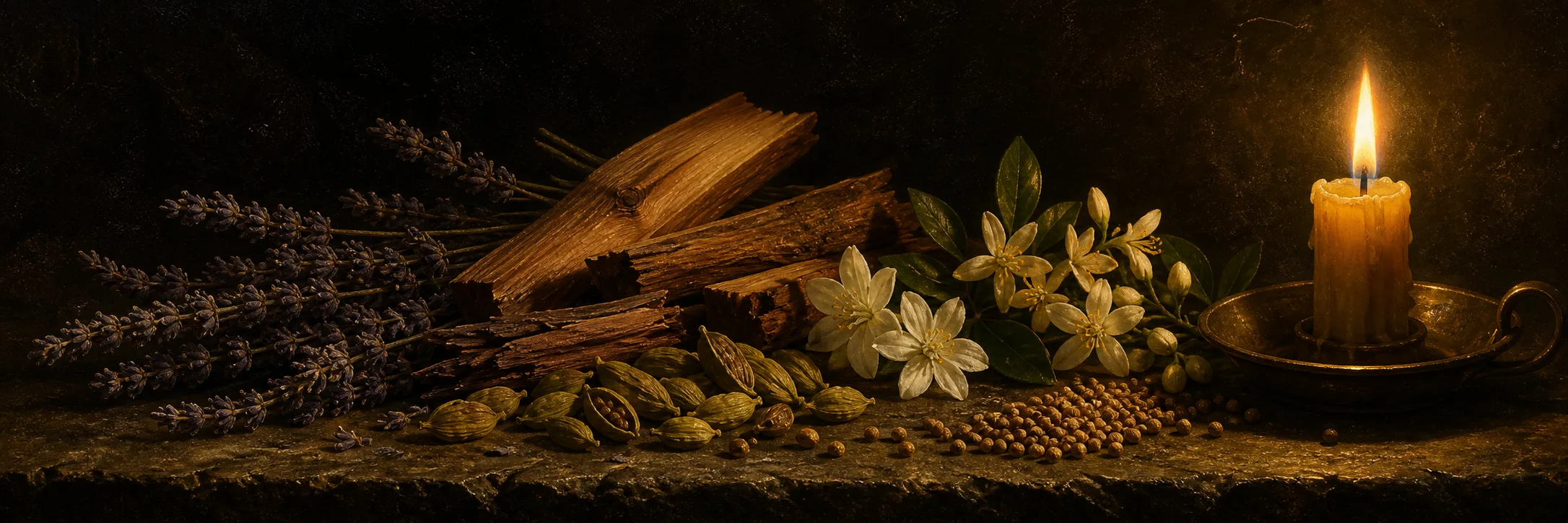
The structure is a classic citrus chypre given a coniferous twist. A bright top of bergamot, lemon, mandarin and neroli with pink pepper gives way to the signature pine-needle accord, supported by an aromatic heart of lavender, cardamom, coriander, geranium and orange blossom with jasmine. The base is the chypre foundation - oakmoss, cedar, patchouli, musk and ambergris. Wearers converges on “a refreshing sauna infusion in the Siberian forest - fresh moss, zesty citrus, and green conifers,” with resin and a clean green character. The pine reads fresh and resinous rather than sharp or cleaning-product-like.
Performance
Per aggregated voting, longevity is rated relatively strongly while sillage is more moderate - consistent with most Clive Christian releases, which wearers describe as well-blended and close-to-skin rather than loud. One wearer in a cold climate (Wisconsin) reported it underwhelming at first, then “radiating” off the skin after roughly 30 minutes, suggesting it rewards patience over an immediate punch.
Wearing Context
A cold-weather, winter scent by design and reputation - wearers note it launched in wintertime and reads “energetic and fresh and dynamic. The green-citrus-conifer profile suits crisp outdoor settings; its restraint makes it more of a refined personal-aura fragrance than a statement projector.
Comparisons & DNA
The most useful in-house reference, repeated by collectors, is that it reads as “a beautiful mix of 1872 Woman + [Clive Christian] Cypress” - sharing the Russian coriander facet of 1872 for Men and the green-fresh character of 1872 for Women. Gender coding is contested: marketed feminine, structured (per several wearers) closer to unisex or even masculine-leaning, with the orange and jasmine providing whatever feminine lean exists.
Reception
Genuinely mixed and sparse. Among early wearers it has admirers who call it “one of my favorites” and praise its blending and beauty. But the one substantive critic-level review available - on - is deflating: “Although marketed as a feminine, it didn’t read as such to me. Mostly, though, it was woody and spicy, in the way a great many fragrances are woody and spicy. It didn’t impress me as anything special.
Versions & Reformulation
No reformulation history is documented; the relevant fact is discontinuation. It was a limited release tied to the Noble Collection XVII series and is reported to have been exclusively available in Russia, which explains both its scarcity and the thin Western coverage. The perfumer is not publicly documented.
Acquisition Notes
Difficult and expensive. As a discontinued, formerly Russia-exclusive limited edition, it surfaces mainly through decant specialists and secondary listings; retail-era pricing ran into the several-hundred-dollar range for a small bottle. Given the lukewarm critical verdict, sampling via decant before committing to a full bottle is the prudent path - this is a completist’s or pine-lover’s purchase, not a safe blind buy.
Notable Facts & Lore
- The whole XVII line is a conceptual exercise: each fragrance spotlights an aromatic ingredient drawn from the “vast Russian landscape” and is framed around the dramatic intensity of Russian Baroque design. Siberian pine (Pinus sibirica) is mythologized in the house’s framing as the life-giving “Mother-Tree” of the Siberian taiga, prized for healing properties - lore that the fragrance leans on for its conifer-forward identity.