D.S. & Durga — Sir
Essence
Sir is an early D.S. & Durga chypre that reads as both classically tailored and slightly feral. The bones are textbook - citrus top, floral heart, oakmoss-patchouli-labdanum base - but the wear keeps wandering toward earthy cellars, reddish resins, aftershave grit, and a faint animalic undertone that stops it from ever becoming a polite revival. That tension between cultivated tailoring and muddy underbrush is why it still carries a lost-gem reputation years after going out of production.
Scent Profile
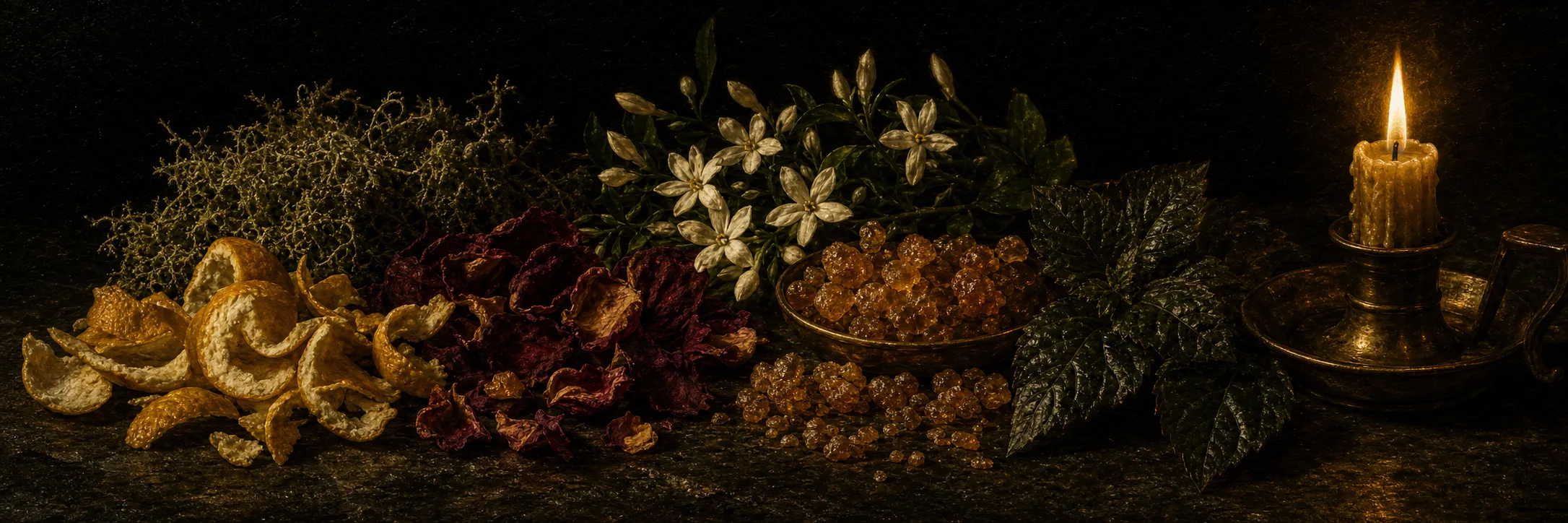
On paper the structure is neat: bergamot, grapefruit, and mandarin up top; rose, jasmine, and benzoin at the heart; oakmoss, patchouli, and labdanum in the base. In wear the opening is brighter and stranger than that suggests - a juicy, zesty citrus start sharpened by grapefruit, with mandarin keeping it full rather than watery. Many notice the rose staining the citrus from the first minutes, a dark, almost waxy cast rather than a pretty floral bloom. The arc is quick: a brief bright top, then a pivot into resins, earth, patchouli, and moss. The heart and base are where Sir becomes divisive. At its best it is a mossy patchouli-rose-jasmine construction with earth, reddish resin, and a soft animalic undertone - some even read a tobacco-like grit or aftershave vibe though no tobacco is listed. Others describe a sultry citrus woodland, mossy caves, or resin-coated flowers framed by patchouli and oakmoss. The dissenting view runs the opposite way: heavily ambered, more linear than its reputation, occasionally too gnarly or patchwork to feel unified. The honest synthesis is that Sir is not a fresh, green, sharply bitter vintage-textbook chypre; it is a darker, warmer, dirtier, resin-laden one that reads as either beautifully idiosyncratic or slightly unresolved depending on your tolerance for earthy resins and animalic texture.
Performance
Performance is generally above average and sometimes strong. Many wearers report eight-plus hours on skin, with one still catching it on the wrist around the ten-hour mark and sillage noticeable to others. There is no perfect consensus - one prominent account calls its longevity and sillage regrettably short - but the weight of reports lands on “substantial for the style”: usually a full workday scent, clearly present, denser than the average citrus-led masculine of its era. Variability is real enough that sampling is worthwhile, and a measured application reads more refined than a heavy one.
Wearing Context
This is a cooler-weather, evening-leaning fragrance with some intentional dress behind it. Wearers find it too dark for warm weather and well suited to cold conditions, which fits a composition anchored in patchouli, labdanum, oakmoss, and resinous florals. The name invites a tailored, gentlemanly image, but plenty of wearers instead picture a field worker, riding boots, and stable air - “old-fashioned masculine with dirt under the nails” more than Savile Row. Despite the masculine framing it wears as completely unisex, and women who enjoy dark earthy chypres can carry it comfortably.
Comparisons & DNA
Sir’s DNA is classic masculine-to-unisex chypre worn at a kinked angle. It is most usefully placed against a handful of references rather than a long list. It strongly recalls Geo. F. Trumper Royal in its barbershop-chypre polish, and shares a resin-musk shadow with darker resinous-animalic compositions when the citrus burns off. In the broader family it earns comparison to the seriousness and structure of Azuree, Cabochard, and Mitsouko - a statement about rank, not a dupe claim. Within the house it is triangulated against Bowmakers and Burning Barbershop: if Bowmakers is polished woodshop and Burning Barbershop is scorched fougere, Sir is muddy mossy chypre with a tailored top note, and feels more like a full perfume than an atmosphere sketch.
Reception
Reception is strong among those who already love older chypre structures - “a new classic,” “magnificent,” and in some cases the best the house has made, with a recurring emphasis on timelessness and unusual depth for the brand’s early lineup. The pushback is just as characteristic: too amber-heavy, insufficiently coherent, or too eccentric for easy wear. The dividing line is clear - it rewards lovers of dark patchouli, oakmoss, resins, and a touch of funk, and frustrates anyone expecting clean modern masculinity. As a blind buy it only makes sense for someone who already knows they enjoy earthy resinous chypres.
Versions & Reformulation
Sir appears to be discontinued rather than reformulated, and bottle-hunting persists years on. Launch coverage from Now Smell This lists it at 40 ml and $94 within D.S. & Durga’s January 2011 wave of nine fragrances, while older editorial coverage refers to it as “Sir Eau de Cologne” - a genuine discrepancy against the catalog’s EDP tag, since several launch-era sources describe the 2011 Sir as a cologne. No credible record of a revised current formula exists.
Acquisition Notes
The only firm acquisition data is archival: a 40 ml bottle at $94 at its 2011 launch, now marked apparently discontinued. There is no dependable current house retail price, so any present-day purchase is effectively a secondary-market or decant hunt rather than a standard retail buy. Documented guidance on counterfeits or batch codes for this specific release is essentially nonexistent.
Notable Facts & Lore
- Sir launched as part of a nine-fragrance D.S. & Durga expansion announced in January 2011.
- Period framing cast it as a grand chypre of choice materials aligned with “smart dress.”
- Editorial treatment likened it to a high-pitched, nostalgic musical score.
- Its lore is the irony of the name: many wearers find it more earthy, feral, and rustic than “Sir” promises.
- It has held a quiet lost-gem reputation since its discontinuation.