Louis Vuitton — Rose des Vents
Essence
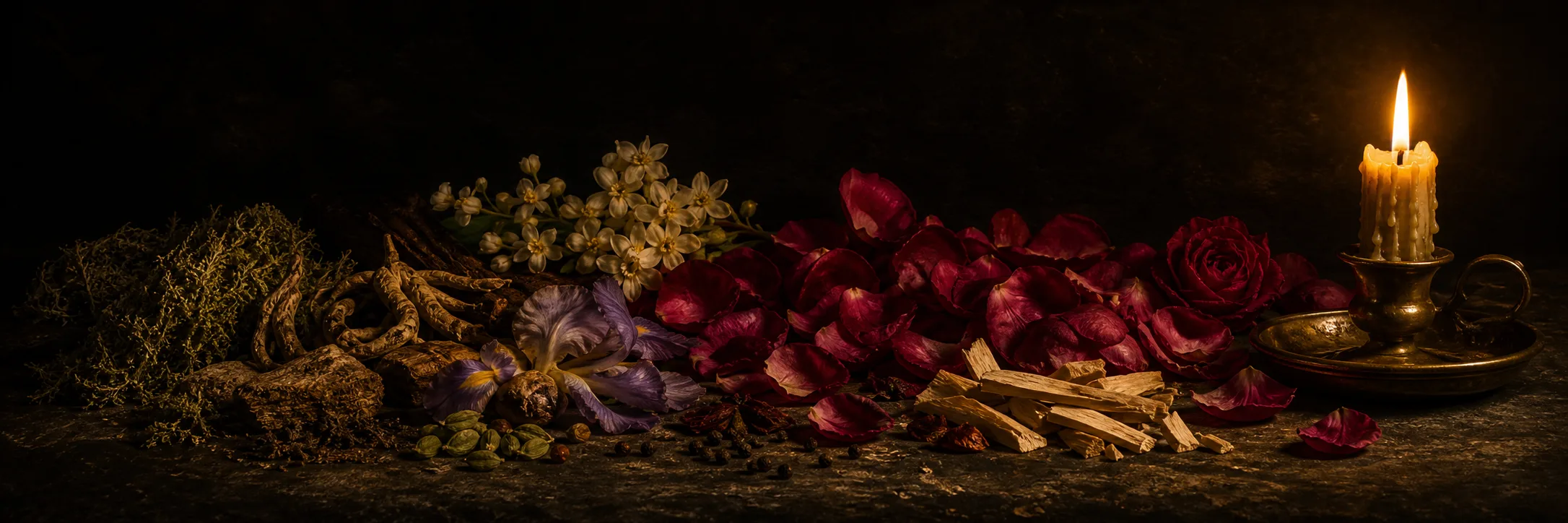
Rose des Vents is Louis Vuitton’s cool, airy, polished rose from the 2016 debut line: not a dark oud-rose, not a sugary jam rose, and not really a fluffy peony-rose either. Its identity is a fresh rosewater-rose-petal effect sharpened by pepper, cooled by iris, and dried out by cedar. That combination makes it feel both feminine and restrained-more expensive rose stem and wind than velvet bouquet. It is distinctive precisely because it resists most contemporary rose trends and stays light, clean, and slightly bittersweet.
Scent Profile
Rose des Vents opens as a bright rose with a peppery edge. Depending on the wearer, the first impression can read as fresh-sweet rose, airy fruity rose, or immediately peppered rose stem. What almost never happens is a syrupy or jammy start. The top pepper matters: several reviewers describe “thorny,” scratchy, or stem-like facets that keep the opening from collapsing into generic pink floral territory. The rose itself feels light-filled and watery rather than dense, which is why some compare it to rosewater or an especially fresh centifolia rather than to Turkish jam or lipstick-rose styles. The heart stays rose-led, but the supporting notes start to define its personality. Iris contributes coolness, bitterness, and a powder-soft restraint, while cedar lends dryness and twig-like structure. A useful way to think about the mid-stage is “freshly cut rose”: petal, stem, and air, instead of petal plus sweetness. Wearer descriptions repeatedly emphasize that this is not a jammy sweet rose and not an oud-rose. The listed osmanthus from the catalog facts is largely submerged in wear; most reviewers do not call it out at all. What they do call out are rose, pepper, iris, and cedar. The three listed roses are not usually identifiable separately in practice; they blur into one refined composite rose accord. By the drydown, the rose softens and the composition can go in one of two directions depending on skin and taste. On sympathetic skin, it becomes delicate, powdery, cedar-tinged, and graceful. On less sympathetic skin, it can flatten into shampoo-clean musky rose or “perfume counter” floral. Either way, the essential structure remains intact; this is a relatively linear scent with small tonal shifts rather than a dramatic transformation.
Performance
Performance is the most contested part of Rose des Vents. Wearer reports are moderate overall, but individual accounts range from three to four hours on skin to six, eight, or even around ten hours. Sillage ranges just as widely, from “no sillage, lovely smell” to “great projection and longevity.” The safest synthesis is moderate projection at first-within a soft personal aura rather than a room-filling cloud-followed by a close-to-moderate trail. On skin, roughly four to eight hours seems the most defensible average; on clothing, it will generally outlast that. Climate matters. Multiple reviewers place it firmly in spring and summer, and one tropical-weather report from Jakarta gave six to eight hours.
Wearing Context
Rose des Vents shines in spring and summer daywear, especially situations that reward elegant subtlety: office, brunch, gallery, daytime wedding, polished everyday use, and settings where you want rose without drama. More than one reviewer explicitly calls it workplace-suitable, and that feels right: it is feminine and refined, but not loud or emotionally heavy. It also works for rose lovers who want something lighter than patchouli- or oud-based rose perfumes. Where it falls flat is in contexts that reward sensuality, darkness, or originality-for-originality’s-sake. If someone wants a plush jammy rose, an incense rose, an animalic rose, or even a photorealistic garden rose with lots of green bite, Rose des Vents may feel too tidy.
Comparisons & DNA
The closest mainstream-niche reference is Maison Francis Kurkdjian - À la Rose. Similarity discussion points there directly, and wearer comments support the overlap. The difference is that Rose des Vents is less citrusy and less transparent-fresh in the MFK style; it is cooler, drier, and more pepper/iris/cedar shaped. If À la Rose is pink, airy petal brightness, Rose des Vents is that profile given stems, thorns, and a more tailored structure. For denser rose benchmarks, wearer reviewers compare it favorably to Frédéric Malle - Une Rose, Perfumer’s Workshop - Tea Rose, and Serge Lutens - La Fille de Berlin, while also implying that Rose des Vents is the gentler, more graceful, less forceful fragrance of the group. One wearer commenter suggested Penhaligon’s - The Favourite as a neighboring pretty-rose option, with Rose des Vents coming off as younger and fresher.
Reception
The strongest praise centers on refinement: reviewers repeatedly call it elegant, charming, graceful, and realistic in a dewy rosewater sense. Wearer reviews, while few, are notably favorable, emphasizing the woody-peppery rose structure, iris/cedar detail, and beautiful softening on skin. Some users genuinely place it among the best roses they have worn. The strongest criticism is also consistent. Many reviewers think it is too simple or too familiar for Louis Vuitton pricing, with repeated comparisons to shampoo, hand soap, or generic perfume-counter rose. Originality is the main attack line, not wearability. Performance is the second fault line: some experience excellent longevity, others get only three to four hours. That split probably explains why reception stays warm but qualified rather than ecstatic. The polarization axis is clear: if you want a light, peppered, airy rose for daily wear, Rose des Vents can feel beautifully judged; if you want novelty or gravitas, it may feel redundant. Blind-buy verdict: no. It is one of the safer roses in style, but at this price point the combination of variable longevity and debates over originality makes sampling first the more rational move.
Versions & Reformulation
Rose des Vents does have a notable variant: Flacon d’Exception - Rose des Vents, a 2022 collector’s-bottle presentation that wearer listings identify as the same perfume in a Baccarat crystal one-liter bottle designed by Marc Newson and limited to 200 pieces.
Acquisition Notes
Rose des Vents launched in 2016 in 100 ml and 200 ml Eau de Parfum, with four-by-7.5 ml travel sprays and miniature sets also announced at launch. Louis Vuitton’s fragrance line remains concentrated in the brand’s own boutiques and a few select high-end department stores, so testing in person is straightforward if a boutique is accessible. The brand also maintains a travel-spray ecosystem, which matters for a scent this airy because many users prefer living with it before committing to a full bottle.
Notable Facts & Lore
- Rose des Vents was one of the seven women’s fragrances in Louis Vuitton’s 2016 return to perfumery and, like Apogée, was fronted in campaign material by actress Léa Seydoux.
- The name itself carries more interpretive weight than most perfume names: wearer reviewers and supporting wearer reports link “rose des vents” to the wind rose or compass rose, which fits the house’s travel-inflected.
- That “compass rose” meaning also helps explain the scent’s mood.
- Writing around Rose des Vents often describes it as breezy, airy, and emotionally cool rather than romantic in an overt way.
- It has a small but persistent niche of admirers who see it as old-world elegant-one wearer reports poster described it as transporting them to a luxurious Parisian rose garden from another era.