Sospiro Perfumes — Dolce Sonata
Essence
Dolce Sonata is a 2024 fruity-floral-gourmand from Sospiro, the Italian niche house founded by Sergio Momo (the creator of Xerjoff), and the third release in the brand’s red-velvet Red Collection after Maraschino and Traviata. The concept is a juicy raspberry-apricot opening that evolves into florals shot through with incense over a cotton-candy-sweet base. Its real-world identity is more contested than its marketing: it is widely heard as a richer, more mature take on the famous Erba Pura fruity DNA, and it is one of the more polarizing recent Sospiros, with the incense note splitting opinion sharply.
Scent Profile
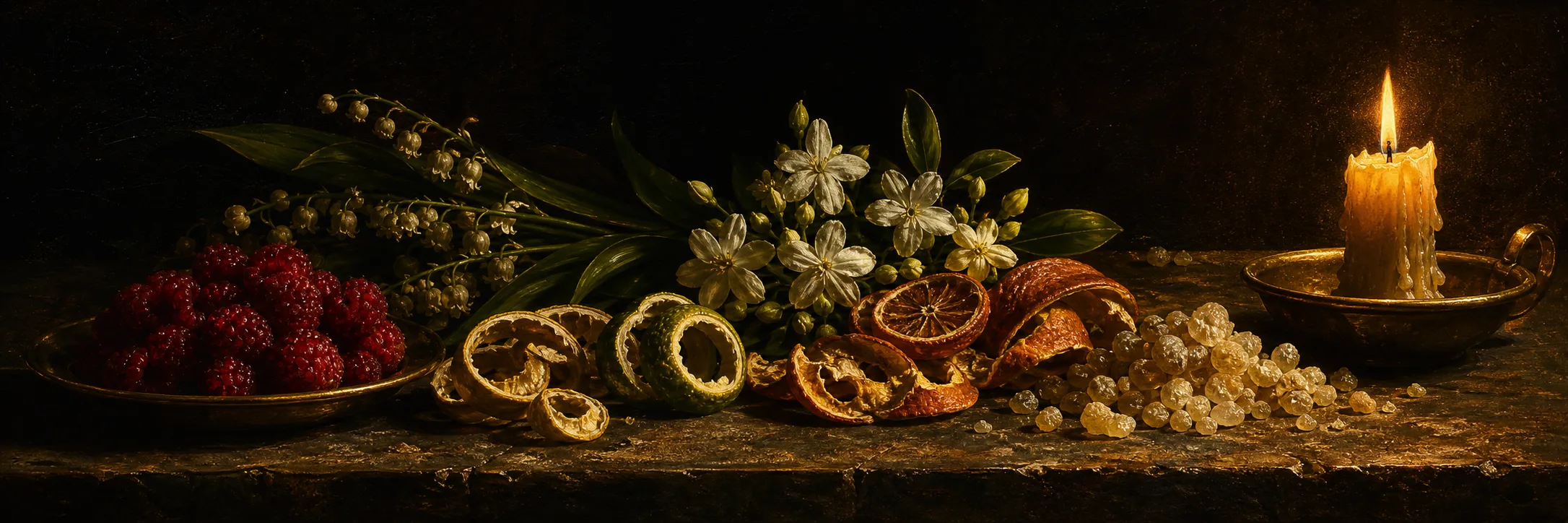
The opening is the most-praised part of the fragrance: a bright, juicy, slightly tart burst of raspberry and ripe apricot lifted by citrus (lime, bergamot, sweet orange). The red fruit reads natural and genuinely enjoyable, and most wearers wish it lasted longer than it does.
The transition is where opinion fractures. The floral heart — osmanthus, jasmine, rose and lily of the valley — can come across as heavy or cloying to several wearers, and an incense note rises and grows steadily more prominent. The base then pairs that smoky incense with patchouli and a fluffy cotton-candy sweetness.
The defining tension is fruit-and-sugar against smoke, and how it resolves depends on the wearer. At its best, the incense reads as a soft, balancing counterweight to the sweetness, giving a “sweet and smoky” effect that holds together. At its worst, the fruit-floral-incense combination is heard as a harsh cacophony that never quite balances out. The fragrance is decidedly non-linear: the shift from juicy fruit to smoky-floral-sweet is the whole experience, and the cotton candy and individual florals stay more conceptual than distinctly legible.
Performance
Performance is strong, consistent with the Sospiro house reputation for long-lasting, high-projection juice. Wearers report long longevity and big sillage, with the broader line generally landing in the eight-to-twelve-hour-plus range. Because the sweetness-plus-incense can become heavy, the standard advice is to apply sparingly; expect above-average longevity and noticeable projection.
Wearing Context
The bright fruity-citrus opening suits spring and warmer daytime wear, while the incense-patchouli-cotton-candy base pushes the fragrance toward cooler weather and evening — wearers split it across both and call it versatile, leaning sweet and smoky for fall and night. It is genuinely unisex, though feminine-leaning given the fruity-sweet-floral core. Because the incense and sweetness are loud and polarizing, it suits social and expressive contexts better than conservative office wear.
Comparisons & DNA
The dominant comparison, made repeatedly and even echoed in marketing, is to the Erba Pura fruity-musk DNA: Dolce Sonata is positioned as a more mature, richer, less sickly-sweet cousin with more floral heart and incense depth. Several wearers go further and call it a near-match to Sospiro’s own Sekushi No. 7, citing it as evidence the house reworks its accords. In the far drydown one reviewer reaches for Chanel Coco Mademoiselle, while another places the overall effect between Byredo Reine de Nuit and a tobacco-mandarin accord. Within the Red Collection itself it is the fruity-incense sibling to the cherry-led Maraschino and the fruit-cocktail Traviata.
Reception
This is one of the more divisive recent Sospiros, split-to-negative in aggregate. The raspberry-apricot opening earns near-universal praise. The criticism is pointed and recurring: the incense is called out of place, even “the ugliest incense note ever,” and the mid-to-base is described as a harsh cacophony or as sticky, artificial dried fruit. Value sentiment is the other major sore point, with several wearers finding the high price unjustified for the result. On the positive side, fans rank it among their top Sospiros, praise the incense-and-sweetness balance, and report compliments. The blind-buy verdict is firmly sample-first: the fruit-to-incense transition and the price are the two things people most often regret.
Versions & Reformulation
Dolce Sonata is a single 2024 composition with no known reformulations, still in production. It is the third fragrance of Sospiro’s Red Collection, after Maraschino and Traviata, previewed across industry fairs before release. One credit note worth flagging: the catalog and dominant sources credit perfumers Salah Al Zarooni and Mariaceleste Lombardo, while at least one retailer instead attributes it to Christian Provenzano and Salah Al Zarooni. Al Zarooni and Lombardo are the primary credit.
Acquisition Notes
This is a full-price niche fragrance, retailing at $326 for 100 ml, sold as a 100 ml eau de parfum in Sospiro’s signature red velvet-wrapped bottle. The single standard size is 100 ml. It is current and in production through the brand’s official channels and authorized niche retailers. Given the polarizing profile and high price, sampling via a decant first is strongly advisable before a full-bottle commitment. Buy from authorized channels to ensure authenticity.
Notable Facts & Lore
- Sospiro frames Dolce Sonata as an homage to classical music, imagined as a sunlit garden where apricot and raspberry trees sway with citrus.
- It is the third release in the brand’s Red Collection, themed in red velvet, after Maraschino and Traviata.
- Sospiro was founded in 2011 by Sergio Momo; despite the shared founder, the house is stated to be distinct from the Xerjoff portfolio.
- A recurring criticism attached specifically to this scent is the “clone house” accusation, that Sospiro reworks its own and Xerjoff’s accords, most often via Erba Pura and Sekushi No. 7 comparisons.