Sospiro Perfumes — Tenore
Essence
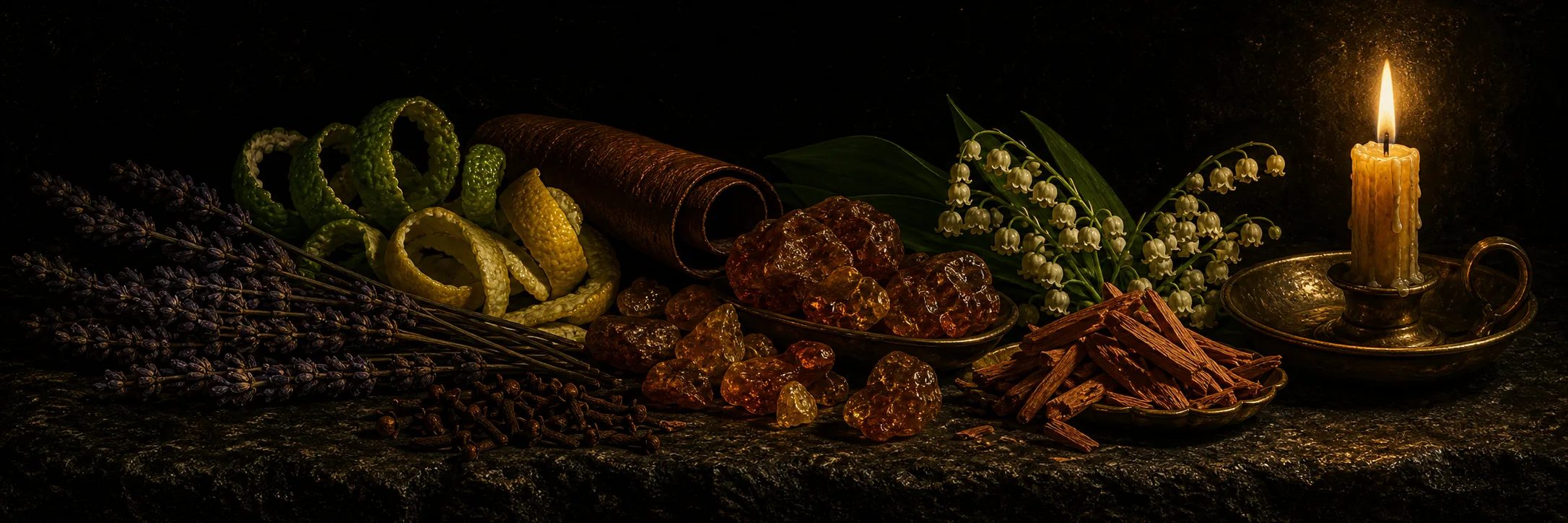
Tenore is a 2022 woody-spicy-leather Eau de Parfum from Sospiro, the operatically-themed sister house to Xerjoff (both founded by Sergio Momo). Named for the tenor voice - the clarion lead of the opera - it’s pitched as one of the house’s most “artistic” and serious compositions: a dry, dusty, spicy-resinous affair that opens with an incongruous flash of lavender and lemon before plunging into leather, clove, incense, patchouli and amber. Its defining feature in discussion is its close kinship to Amouage Jubilation XXV, which dominates nearly every conversation about it.
Scent Profile
The opening is aromatic and slightly camphorous - fresh lavender and zesty lemon that several wearers find jarring or “all over the place” at first, before the composition settles. Within roughly 20 minutes it transforms: spicy notes (clove prominent, plus what many sense as additional unlisted spice), resin and leather build into what one lead reviewer calls a fragrance “with great depth of soul.” The heart is dry, dusty and spicy; lily-of-the-valley adds a thin sliver of dewy freshness that keeps it from going entirely dark. The base is the payoff: woods, patchouli, amber and a musk that several describe as faintly “pissy”/animalic, resolving into a soft, sweet-spicy Jubilation-like drydown. One wearer mapped it neatly: “Opens aromatic-camphorous, maybe green. Transitions sweet & woody (Royal Oud?). Finishes Jubilation 25.” Notably non-linear - its transformation from rocky opening to elegant drydown is its main narrative. Signature accord: dry, dusty leather-incense over spicy amber-wood.
Performance
Reports are mixed but lean toward good. Multiple wearers call sillage “pretty strong” and longevity “solid,” and one reviewer cites “strong sillage and longevity.” A dissenting reviewer who owns much of the house says “it does not give me the projection/sillage that I have came to know and love from the house,” calling it an “overlooked gem” that underperforms relative to Sospiro’s louder offerings. The drydown is widely described as introspective and close-wearing - a “depth of soul” rather than a room-filler. Best in cool weather; a reviewer explicitly recommends it for “the cooler seasons.” Several note it can be “tiring on the nose” if oversprayed given its dry, dusty density - moderate application advised.
Wearing Context
A fall/winter, cool-weather fragrance, leaning toward evening and formal or contemplative settings - “black-tie affair, an important meeting, or a quiet night,” per retail framing, though that’s marketing. wearer framing is darker and more atmospheric: “definitely not for people afraid to walk in the woods after the sun goes down.” Skews masculine within its unisex billing (one owner calls it “the most masculine” of the Jubilation-adjacent trio he compared). Not an office or daytime scent for most; its spicy-leathery seriousness reads as deliberate and mature.
Comparisons & DNA
The overwhelming reference point is Amouage Jubilation XXV, cited in nearly every substantive review. The nuance the wearers draws: “Jubilation is an orchestra of notes while Tenore is an ensemble” - i.e., Tenore is the leaner, drier, more linear cousin. A reviewer who loves Jubilation 25 found Tenore “somewhat close to it” but noted “the slightly sweet, fruity vibe in Jubilation is completely absent here. Instead, it has a much drier, dusty, spicy character.” One owner who compared Tenore against both Jubilation XXV and Jubilation 40 concluded the Jubilations “are lighter and have more patchouli” while in Tenore “the main player is the Amber.” Other reach-points raised by wearers: By Kilian / CH Golden Myrrh (myrrh-sweetness off the cap), Initio Oud for Greatness (dry spicy saffron-cedar), and the Xerjoff Erba Pura cedramber accord - though one reviewer found Tenore “much more bearable” than those. DNA: dry leather-incense-amber oriental in the Jubilation lineage.
Reception
Polarized in an interesting way: many wearers report the scent “growing on them.” A common arc is initial indifference or dislike of the opening, followed by strong appreciation of the drydown - “The first time I tried it, I actually didn’t have anything to say about it… I was wrong, Sospiro has done it again.” Praise: quality, depth, elegance, natural-smelling materials, and an “artistic”/“extreme” character (one reviewer calls it “perhaps the most artistic creation of Sospiro”). Criticism: it can read as “chaotic,” derivative of Jubilation (“This one is kind of all over the place. I’d just get jubilation”), “tiring on the nose,” and a value question given the Jubilation comparison at similar price. Blind-buy verdict: risky given the difficult opening and the strong “just buy Jubilation” faction - sample first, especially if you already own Jubilation XXV.
Versions & Reformulation
Single composition, no known reformulations. Some listings give the heart as lily-of-the-valley and the base as woodsy/patchouli/amber/musk, while others reorder or substitute “oriental” for one base note; these are listing inconsistencies, not separate formulations.
Acquisition Notes
This sits in Sospiro’s upper-niche price tier and is sold as an eau de parfum. Catalog pricing lists it at $326 for 100 ml. Sample first when the dossier highlights polarizing sweetness, leather, oud, or musky projection. Buy through official or established niche retail channels; for older presentations, check packaging and batch-code consistency as a basic authenticity precaution.
Notable Facts & Lore
- The name refers to the tenor voice, matching the Classica collection’s musical theme.
- The brand describes Tenore as sensitive and expressive like a singer hitting high notes.
- One memorable wearer image compares it to a freshly rosined bow or rosin powder.
- It was composed by Christian Provenzano, a senior perfumer associated with CPL Aromas.
- No celebrity association or viral moment is documented; Tenore’s lore is mainly the musical concept and perfumer context.