Sultan Pasha Attars — Chypre Chrysantheme
Essence
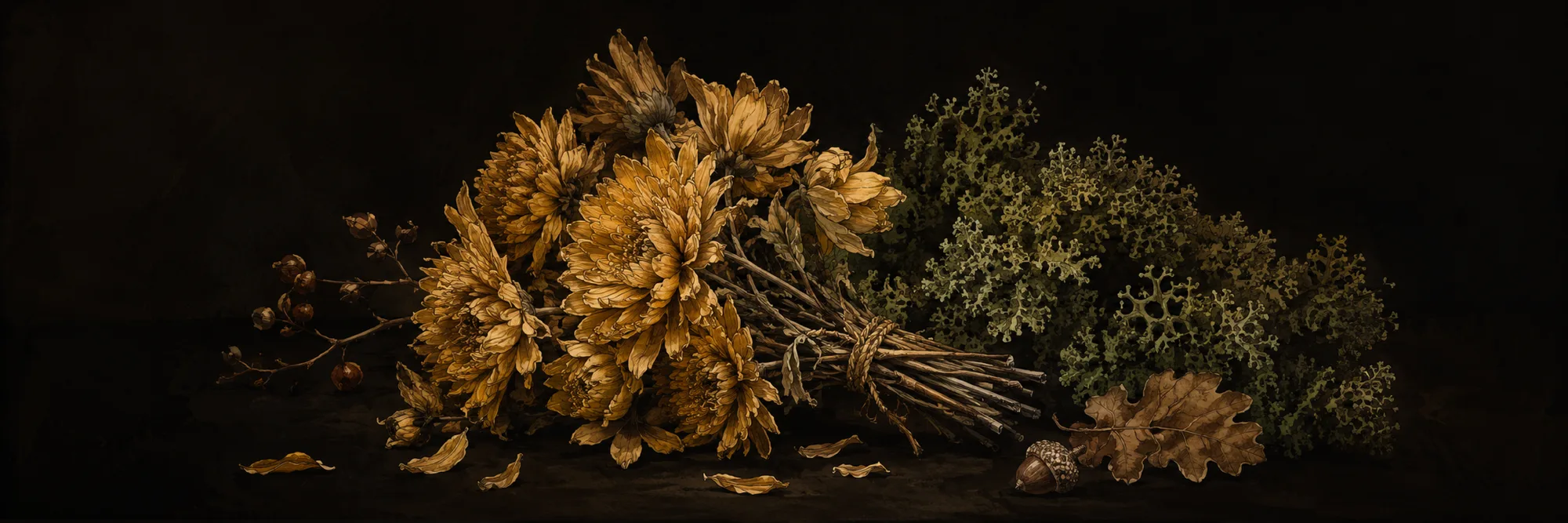
Chypre Chrysantheme is Sultan Pasha’s 2019 attar in his “Classical Occidental” line — a deliberately French-school chypre built around the rarely-used chrysanthemum absolute. It pairs that note with a multi-rose accord, a coffee-honey-clary-sage heart, and a classical oakmoss-civet-castoreum chypre base, for a bitter, herbal, autumnal composition. The central conceit is the marriage of two of perfumery’s most autumn-coded ideas: an unusual, vegetal flower and the chypre genre itself.
Scent Profile
The opening is sharp and green: a bitter slap of lemon verbena, lime, lemon and bergamot, threaded with a pointillist dot of rosa alba and jasmine. Within minutes the chrysanthemum surfaces — herbal, hay-like, slightly chamomile and turned-loam, far more vegetal than floral. It is, as one critic put it, the anti-spring flower.
The heart is the composition’s intellectual core: golden chrysanthemum over a velvety bed of oakmoss, with a rose duo of damascena and centifolia, hyacinth, lily-of-the-valley and a small coffee absolute supplying soft supporting tones. Clary sage and honey add a procession of herbal, waxy garden smells, and beeswax binds the green and floral elements together without sweetening them.
The drydown is classically chypre and slowly animalic: oakmoss, aged patchouli, civet, castoreum, labdanum, styrax, frankincense, Mysore sandalwood, bourbon vetiver and white ambergris settle into a dusty labdanum undertow that pulls everything into the shadows. The civet, musk and castoreum grow more assertive over time, nodding to the elegant animalism of vintage chypres, while a small seaweed note adds a mineral-marine tang that some wearers detect late.
Performance
Performance is high but not extreme. Longevity averages ten to twelve hours, and projection is moderate-to-soft, consistent with the genre — classical chypres are not loud fragrances. The structure reads as dense and muscular rather than diffusive. A consistent observation is that the attar only shows its true character on skin after the first hour; the citrus-verbena top can mislead first-time wearers into expecting a fresher chypre than they ultimately get.
Wearing Context
Autumn is the obvious season — one critic invoked a tweed suit for the chypre-chrysanthemum-fall trinity. It works in cooler weather and is dampened by humidity, where the bitter-herbal greens flatten. It is unisex, with a slight lean toward the formal-feminine register of vintage chypres, though the animalic civet-castoreum drydown reads masculine and many male wearers cite it as a sleeper. It is a serious, sit-and-think fragrance rather than a sociable one, rewarding focused wearing over casual dabbing.
Comparisons & DNA
The clearest cousin within Pasha’s own catalog is Encens Chypre, which Chypre Chrysantheme follows in a woodier, dustier direction. Its sibling release, Chypre Narcisse, is darker and more animalic, leaning into narcissus, truffle and leather, while Chypre Chrysantheme is the more refined and floral of the pair. Outside the line, the strongest comparison is Serge Lutens De Profundis, the other prominent chrysanthemum-led niche perfume — though De Profundis reads floral-green where this is all wood, pith and dusty oakmoss. Vintage Diorella and vintage Mitsouko are the genre touchstones it descends from. Because chrysanthemum absolute is rare and expensive, no mass-market clone exists.
Reception
Reception has been among the strongest in Pasha’s recent output. Editorial reviewers placed it on Best of 2020 lists, with critics calling it one of the most sophisticated, gorgeous chypres around — an incredibly realistic chrysanthemum top swirling around three roses, green stem and velvety resins, finished with a dollop of civet — and describing the overall effect as pure grace. It resonated with editors precisely because it sits at the intersection of classical structure, rare materials and a genuine concept, and because the attar format sidesteps the modern reformulation limits that have thinned out the chypre genre. Wider reception is more divided: some wearers find the chrysanthemum too herbal, dank or wet for them, and the autumnal green density is challenging for anyone used to brighter florals. Among chypre devotees and editorial reviewers, however, praise is nearly unanimous.
Versions & Reformulation
Chypre Chrysantheme is sold in 3 ml form and has not been formally reformulated. There is no spray-format release; the 2025 Sultan Pasha Perfumes alcohol line, made with co-perfumer Christian Carbonnel, included other titles but not the chypres. Published note lists vary slightly across sources — some cite kyara incense and frankincense in the base while Pasha’s own list emphasises olibanum and not kyara — and minor batch variation may exist, but the structural composition has stayed consistent.
Acquisition Notes
The attar sits at one of the lower price points in the catalog, around $69 for 3 ml as of recent listings, making it one of the most accessible “Classical Occidental” pieces. It is sold direct from the house and is among the more reliably in-stock pieces, since its rare material is the chrysanthemum absolute rather than a supply-constrained oud lot. The multi-attar sample set typically includes it. Because the reveal is slow, the firm recommendation is to wear a sample on skin for a full day before committing; the citrus opening is not representative of where the composition goes.
Notable Facts & Lore
- It belongs to what is described as Pasha’s Classical Occidental line, drawing on French perfumery’s mid-20th-century structural codes rather than the Middle Eastern mukhallat idiom.
- The chrysanthemum absolute is materially expensive and rarely encountered commercially; this is the only Pasha composition centred on the note.
- The drydown has been likened to the feral scent of a freshly killed fox in a hedgerow, a descriptor that has stuck in discussion of the attar.
- A small kyara incense reference appears on some published note lists, though whether it is genuine kyara or a kyara-styled co-distillation is unclear; the frankincense is more reliably present.
- A seaweed (fucus) absolute, used in only a handful of Pasha compositions, contributes the late mineral-marine note.