Yardley London — English Honeysuckle
Essence
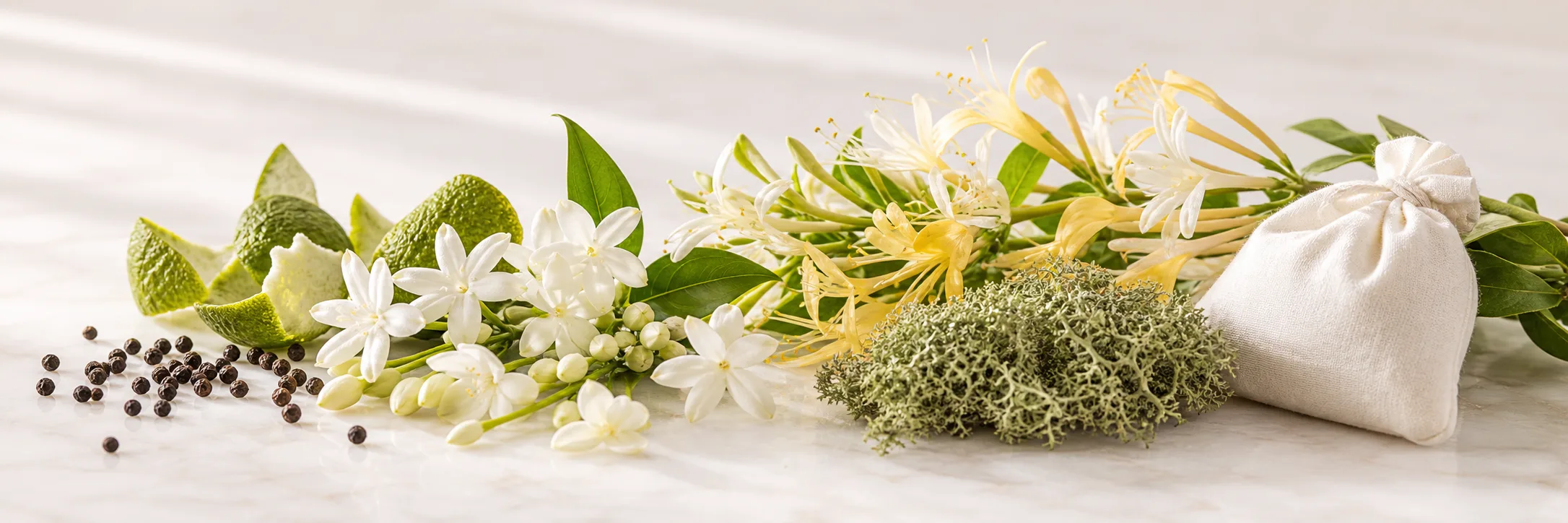
English Honeysuckle is a quiet, inexpensive spring floral built more like a light green floral-cologne than a lush nectar-drunk soliflore. The most consistent wearer picture is of something bright, airy, fresh, and easy to live with: citrus and pepper at the top, a soft honeysuckle-jasmine floral center, then a clean musky-mossy base that keeps it from turning sugary or syrupy. Straightforwardness is part of the point here; even the one detailed wearer feedback review frames it as cheerful, uplifting, and especially useful as a layerer rather than as a dramatic standalone statement.
Scent Profile
The published structure is simple and that simplicity seems to define the wear. wearer feedback and wearer feedback both place bergamot and black pepper up top with honeysuckle present in the opening, then move to a largely jasmine-centered heart before the moss-heliotrope-patchouli-musk base; that conflicts slightly with the catalog’s heart placement for honeysuckle, but both wearer databases agree the flower reads early rather than waiting for a late bloom. wearer feedback’s accord map leans white floral, citrus, fresh spicy, powdery, and mossy, while wearer feedback classifies it more tersely as fresh, green, floral, and citrus. Put together, that points to a fragrance that opens with cool brightness and a little peppery edge, not with thick indolic sweetness. What seems most likely on skin is a short arc from citrus-pepper sparkle into a clean white-floral center, then a lightly powdery, soft-green drydown where musk and moss do more work than patchouli. The wearers describes it as light, fresh, uplifting, and non-cloying, which fits the accord data and also suggests that if you go in expecting photorealistic vine-and-nectar honeysuckle, this will smell cleaner and more perfumey than that. Heliotrope in the base likely adds a faint cosmetic softness rather than obvious almond; patchouli sounds submerged rather than earthy-dark. In other words, the signature accord is less “honeysuckle absolute” and more “freshly laundered spring floral with a honeysuckle tint.” That same reviewer also says English Honeysuckle comes alive when layered with sweeter fragrances, specifically mentioning La Vie Est Belle-style profiles, which is useful context for how transparent the composition probably is.
Performance
Performance evidence exists, but it is thin and somewhat contradictory. wearer feedback’s voting skews toward weak longevity and overwhelmingly intimate sillage, with spring and daytime usage dominating the “when to wear” chart. wearer feedback, by contrast, tags longevity as above-average, while the only detailed review on the page says the scent is “not that strong” and its projection is limited, though the wearer still gets a decent amount of wear-time from it. With so few voters and only one substantive longform review, the safest read is that English Honeysuckle wears softly, close to the body, and is unlikely to project with any force; whether it fades quickly or lingers quietly seems to depend on skin and expectations. For practical use, this looks like a spray-liberally fragrance if you want to smell it on yourself, and a good candidate for fabric or layering rather than a one-spray minimalist approach. That is a practical reading from the weak/intimate wearer feedback voting plus the layerer-oriented review, not a broad consensus built from deep testing data.
Wearing Context
The wearer signal is unusually clear on season and timing even if it is small: spring first, summer second, daytime overwhelmingly ahead of night. That makes sense for the profile. The pepper and bergamot keep the opening brisk, the floral core stays light rather than narcotic, and the moss-musky base sounds tidy rather than plush. This is the sort of fragrance that fits errands, workdays, study sessions, casual lunches, and low-stakes social settings where “smells clean and pleasant” is more useful than “turns heads.” Socially, it seems to skew gentle, nostalgic, and non-threatening. The wearer feedback review explicitly associates it with spring walks and comforting memories, which tracks with a fragrance that wears as safe and quietly cheerful. As a practical reading rather than a consensus judgment, this is probably wrong for anyone looking for sultry white florals, nocturnal sweetness, or dramatic projection, but very right for someone who wants a clean spring floral that feels easy rather than effortful.
Comparisons & DNA
Reliable direct comparisons are scarce. The most concrete wearer use-case is not a smellalike claim but a layering one: one wearers explicitly likes pairing it with La Vie Est Belle-style sweetness to give the composition more bloom and sophistication. That tells you more about its function than about its exact twin: English Honeysuckle behaves like a lift-and-brighten floral, not like a dense self-sufficient bouquet. Beyond that, the safest thing to say is that it belongs to the family of clean, inexpensive spring florals rather than to the smaller world of convincing honeysuckle soliflores. It does show up in wearer feedback recommendation threads when people ask for honeysuckle fragrances, but there is no settled dupe consensus and no repeated comparison to a specific prestige perfume. So the broad DNA is “fresh floral-cologne with honeysuckle coloring,” not “reference-standard honeysuckle realism.”
Reception
Reception is modest but more positive than the raw wearer feedback sentiment might initially suggest. Available wearer feedback suggests a middling favorable sentiment from a small response pool, which reads as respectable rather than beloved, while wearer feedback’s accessible material is based on a much smaller pool but is notably warmer, with the fragrance described there as affordable, uplifting, non-cloying, and emotionally comforting. The lack of multiple detailed reviews means there is no deep polarization to map; this is not a hotly debated perfume so much as a lightly documented one. The clear praise points are affordability, ease, spring brightness, and layering usefulness. The clear caution points are strength and expectation management: if you want a realistic, saturated honeysuckle or a perfume that announces itself, the available wearer evidence does not support that outcome. As a practical blind-buy verdict, it looks low-risk only if what you want is a soft, clean, budget spring floral; it is not a smart blind buy for someone chasing lush white-floral drama or strong performance.
Versions & Reformulation
Single composition, no known reformulations.
Acquisition Notes
Whitelisted acquisition evidence is limited but directionally useful. wearer feedback explicitly lists the fragrance as still in production, and the strongest qualitative signal around buying is that it is considered “an incredibly affordable option” in the only longform review currently accessible there. No reliable whitelisted evidence surfaced for bottle sizes, decant norms, counterfeit prevalence, or batch-code decoding. Because the scent wears softly and seems to work best as a spring-day reach or layerer, the main acquisition consideration is less authenticity risk than expectation risk: buy it if you want a cheap, bright, easy floral; skip it if you want a statement honeysuckle. That framing is an inference from the profile and reception, not a formal market consensus.
Notable Facts & Lore
- Two small metadata caveats matter for a fragrance agent.
- First, wearer feedback credits Jean-Charles Mignon as perfumer while the catalog lists the perfumer as unknown.
- Second, both wearer feedback and wearer feedback place honeysuckle in the opening rather than in the heart, so if a user describes it as a bright floral opening rather than a later floral bloom, that is consistent with the main wearer databases.
- Beyond that, no launch story, viral moment, or house-documented lore surfaced in the accessible whitelisted sources.