Acqua dell'Elba — Eau de Parfum Napoleone Bonaparte
Essence
Napoleone Bonaparte is a 2014 limited-edition masculine EDP created by Acqua dell’Elba to mark the bicentenary of Napoleon’s 1814–15 exile on Elba. It is a fresh-aromatic Mediterranean fragrance — a citrus-and-rosemary opening leading into a green, watery seaweed heart and a dry, herbal, oakmoss-cypress base — conceived by the house as “fresh yet decisive, intimately masculine, deep and aromatic,” mirroring the complexity it ascribes to Napoleon. More refined, greener and more “elegant” than the house’s flagship Classica, with notably better performance.
Scent Profile
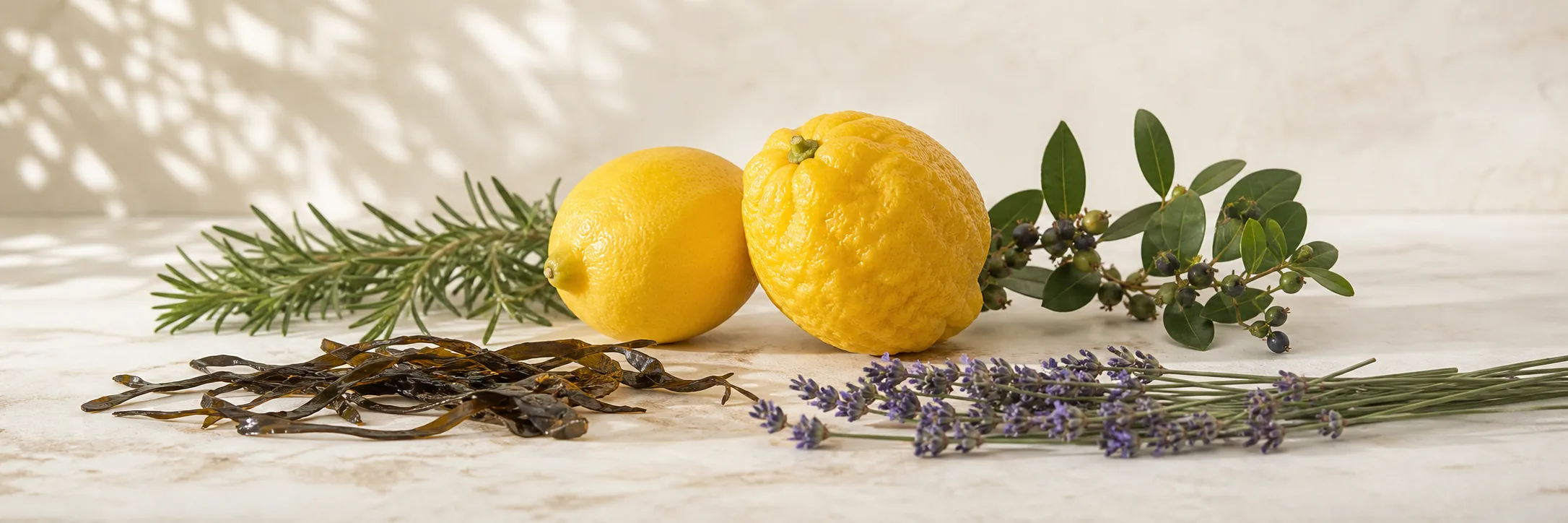
This is one of the two entries with a fully documented pyramid: top lemon, citron, rosemary, myrtle; heart seaweed, lavender, juniper; base cypress, mastic/lentisque, oakmoss. The opening (first ten to twenty minutes) is a bright but not screechy citrus — lemon and citron — wrapped immediately in aromatic herbs, with rosemary and myrtle giving a green, slightly resinous Mediterranean-scrub character rather than a clean cologne citrus. Into the heart (one to three hours) the fragrance turns watery-green: a sea-algae/seaweed note is the defining accord and is clearly perceptible, with one wearer notes wearer noting “a sea algae note, but that should come as no surprise as seaweed is officially listed as a middle note.” Lavender and juniper sit alongside it, adding a clean herbal-gin facet that keeps the marine element from turning fishy or sweet. The overall heart effect is “fairly sweet, watery-green yet elegant and exquisite,” per wearer description — sweeter and softer than the men’s Classica despite the shared marine DNA. The drydown (three hours-plus) is the most substantial part and what separates it from the lighter house staples: cypress, mastic (lentisque) and oakmoss give a dry, woody, faintly chypre-leaning herbal base — the Mediterranean maquis rendered as a soft, mossy-woody skin scent. The signature accord is the seaweed-over-herbal-moss pairing; perceptible throughout are the citrus (early), the algae and juniper/lavender (heart), and the dry oakmoss-cypress (late). The myrtle and mastic are more textural than loud. Structurally it shows real evolution rather than linearity — a citrus-aromatic → watery-green → dry-mossy arc — and is the most “composed” of the house’s aquatics in wearer estimation.
Performance
Performance is markedly better than Classica and is treated as a genuine strength. wearer notes wearer voting puts longevity around qualitative and sillage around qualitative — moderate but, crucially, more reliable than the house’s lighter scents. Wearers describe longevity as “very good” and sillage as “good but not atomic … you don’t want to suffocate people,” which several explicitly count as a plus for a warm-weather fragrance. Projection is moderate and intimate-leaning after the first hour; on skin expect roughly 6–8 hours for most wearers, with the dry oakmoss-cypress base clinging close late; on clothing longer still. It performs best in warm spring and summer conditions and in heat/humidity, where the marine-herbal accord reads as fresh; it is less suited to cold. Application strategy: a moderate application is sufficient given the better-than-house-average tenacity; the EDP concentration and resinous base carry it without overspraying.
Wearing Context
A warm-weather daytime-to-early-evening scent: spring and summer, casual through smart-casual, and well suited to anyone wanting a Mediterranean fresh-aromatic with a touch more depth and “maturity” than a standard blue freshie. Wearer framing repeatedly tags it as skewing slightly older/“elegant” — some reviewers report being told “this is a scent for older men,” a perception the wearer pushed back on, indicating a mild age-up social skew rather than a hard rule. Where it shines: hot days, seaside and holiday settings, office-safe wear, fans of green-marine and light-chypre profiles. Where it falls flat: cold weather and contexts wanting a loud, sweet, modern crowd-pleaser. Its restraint is the point — refined rather than attention-seeking.
Comparisons & DNA
Within the house it is essentially an elevated, greener, better-performing relative of Classica Men, sharing the seaweed-citrus core but adding lavender/juniper and a dry oakmoss-cypress base; it also relates to Blu Men and Arcipelago Men in the Mediterranean-aromatic family. wearer notes’s “reminds me of” cluster points to mainstream masculine freshies and aromatics rather than niche marines — Bleu de Chanel EDP, Dior Sauvage Elixir, Ralph Lauren Romance for Men, Lancôme Hypnôse Homme, Lacoste L.12.12 Blanc, Antonio Banderas The Icon Supreme, and Molinard Iles d’Or — suggesting wearers read it as a more natural, herbal cousin of the modern blue/aromatic genre. In the broader marine-herbal lineage it sits near Creed Erolfa and the salty-myrtle Mediterranean school (Acqua di Parma Mirto di Panarea, Profumum Acqua di Sale) without being a close clone of any. No Lattafa/Armaf/Maison Alhambra clone exists, unsurprising given its limited-edition status. Its lineage is the house’s own marine-aromatic DNA, dressed up for a commemorative release.
Reception
documented reception is limited and rests almost entirely on wearer notes/wearer notes wearer sentiment — no documented critic reviewed it. Among those who tried it, sentiment is positive: praise centers on elegance, blending, “high quality ingredients,” very good longevity, and well-judged sillage; one wearer is “glad I grabbed a full bottle … since it may be difficult to find these days,” reflecting its limited-edition scarcity. The main friction points are availability (it sells in restricted windows) and the age-perception debate (the “for older men” framing some reviewers report and dispute). Polarization is mild compared with Classica — fewer performance complaints, since it lasts better. “Blind buy?” verdict: lower-risk than the house’s lighter scents for fans of green-marine aromatics, but its limited-edition distribution makes sampling harder, so most buyers commit on reputation or in-boutique testing. Treat reception as documented consensus only; no documented documented review was found.
Versions & Reformulation
Napoleone Bonaparte is a limited, numbered edition. Per the house’s “Limited Edition” materials, the 2014 pair was “created in a limited, numbered edition of 2014 items for men and 2014 for women,” sold within a defined window tied to the bicentenary of Napoleon’s Elba reign — from 11 April 2014 (anniversary of the Treaty of Fontainebleau) to 26 February 2015 (anniversary of his escape from the island). A more exclusive “Bicentenario” sub-series of 200 numbered pieces for men (and 200 for women) paired the fragrance with a lithographic reproduction of cinema-poster illustrator Silvano “Nano” Campeggi’s drawing, priced at €84 (per Elbareport), with Campeggi signing the lithographs in person at the Sala della Gran Guardia in Portoferraio on 16 May 2014 from 6pm. The pair was then re-issued as a limited edition in 2021 to mark the bicentenary of Napoleon’s death (5 May 1821), again with the Campeggi artwork on the bottle. These are reissues of the same composition rather than reformulations; no scent reformulation is documented in documented sources.
Acquisition Notes
Pricing is niche/limited-edition: the standard limited edition sat around the house’s normal EDP tier, with the special “Bicentenario” + lithograph set at €84 (per Elbareport). Because it is a limited, numbered release sold in windows (2014–15, reissued 2021), availability is the principal obstacle — it is bought through Acqua dell’Elba boutiques and official e-boutiques during release periods, and otherwise sought secondhand. Bottle sizing follows the house EDP norms. The US decant trio (Surrender to Chance, Scent Split, MicroPerfumes) is not confirmed to carry it; sampling is difficult outside the house’s own channels. Counterfeiting is not documented, though the numbered/collectible nature means buyers should verify edition numbering and Campeggi artwork on secondhand purchases. Buy authentic from the house during a release or from reputable resellers verifying numbering.
Notable Facts & Lore
- The fragrance marks Napoleon’s 1814-1815 exile as Emperor of Elba.
- The original edition was limited and numbered, with a paired feminine Paolina release.
- Silvano Nano Campeggi’s Napoleon artwork appears on the aquamarine-ground bottle presentation.
- A 2021 reissue marked the bicentenary of Napoleon’s death, not a reformulation.