Swiss Arabian — Amaali
Essence
Amaali is a small concentrated perfume oil from Swiss Arabian: ornate, inexpensive, soft-spoken, and built around a clean powdery floral impression rather than the juicy fruit pyramid its note list suggests.
Scent Profile
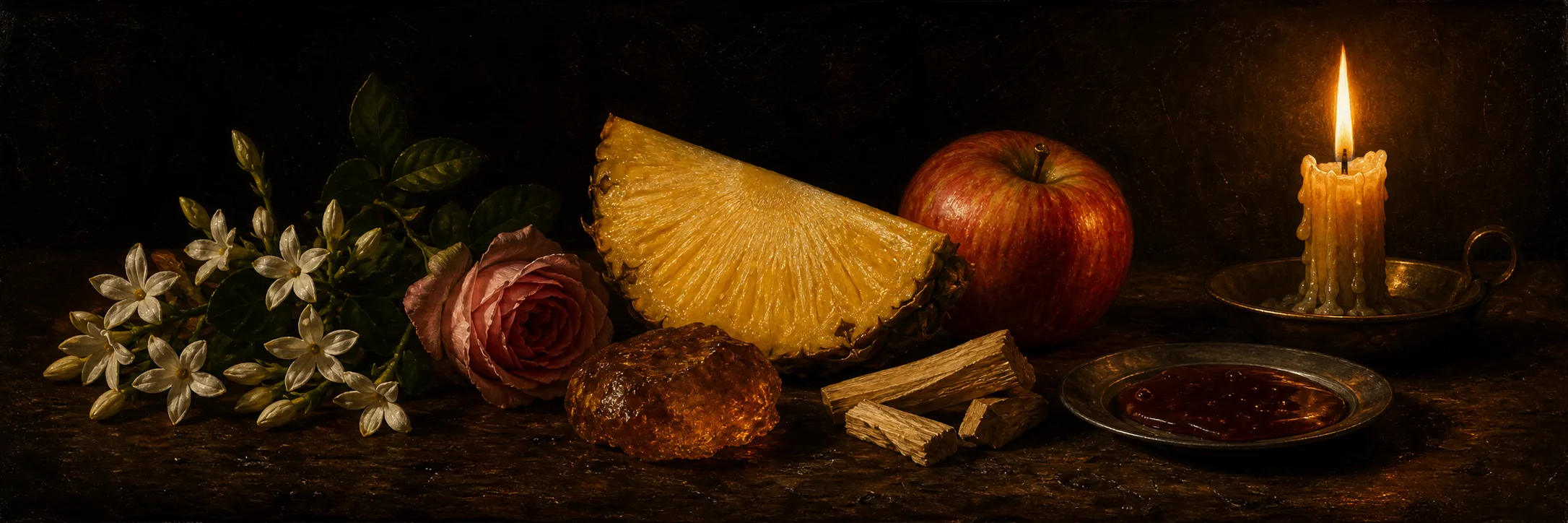
On paper Amaali opens with pineapple, lemon and apple, moves into rose and jasmine, and settles over cedarwood, sandalwood, musk, vanilla, caramel and amber. On skin, the top notes tend to blur quickly into a clean floral-powder effect. The fruit is present as lift more than flavor; anyone expecting a loud tropical opening may miss the point of the fragrance.
The heart is musky, pale and soapy. Rose and jasmine sit inside a soft powder texture, sometimes reading like fresh laundry or a gentle soap bar. That quality is the decisive personality trait: plush and comforting to fans, old-fashioned or detergent-like to detractors.
The drydown is the best-loved phase. Caramel, amber, vanilla and light woods form a warm skin scent that is sweet but not sticky. The oil format keeps the fragrance close, so Amaali feels more like a personal comfort layer than a room-filling perfume.
Performance
Longevity is inconsistent across wearers. Some get strong all-day persistence from the oil, while others find it surprisingly short-lived beside related Swiss Arabian oils. Projection is usually modest and intimate. A light dab on pulse points is enough; over-application can push the soapy floral aspect forward.
Wearing Context
Amaali is best treated as an easy daily scent: office-safe, casual, clean, and good for bedtime or close-range wear. It suits spring, mild summer days and cool weather equally well because the clean floral top and the caramel-amber base balance each other. It reads feminine and soft rather than dramatic.
Comparisons & DNA
Within Swiss Arabian, Amaali belongs near Layali, Layali Rouge, Yulali and Rasheeqa. Compared with Layali Rouge, it is less tropical and less playful; compared with Layali, it is cleaner and softer, without the darker plum-blackcurrant personality. Yulali is the usual internal reference when wearers want a similar idea with more endurance.
Outside the house, the rose can be usefully contrasted with brighter designer roses: Amaali is not sparkling or petal-like, but greenish, musky and powdery. It has no strong clone identity.
Reception
The consensus is affectionate and price-conscious. Amaali is praised as a pretty, comfortable oil with a surprisingly charming bottle and a warm caramel-amber finish. The main criticism is expectation mismatch: the fruit notes sound much juicier than the fragrance usually smells. Performance also divides wearers, from long-lasting oil to underpowered skin scent.
Versions & Reformulation
Amaali is sold as a concentrated perfume oil, generally in a 15 ml alcohol-free format. It is treated as a limited companion within the Layali family. No clear reformulation history is documented.
Acquisition Notes
This is a budget buy in a small decorative oil bottle. It is inexpensive enough that sampling may be less practical than buying a bottle, but oil freshness matters. Expect skin-close wear, not the projection of an eau de parfum.
Notable Facts & Lore
- The fragrance is most memorable as a clean floral-powder oil with a caramel-amber finish.
- Its flower-topped bottle is one of the strongest reasons people notice it.
- It is often discovered by shoppers comparing Swiss Arabian’s Layali-family oils.
- Fruit-forward buyers are the group most likely to be surprised by it.