Versace — Blonde
Essence
Blonde is Versace’s 1995 white-floral monument - a tuberose-gardenia bomb composed by Nathalie Feisthauer as an homage to Donatella Versace, reportedly with hands-on input from Madonna, who pushed for tuberose as the dominant note. It lives in the same lineage as Robert Piguet Fracas but sits at the brassier, more animalic end thanks to a substantial civet base. Long discontinued, its EDT and extrait remain among the most sought-after vintage Versace feminines on the secondary market.
Scent Profile
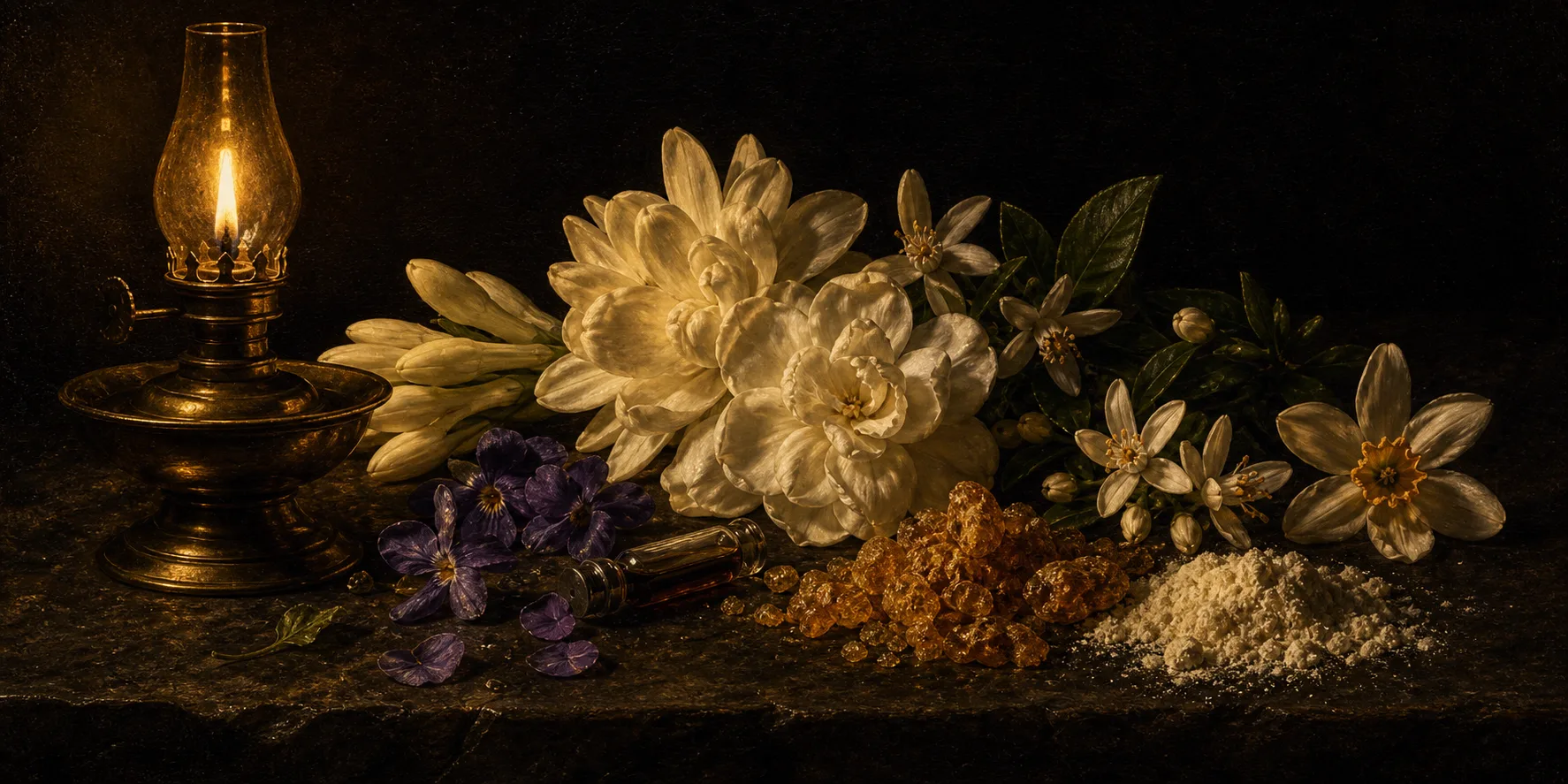
The first ten to twenty minutes are aggressively floral - a near-aldehydic, almost bridal-bouquet opening where gardenia, neroli, and bergamot punch through together before tuberose has fully arrived, with pitosporum and violet adding a powdered, slightly sweet edge. There is no quiet introduction; “bombastic” is the word that recurs across reviews to the point of consensus. From roughly thirty minutes in, tuberose takes the stage and dominates. Narcissus contributes a distinctive burnt-plastic floral edge, ylang-ylang adds creamy yellow-flower richness with a faint tropical sweetness, and carnation injects a peppery, clove-spiced bite that keeps the composition from turning sugary. White flowers stay front and center for an unusually long time. The signature accord is tuberose-gardenia-narcissus over civet, with the narcissus giving Blonde the off-kilter, modern twist that separates it from straight Fracas-style tuberoses. The drydown, beginning around hour five, reveals civet’s animalic warmth as the bouquet softens. Benzoin adds a sweet, balsamic base while musk provides a clean counterpoint to civet’s funk. The civet-musk-benzoin trio is what gives Blonde its erotic, slightly sweaty undertow - one reviewer’s “spellbinding sharp eroticism, albeit pleasantly old-fashioned.” The arc from soapy-green opening to floral peak to animalic skin scent is genuinely evolving, not linear, and is the source of much of its devoted following.
Performance
Blonde performs big. The EDT throws a noticeable cloud at four to six feet during the first three hours, and the extrait projects further and longer, with sillage in near-monster territory at parfum strength. Longevity runs seven to ten hours on skin for the EDT and eighteen to twenty-four for the extrait, lasting for days on clothing. Cool weather is its natural home, where the tuberose-gardenia core blooms; in high heat the civet can read sour or overripe. Restraint is essential - one to two sprays of EDT to pulse points, or a single dab of extrait - because the same composition turns either glamorous or oppressive purely on dosage.
Wearing Context
This is a fragrance for autumn evenings and cool spring nights: opera, formal dinners, dramatic entrances. Daytime works only in cooler weather and with a very light hand. It falls flat in the office (too loud and too intimate at once), the gym, and bright summer daylight, where the floral density turns heavy and headache-inducing. Socially it reads mature, deliberately glamorous, and unmistakably feminine - there is no unisex reading despite a few adventurous male wearers - with reviewers reaching for blonde Hollywood icons like Marilyn Monroe and Jayne Mansfield as the imagined wearer.
Comparisons & DNA
The unavoidable reference is Robert Piguet Fracas, the canonical tuberose; Blonde is noticeably greener, more animalic via civet, and more narcissus-forward where Fracas is creamy-buttery and orange-blossom-led. Madonna’s Truth or Dare is the third member of the family, sharing a documented compositional kinship - one writer framed Blonde as “the Mother who shares DNA with her grandmother Fracas and her daughter Truth or Dare.” For contrast, Frederic Malle Carnal Flower is a leaner, more modern tuberose, while Serge Lutens Tubereuse Criminelle pushes the mentholated, medicinal side of the note. Kenzo Jungle L’Elephant sits in the same brassy floral neighborhood with more clove and mango.
Reception
Among Versace’s discontinued feminines, Blonde is the most consistently praised - widely held up as the best of that vintage line. Admirers call it the most bombastic tuberose, prize its longevity (especially in the extrait), and value the animalic complexity that rewards repeated wear and the quality of its real tuberose. Critics find it too much, too dated, or too 80s-power for modern taste, and the civet’s funk is a genuine fault line. Polarization tracks almost entirely with tuberose tolerance: wearers tend to love it or reject it outright, with little middle ground. Sampling first is the standing advice for anyone not already sold on Fracas-style white florals.
Versions & Reformulation
Three concentrations reached retail: the common EDT (heavy but slightly greener), a less common EDP, and a rare Extrait de Parfum in an intaglio-engraved Medusa bottle inside a red-and-gold coffret. Reviewers consistently treat the extrait as definitive - denser, longer-lasting past twenty-four hours, and more civet-forward. No reformulation is documented during its run; Versace appears to have left the formula alone until discontinuation in the mid-to-late 2010s. Age-related degradation is the real concern, since civet-heavy juice can turn sour - favor bottles still pale-yellow rather than amber-brown, with a floral rather than sour-medicinal opening.
Acquisition Notes
Originally designer-tier, Blonde now trades as cult vintage with real resale premiums, typically around 85 to 104 USD for the EDT when stock surfaces and well into the hundreds for extrait coffrets in good condition. Sizes ran from 30 ml to 100 ml EDT plus the small extrait. Counterfeits are a moderate-to-high risk given the premium and Medusa branding, so verify the intaglio Medusa engraving on the extrait, the embossed pattern on the EDT glass, and the batch code, and favor specialty discontinued-fragrance dealers over mass-market discounters.
Notable Facts & Lore
- It was composed as a tribute to Donatella Versace, who modeled the 1995 campaign shot by Richard Avedon.
- Perfumer Nathalie Feisthauer’s account places Madonna at the composition meetings in Miami, pushing for tuberose as the lead note.
- The launch reportedly required “the world production of real tuberose,” a detail that helps explain why the extrait is so revered.
- That tuberose cost is also the standard explanation for why Versace never attempted a reformulation at modern margins.
- It is widely regarded as the standout among Versace’s discontinued feminines, with persistent fan campaigns for a reissue.