Floris — A Rose For...
Essence
A Rose For… is Floris London’s contemplative, English take on rose oud: dry rose, Darjeeling tea, incense, orris, oud and soft woods, inspired by Edward Bodenham’s 2015 visit to Moroccan rose fields. Its central idea is personalization: the original hand-poured edition invited each owner to finish the name themselves. The scent follows that intimacy, favoring quiet, serious elegance over syrupy rose-oud spectacle.
Scent Profile
The opening pairs Darjeeling black tea with frankincense, creating a dry smoky-tea accord. Some wearers also notice a brief fruity sweetness, like blackcurrant or Turkish delight, before the fragrance turns more austere.
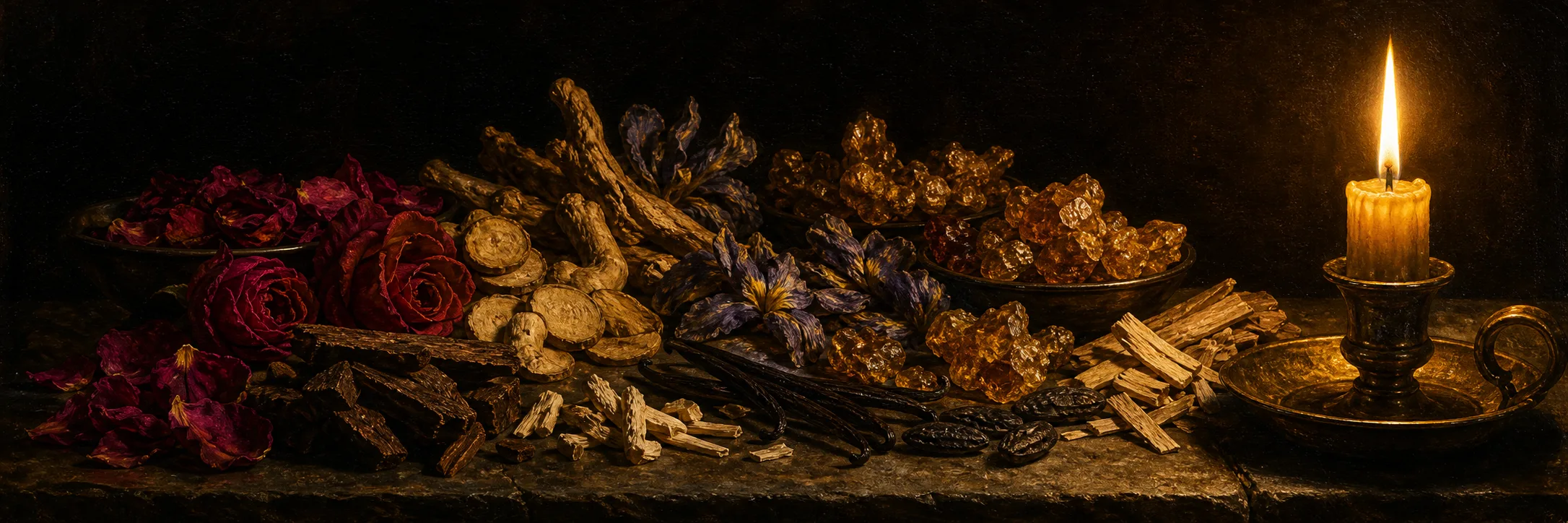
The heart is rose, but not a dewy or jammy rose. It is dry, wine-like, slightly serious and faintly spicy, with orris adding powder and a cool texture. Tuberose and oud are present but supportive. The oud reads earthy and warm rather than barnyard or medicinal.
The drydown is the most admired phase: creamy sandalwood, earthy patchouli, soft vanilla, amber and a slightly salty warmth on some skins. The fragrance changes more than its restrained profile suggests, showing tea, clove-like spice, iris powder or woods differently from wear to wear. Its signature is cool incense-tea rose over lactonic woods.
Performance
Performance is the main criticism. A Rose For… is soft, intimate and not built as a powerhouse rose oud. Most accounts point to four to six hours, with modest projection and a close skin-scent phase after the first couple of hours. Heat can increase diffusion, but the safe expectation is a quiet scent bubble. Apply generously if you want others to notice it; build carefully in hot weather.
Wearing Context
This is mainly a cool-weather, evening, formal or romantic fragrance, though some wear it year-round. It is genuinely unisex and often recommended as a rose for people who normally avoid rose, because the tea, incense and woods keep it dry and restrained. The social impression is refined, grown-up, understated English luxury rather than loud sweetness.
Comparisons & DNA
The genre is rose oud, but A Rose For… deliberately avoids the obvious heavy template. It is adjacent to Frederic Malle Portrait of a Lady in seriousness and rose-patchouli territory, but far quieter, warmer and less forceful. Within Floris, Honey Oud is sweeter and honeyed, while Leather Oud is a different, darker direction. The airy incense-wood drydown also suggests the transparent woody-incense style associated with Bertrand Duchaufour.
Reception
Reception splits between admirers of the blending and skeptics who want more rose, more power or more distinctiveness for the price. Praise centers on quiet sophistication, high-quality materials, the creamy drydown and the way rose facets shift over time. Criticism centers on restraint: not rosy enough, not projecting enough, sometimes sharp or muddy on the wrong skin, and expensive for a scent that whispers. The sensible verdict is sample first, especially at full-bottle pricing.
Versions & Reformulation
There is one known composition with no documented reformulation. The release history causes date confusion: the first 100 hand-poured bottles appeared in 2016, sold through Floris’s Jermyn Street home and website, while the fragrance entered the regular collection in 2018. The 2016 date is the original release; 2018 is the permanent-line debut.
Acquisition Notes
A Rose For… sits in the upper-niche tier and remains in Floris’s regular EDP range, with standard bottle, travel and sample formats. Multiple wearers find it expensive for its quiet presence, so official samples, travel sizes and mini sets are the best entry point. Counterfeit concern is low at this volume; the main purchase risk is paying for a full bottle before testing its soft projection.
Notable Facts & Lore
- Edward Bodenham created it after a 2015 trip to Morocco’s rose fields.
- The original limited release consisted of 100 hand-poured bottles.
- Each original bottle came with a gold pen so the wearer could complete “A Rose For…” personally.
- The trailing ellipsis in the name is the concept, not a typographic accident.
- Its main controversy is olfactory restraint: some treasure the quiet dry rose, others want more power and more rose.