Givenchy — Ange Ou Demon Le Secret
Essence
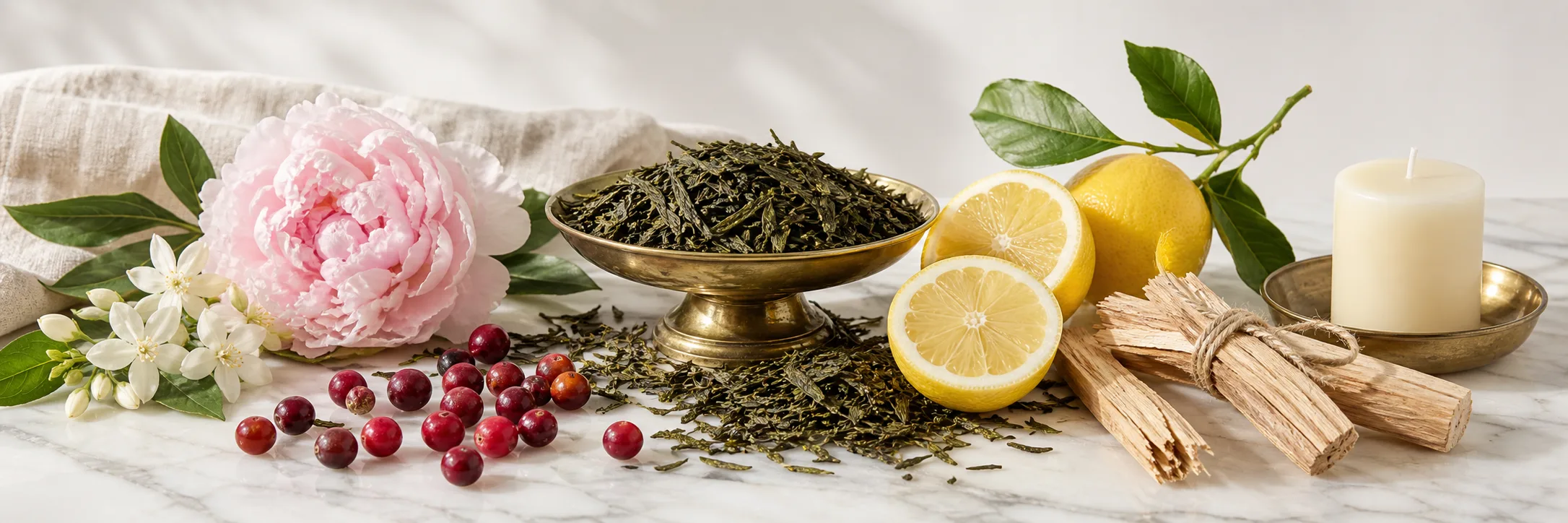
Le Secret takes the Ange ou Demon name and strips out most of the original’s darkness, keeping only the idea of contrast. What you actually get is a transparent tea-citrus floral with tart cranberry, soft peony-jasmine, and only a faint woody-patchouli anchor. Its distinction is finesse rather than force: the tea note is handled with unusual delicacy for a mainstream release, giving the perfume a crisp, watercolor-light texture that made it widely likable, easy to wear, and much safer than the original - while also opening it to criticism for being too polite and too fleeting.
Scent Profile
The first 10 - 20 minutes are defined by the lemon-tea-cranberry accord. Lemon is clearly perceptible, but not as a sharp cologne flash; it is softened by the tea and tinged pink by the cranberry, which many reviewers experience less as sugary fruit than as a tart, almost peppery berry edge. Bois de Jasmin’s review snippet is still one of the best shorthand descriptions of the structure: the tea note stays transparent and soft instead of turning harsh, and the whole opening has a crispness that feels more watercolor than neon. This is the most distinctive stage of the scent, and it is the reason people remember Le Secret more for “lemon tea” than for any individual flower in the heart. The heart is airy and balanced rather than dramatic. Peony, jasmine and water-lily are all detectable, but they read as a cool, clean floral wash more than as a thick bouquet. wearer reports and wearers agree that most of the listed notes are there - tea, lemon, peony, jasmine, white woods - but that patchouli is very mild, and the overall personality is fresh, feminine, and inoffensive. Compared with many designer florals from the same era, Le Secret is not especially sweet. It is softly fruity and softly floral, with the tea note providing the real spine. In the drydown, the fragrance becomes a light woody-musk skin scent with traces of tea and citrus still hanging on. The listed patchouli remains submerged for most wearers; what persists is more a pale wood and clean-musky softness than anything earthy. Some wearers even describe the late stage as cotton-candy parchment or old books, which points to the scent’s slightly papery, clean-dry character. Evolution exists, but it is gentle rather than dramatic: Le Secret is closer to linear freshness than to a three-act perfume. Its signature accord is unmistakably tart lemon-green tea over translucent peony-jasmine.
Performance
Performance is the fragrance’s most disputed point and one of the main reasons it polari
Wearing Context
Le Secret is built for daytime. It fits spring, early summer, office wear, brunch, errands, travel, casual dates, and generally any setting where you want to smell polished and feminine without smelling heavily perfumed. Multiple reviewers explicitly call it suitable for office wear, day wear, and cool early-spring use; one wearer reports user even says it became her wedding fragrance, which tracks with the scent’s clean, pretty, non-threatening profile. Where it falls short is in situations that benefit from density or seduction by volume: nightlife, winter evenings, and any occasion where you want the “demon” part of the name to show up. Socially, the fragrance skews youthful-to-midrange feminine rather than mature. It is often praised as carefree, graceful, and confidence-boosting, but very few reviewers describe it as powerful, mysterious, or complex. That makes it one of the safest wear-context perfumes in the Givenchy women’s catalog, but also one of the least dramatic.
Comparisons & DNA
The most direct comparison is to Givenchy - Ange ou Demon itself, and here the important point is discontinuity: reviewers on wearer reports and wearer reports repeatedly say the two really have little in common besides the name. Le Secret removes the original’s saffron-thyme-powder darkness and replaces it with transparent tea-citrus florals. In critical criticism, Bois de Jasmin places it in the same broad consumer-friendly lane as Dior - Miss Dior Cherie and Badgley Mischka - Badgley Mischka, but specifically says Le Secret is milder and less nuanced than either. That is exactly right: it belongs to the late-2000s clean-pretty floral trend, but with a more delicate tea note than most of its peers. For within-line comparison, the 2014 Le Secret keeps the tea-and-white-flower theme but adds more citrus radiance and a smoother white-musk/amberwood/vanilla finish, making it cleaner and slightly more moderni
Reception
Le Secret is one of those fragrances where the critical and wearer consensus align unusually well. The praise is consistent: it is pretty, crisp, easy to like, balanced, and well crafted for a commercial designer floral. Bois de Jasmin’s review is generous because it hears finesse where the format could easily have produced banality; wearer reports and wearer reports likewise praise the balanced treatment of tea, lemon, peony and jasmine, and describe the fragrance as fresh, clean, feminine, and broadly wearable. Compliment culture is also present: in wearer reports compliment threads, Le Secret gets cited directly, and wearers often describe it as a scent that makes them feel put together without smelling like a body spray. The negative consensus is just as stable. Critics find it safe, basic, light, or boring; wearer reports calls it not nearly as unique as the original and potentially banal, while wearer reports and wearers complain about short longevity and secondary-market prices that feel high for a fragrance this sheer. The dividing line is expectation. If you want an elegant office tea floral, Le Secret still lands. If you expect the name Ange ou Demon to imply drama, sensuality, or a darker edge, it disappoints. Blind-buy verdict: safer than the original by a wide margin, but still not ideal if performance is important to you. Sample it if you like tea scents, because its biggest strength and biggest weakness are both subtlety.
Versions & Reformulation
Le Secret matters as a mini-franchise, not just a single bottle. The original launched in 2009 in 50 and 100 ml EDP, followed by multiple collector or seasonal variations and by Le Secret Elixir, which users on wearer reports still mourn as a standout darker flanker. A major pivot came with the 2014 relaunch, which wearer reports presents as a true reworked composition rather than a mere packaging refresh: more citrus, added white musk/amberwood/vanilla, and official availability in 50 and 100 ml. wearer discussion treats 2014 as a real reformulation point. wearers users date the change to April 2014 and call it radical, and the note pyramid confirms the shift from the woodier 2009 base to a cleaner musky-amberwood structure. There were also numerous limited editions such as Feather Edition and the 10th Anniversary bottle, but the big distinction for wear is simple: 2009 is the more tea-wood-patchouli original; 2014 is brighter, cleaner, and more conventionally musky.
Acquisition Notes
Le Secret is still easier to source than many forgotten designer flankers, but the exact version matters. The 2009 original and 2014 relaunch are both in circulation, and wearers comments suggest that bottles can feel rarer and pricier than their scent profile would imply, with one wearer reports user complaining that a 30 ml bottle cost enough to make the weak longevity hard to justify. If you care about tea-wood nuance rather than just “clean floral,” make sure the seller is explicit about year and bottle. Because Givenchy reused the same name across materially different bottles, wrong-version purchasing is as much a risk as counterfeiting. For authenticity, the same Givenchy/LVMH batch-code guidance applies: matching box and bottle codes, plausible four-character LVMH formatting, and skepticism toward batch-checker sites. For budget-minded buyers, La Rive Hello Beauty is the only clearly documented low-cost smell-alike in the whitelist, but otherwise Le Secret is a case where sampling first matters more than hunting a perfect clone.
Notable Facts & Lore
- Le Secret’s main lore is that it quietly became the “angel” branch of a supposedly dark franchise. wearer reports launch text associates it with Uma Thurman and a champagne-pink bottle, but the actual wearers story is more interesting: reviewers repeatedly point out that the scent is much more tea-clean and approachable than the name implies.
- In practice, it became the branch people wore to work, on spring days, and even to their weddings, not the branch they wore for full-on nocturnal drama.
- The second lore point is that this fragrance is remembered less as a blockbuster than as a personal attachment scent.
- Users talk about backups, discontinued flankers, and the frustration of not finding anything that replaces its tart tea-floral balance.
- That gives Le Secret an outsi.