Imaginary Authors — The Soft Lawn
Essence
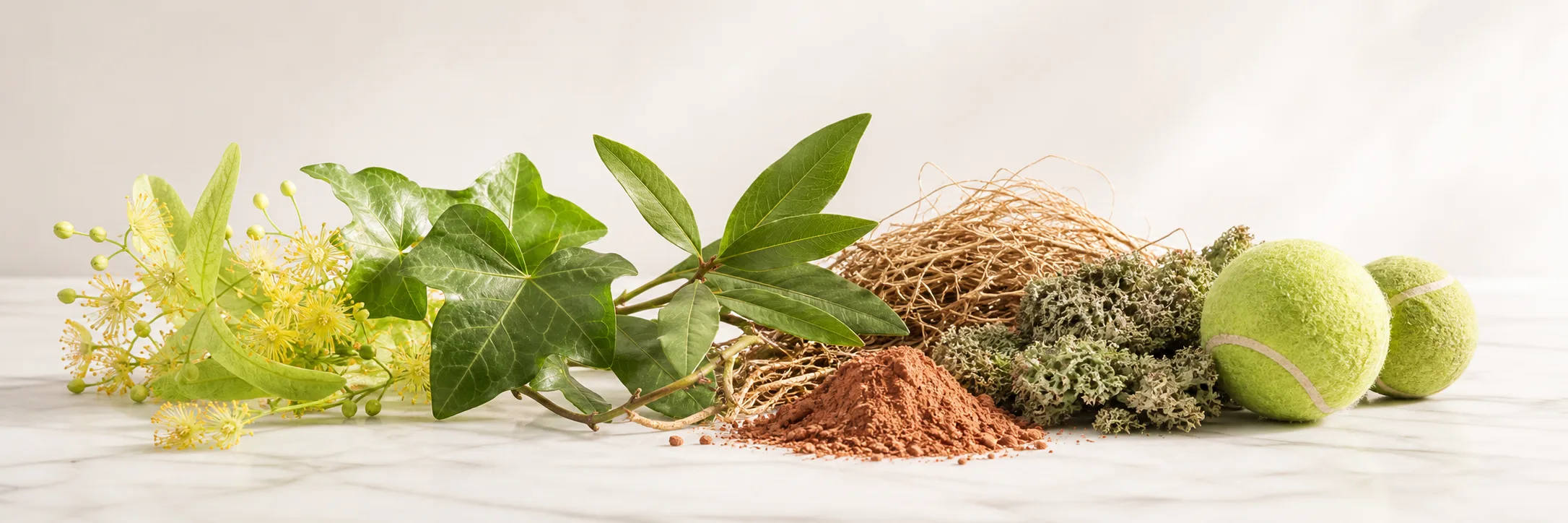
The Soft Lawn is one of the more successful concept perfumes of the last decade because it doesn’t just gesture toward greenery - it tries to bottle a specific social scene: a 1920s East Coast tennis club, with clipped grass, linden blossom, tennis-ball rubber, clay dust, and clean white fabric folded into a single image. That peculiar balance between natural and synthetic, living and inanimate, is why the fragrance still reads as unusually vivid more than a decade after launch. It was also the first Imaginary Authors release, an early statement of the brand’s atmospheric, storytelling-driven style.
Scent Profile
The opening is a green-citrus snap colored by linden blossom, ivy, and vetiver, plus a distinctly synthetic effect meant to evoke a freshly opened can of tennis balls - some wearers also pick up cucumber, mint, dill, or camphor from that same accord. One especially vivid description frames it as an olfactory snapshot of grass, old rubber-soled shoes, tennis balls, and starched whites, with linden blossom keeping the whole composition from collapsing into pure novelty.
Development is moderately linear rather than dramatic: the green, rubbery, minerally top is the whole point, and the drydown softens toward faded linden, oakmoss, and vetiver with a faint musky, laundry-like residue rather than revealing a radically different base. The main disagreement among wearers isn’t about identity but emphasis - some get a lot of literal tennis ball, others experience mostly a tart green vetiver-linden cologne with the tennis concept lurking quietly in the background.
Performance
Performance on this original 2012 formula isn’t unanimously weak, but it’s inconsistent enough to treat as a medium-strength fragrance rather than a projection monster. Aggregated feedback points to decent endurance with moderate reach, though individual reports split more sharply - some wearers get six hours or more, others report closer to nine hours held close to the skin, and a few find the projection disappointing relative to what the EDP concentration promises. The safest expectation is that this opens clearly and characterfully before settling into a softer, more private scent cloud; wearers who like louder performance may want to apply more generously or spray onto clothing.
Wearing Context
This reads overwhelmingly as spring-to-summer, daytime wear, since its appeal depends on the freshness of cut greenery, linden bloom, and its cool, mineral-rubbery illusion. Socially it skews preppy and country-club in the imagination of many wearers, without reading as loud or conventionally sporty - it’s more eccentric than sexy. It works best in casual daytime settings, warm-weather office wear, walks, and outdoor daytime social settings, and is less convincing for formal evening use unless the wearer specifically wants the tennis-ball oddity as part of their personal signature.
Comparisons & DNA
The Soft Lawn sits in a small subcategory of green, synthetic “place scents,” so comparisons tend to isolate fragments of its structure rather than offer a true substitute. Its vetiver backbone draws comparisons to Guerlain’s Vetiver; its rubber-and-plastic facet recalls Bvlgari’s Black in a fresher, sportier key; and its more cologne-like drydown has reminded some wearers of Abercrombie’s Fierce or Chanel’s Egoiste Platinum. None of these genuinely duplicates the point of the fragrance, though - its real DNA is a linden-vetiver green freshie deliberately contaminated by the smell of tennis balls and clay-court dust.
Reception
Reception runs positive on originality and considerably more divided on actual wearability. Aggregate reaction is respectable rather than rapturous, and the pattern is consistent: fans praise the realism of its grassy, rubbery illusion and the specific season and social world it evokes, while detractors describe the tennis-ball accord tipping into dill pickle, air freshener, or plastic-cucumber territory. This is a fragrance admired even by some people who don’t personally want to wear it, and wider opinion leans against blind buying unless you already know you enjoy conceptual green, synthetic-sporty fragrances.
Versions & Reformulation
This is one of the rarer cases in the catalog where reformulation history genuinely matters to a buying decision. The original 2012 version appears discontinued and has effectively been replaced by a 2021 reboot, sold under a separate “Edition 2.0” name. That newer version runs warmer, muskier, and more conventionally fragrance-like, with the original’s tennis-ball accord softened and its confrontational, mineral-cool character toned down - a meaningful difference for anyone specifically chasing the stranger, cooler, clay-court original.
Acquisition Notes
For this cataloged 2012 formula, acquisition is now largely a secondary-market or decant matter rather than routine retail, since the original appears discontinued and has been superseded by the 2021 edition in most current discussion. Anyone specifically chasing this original profile should look for clearly identified vintage stock or secondhand bottles, and should expect some seller confusion with the newer reboot given how similar their names and concepts are.
Notable Facts & Lore
- The fragrance’s fictional backstory involves an invented 1916 novel and a prep-school tennis milieu, tightly woven into how the scent is marketed and perceived.
- Wearers repeatedly describe the fragrance as genuinely smelling like its own fictional premise, an unusually clean demonstration of narrative perfumery.
- This was the first fragrance Imaginary Authors ever released, making it a foundational statement of the brand’s atmospheric, storytelling-driven style.
- It was later reformulated into a 2021 edition sold under a distinct name, softening its most confrontational, synthetic tennis-ball character.