L'Occitane en Provence — Eau de Vétyver
Essence
A discontinued cult vetiver from L’Occitane’s Provencal line, Eau de Vetyver (2001) is a warm, dry, slightly nutty take on the root - closer to vetiver essential oil than to the bright, citrus-forward vetivers of its era. What makes it distinctive is its naturalistic, “all essential oils” feel and a prominent nutmeg/spicy-woody character driven by an (unlisted) cypress note that melds with the vetiver. It’s earthy and grounding rather than sharp or smoky, with a barbershop-adjacent powdery facet in the drydown.
Scent Profile
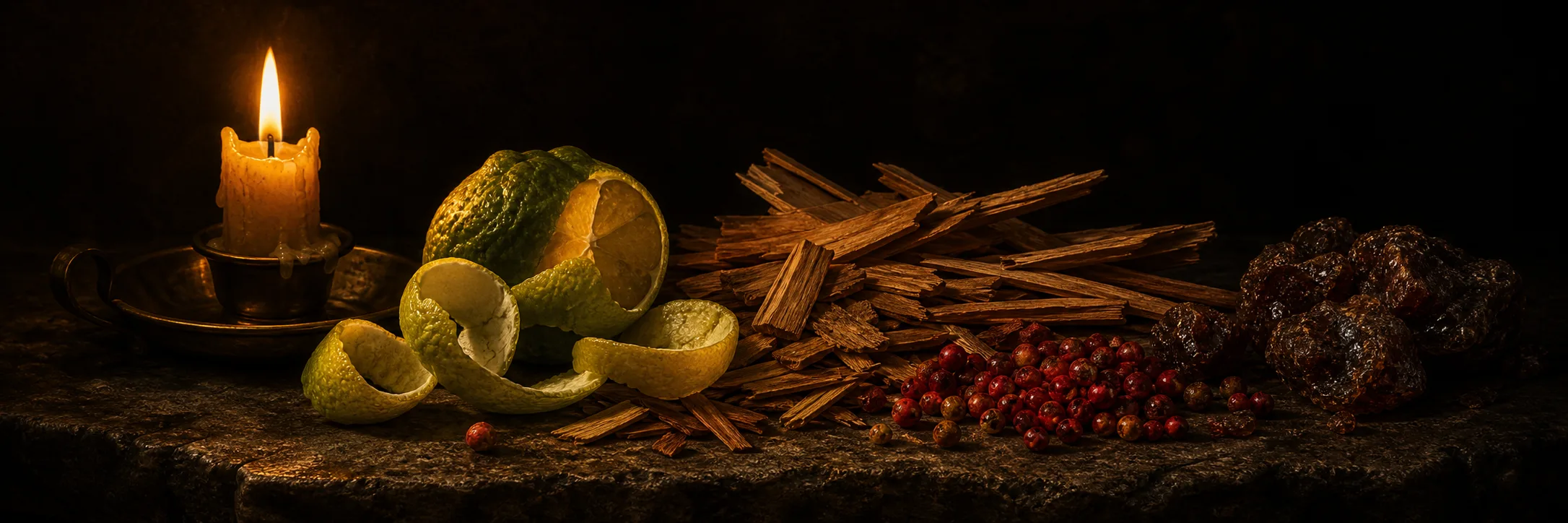
The opening is brief and quiet: a faint hint of bergamot and lemon that’s quickly “absorbed into its woody spicy vetiver heart.” The citrus is negligible - present for a few minutes, never a bright sparkling top like Guerlain Vetiver or Tom Ford Grey Vetiver. Some wearers catch a slightly powdery, mildly camphorous lift early. Within minutes the vetiver is already prominent; this is not a fragrance that hides its namesake. The heart (roughly 1 - 3 hours) is the core experience and where the composition essentially settles for the duration. The defining move is a “slightly sweet nutmeg-like herbal woody smelling cypress that couples with effervescent vetiver over a cedar spine” - cypress is unlisted but widely perceived, and it’s the engine of the scent. Nutmeg is the most-named perceptible spice, and several wearers treat it as one of the better nutmeg renditions in perfumery. The vetiver here reads earthy and rooty rather than green-citrusy or smoky; some find it almost mossy, even faintly sweet like sweet potato. Cedar accentuates the woodiness and lends maturity. Listed leather is largely submerged - reviewers repeatedly say they “don’t smell leather in the base,” or detect it only faintly late. Guaiac wood is similarly quiet, folded into the general woodiness. A few note a synthetic cashmere-woods (Cashmeran) facet they’re less keen on. The drydown (3+ hours) stays close to the heart: warm vetiver, nutmeg and light woods, taking on a “more powdery/green ambiance” and a “barbershop”/Old Spice-adjacent feel that several wearers love. It becomes a quiet, textured skin scent - “warm, expensive and textured.” This is a famously linear, minimalist fragrance: reviewers agree it “doesn’t change much for the remainder of the wear cycle.” The established consensus frames it as smooth, natural and unpretentious. The signature accord is the nutmeg-cypress-vetiver braid over cedar - a warm, dry, spicy-woody vetiver.
Performance
Projection is light to at most moderate and close to the skin - repeatedly called “below average” projection with little sillage. This is an intimate, “close scent.” Longevity, by contrast, is a pleasant surprise and the subject of some disagreement: one technical reviewer pegs it at “just over 10 hours on skin,” and several wearers report 9 - 10 hours with a few hours of solid early presence; on clothing it lasts notably longer (one wearer still smelled wood hours after returning home, others note all-day fabric persistence). A minority report shorter 4 - 5 hour wear, likely skin-chemistry dependent. Net: skin roughly 6 - 10 hours, clothing longer. It’s a “natural ingredients” composition, so a couple of reviewers attribute the soft projection and occasional shorter wear to that.
Wearing Context
A versatile daily-wear and office vetiver. Reviewers describe it as working “year-round,” for “casual and office use and even semi-formal occasions,” day or night - though best avoided in very warm weather per established consensus. It reads decidedly masculine and mature (“gentlemanly,” “barbershop”), close-wearing enough to be polite in shared spaces (its quiet projection is an asset at work). Several wearers treat it as a calming morning scent - “wearing it in the morning makes me feel calm,” “very grounding.” Where it shines: low-key professional and everyday settings, cooler months, anyone wanting an honest, natural vetiver without loudness.
Comparisons & DNA
The most repeated in-house comparison is to L’Occitane Eau des Baux, its sibling, which uses a similar herbal-cypress heart accord but turns tobacco-like rather than vetiver-nutty. Among outside vetivers, wearers place it near Guerlain Vetiver (brighter, more refined and citrus-classic), Chanel Sycomore (smokier and more rooted), Tom Ford Grey Vetiver (much brighter citrus), and Creed Original Vetiver, which several wearers cite as remarkably close - one calls EdV “a poor man’s Creed Original Vetiver,” a “low-cost dead-ringer.” It’s also likened to a more mature and toned-down Gucci Envy and, in its animalic touch, to Chanel pour Monsieur; one wearer found the bergamot/vetiver vibe close to Dior Eau Sauvage Parfum (2012) with woods instead of myrrh. As a discontinued mass-market natural-leaning composition, no true clone/dupe exists; searches for one have largely come up empty.
Reception
Reception is strongly positive and tinged with mourning: it’s repeatedly called an “underrated hidden gem,” “one of the best vetiver fragrances I’ve smelt,” a “benchmark for honest, natural vetiver,” and “one of my favorite scents in the whole of perfumery.” Praise: naturalness, smoothness, the nutmeg, the warm woody drydown, value-for-money (around £35/100 mL when available). Criticisms: soft projection and, for some, mediocre longevity; a “not super complex”/linear character; one wearer got only a “lumber store” woody blast with no vetiver (skin chemistry); a minority dislike a synthetic cashmere-woods facet or find it medicinal. Axis of polarization: people who prize a quiet, natural, linear vetiver adore it; those wanting projection, evolution or a classic bright vetiver are lukewarm.
Versions & Reformulation
Single composition, no known reformulations. It was offered as EDT in (now-collectible) bottles - the older brown-glass and the later clear tall hexagonal flacons - and the boxes carried multilingual notes on the fragrance’s inspiration (the original Vetyver box reportedly explained that Mediterranean men traditionally bathed in vetiver for their nuptials). The matching soap and the wider vetiver line were discontinued first, then the fragrance itself, several years ago.
Acquisition Notes
Was designer/affordable tier (~£35/100 mL; ~$50 for 4 oz in the US per a longtime buyer). Now discontinued, so pricing is secondary-market and rising: UK eBay listings of sealed bottles have run around £90, and a retrospective notes prices have climbed toward deep-vintage-collectible territory. Sizes were principally 100 mL (and a 4 oz/large format). Decant ecosystem is limited and not well-documented on the major splitters given discontinuation; remaining stock surfaces on eBay and through L’Occitane store back-stock that lingered after delisting.
Notable Facts & Lore
- The lore here is mostly wearers-driven: it has an unusually devoted following for a mass-market house fragrance, with wearers describing near-ritual conservation of their last bottles (“I pretty much treat it as a sacred anointment”).
- One recurring emotional thread: it served as a “signature scent for years,” in at least one case “originally a gift from my dad and something I still associate with his memory.”
- The original packaging’s nuptial-bathing anecdote is a frequently-shared bit of brand storytelling.
- L’Occitane’s broader origin - Olivier Baussan reviving an abandoned still in 1970s Provence - frames the line’s natural-oils ethos that fans credit for Vetyver’s character, and the 50th-anniversary retrospective (celebrations scheduled for 2026) singled the fragrance out as emblematic of the brand’s timeless Provencal mood.