L'Occitane en Provence — Verveine Fleur de Carotte
Essence
A 2023 limited-edition summer flanker in L’Occitane’s long-running Verveine (verbena) line, built around the conceit of pairing the house’s signature lemony verbena with carrot seed. The central, repeatedly-confirmed point is that this is not a “carrot flower” scent at all - it reads as carrot seed, an orris-adjacent earthy-rooty material, grafted onto the familiar L’Occitane verbena cologne template.
Scent Profile
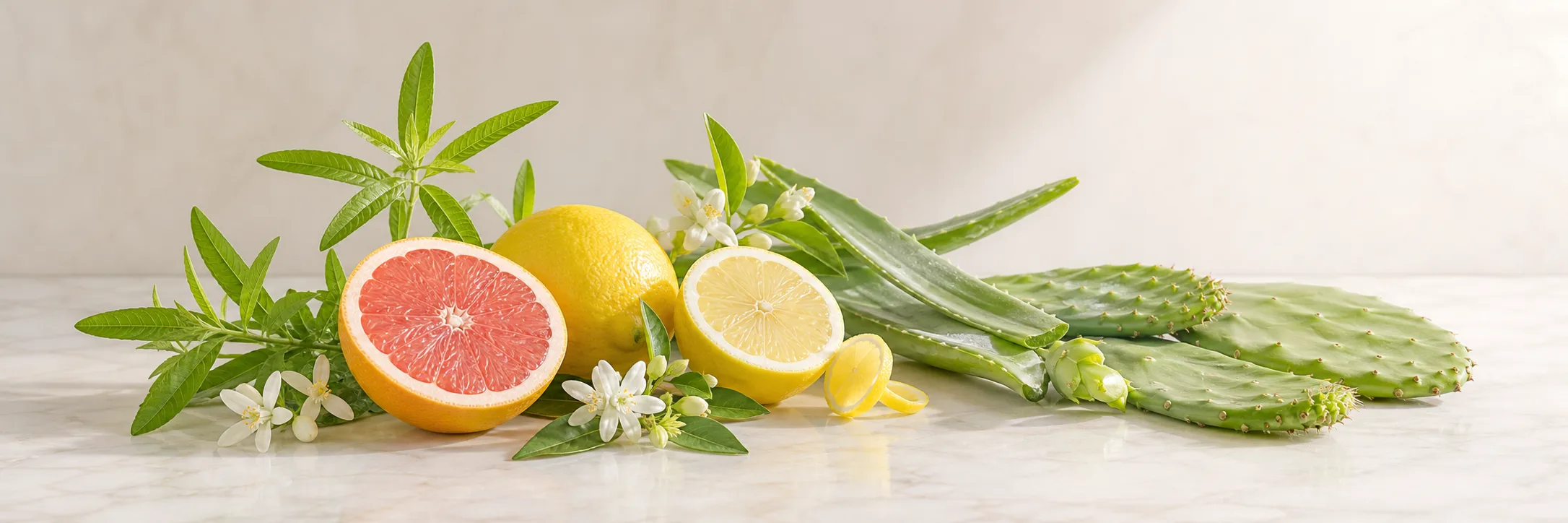
The opening is the recognizable L’Occitane verbena signature - bright, fizzy, lemon-candy citrus from the lemongrass/litsea cubeba pairing, the same zesty profile that has anchored the Verveine line since 2003. What distinguishes Fleur de Carotte is the herbal-earthy turn in the heart: Cafleurebon describes carrot seed as sharing “several olfactory characteristics of orris, minus the expense,” rooty and peppery alongside angelica, with true ambrette providing a “vegetal musk with floral/subtly animalic tones.” The drydown leans on Cashmeran (the “blond woods” listed), described by the same reviewer as “musky, spicy-woody with a pine-like nuance.” The net effect is a verbena cologne with a vegetal, slightly powdery-earthy underbelly rather than a sweet one - wearers note it is less sugary than the original Verveine. Per the catalog notes (lemongrass, green leaves, litsea cubeba top; verbena, carrot seed, angelica heart; ambrette, blond wood, Ambrofix base) and wearer/critic description, it opens with the classic L’Occitane lemony verbena - bright, zesty, green, citrus-forward from lemongrass and litsea cubeba. The Cafleurebon reviewer clarifies that it “does not smell like a carrot flower: it smells of carrot seed,” which “shares several olfactory characteristics of orris, minus the expense” - that is, a rooty, earthy, faintly powdery quality. This intertwines with the “earthy, botanical muskiness of angelica (peppery, rooty)” and true ambrette (a “vegetal musk with floral/subtly animalic tones”), anchored by Cashmeran (the “blond woods”), described as “musky, spicy-woody with a pine-like nuance.” The result is a fresh citrus-green scent tempered by a soft vegetal-musky base. It is essentially linear and transparent - a fresh cologne-style wear rather than a developing pyramid. One wearer noted the verbena can read as oddly “separate” from the rest rather than fully blended; another found the carrot adds a vegetal earthiness to a “classic L’Occitane lemony verbena” opening. Signature impression: zesty lemon-verbena over earthy carrot-seed/angelica musk. The top is classic L’Occitane verbena territory - a zesty, fizzy lemongrass-and-litsea-cubeba citrus with green leaves, sunny and sharp without going pith-bitter or sweetly candied. The twist is in the heart: carrot seed, which (as Cafleurebon’s review explains) shares much of orris root’s earthy, rooty character without the cost, here reading vegetal and slightly powdery rather than like an actual carrot. Angelica adds a peppery, rooty, faintly bitter botanical muskiness, and true ambrette contributes a soft vegetal-musk floralness. The base is anchored by Cashmeran (the “blond woods”) and Ambrofix, lending a velvety, musky-woody warmth with a faint pine nuance that prolongs the otherwise fleeting citrus. The overall effect is green, herbal and fresh - “almost like lemon sorbet,” per one wearer - with an earthy undertow that keeps it from being just another lemon cologne.
Performance
Weak, as is standard for the line. Wearer accounts describe fast fading and close-to-skin sillage, consistent with L’Occitane’s verbena EDT style. Cafleurebon turns this into a virtue, noting the juice is colorless so it “can be lavishly spritzed upon clothing to prolong wear,” is pleasant chilled in the refrigerator, and that “because it is subtle, reapplication is no problem.” As with most of the Verveine line, performance is modest - this is a light EDT. Wearer accounts put longevity and sillage below the scent itself, consistent with the line’s reputation.
Wearing Context
Hot-weather refreshment, full stop. Cafleurebon frames it explicitly as a summer-in-the-city antidote - “discreet enough to be worn on any occasion, anywhere.” Unisex by design and by reception; one commenter reports it worked on both spouses despite different chemistry. Daytime, casual, office-safe, a shower-fresh pick-me-up rather than anything with presence. A quintessential hot-weather, daytime, anywhere-and-everywhere refresher.
Comparisons & DNA
The most-cited comparison among users is Hermes Un Jardin Sur Le Nil, with several calling Fleur de Carotte a “dupe” they prefer to the Hermes because it avoids the base they find nauseating. Within L’Occitane’s own catalog, one reviewer connects it to the 2012 Eau Universelle and Eau Captivante, and it is universally measured against the original L’Occitane Verveine (2003) and its many flankers (Verveine Agrumes, Verveine Cactus), with Fleur de Carotte generally rated above the sweeter original. The carrot-seed/orris angle invites loose kinship with iris-rooty fragrances, but no critic names a specific carrot-seed comparator. The broad DNA is a Provencal lemon-verbena cologne with a green-herbal-rooty twist; “reminds me of” and similar-fragrance listings cluster it with other fresh citrus-aromatics. No designer clone is relevant; if anything, it is positioned by reviewers as itself an affordable alternative to pricier green/citrus niche scents.
Reception
Warm but quiet. Sentiment skews positive, with the recurring wish that L’Occitane make it permanent. The most common complaints are the line-standard weak performance and that, for some noses, the verbena and the rest of the composition “didn’t blend” - one reviewer perceived the verbena as sitting entirely separate from the carrot/musk. Cafleurebon was unambiguously enthusiastic, recommending buying a bottle “while it’s still within easy reach” and praising it as conjuring “the countryside in a natural and unforced manner.” Wearer response is solidly positive on scent with more modest performance marks. Common praise: the herbal carrot-seed/angelica twist, the natural feel, the affordability, and broad wearability.
Versions & Reformulation
Single composition, no known reformulations. (It is itself a limited-edition flanker within the broader Verveine line; the line has many sibling flankers, but Fleur de Carotte as such has not been reformulated.) Verveine Fleur de Carotte (2023) is one of many flankers in L’Occitane’s Verveine/Verbena franchise, which includes the original Verveine (2003) and numerous seasonal editions (Verveine Agrumes, Verveine Cactus, Verveine Sorbet, Verveine Mandarine, Citrus Verbena Summer, and others). It was released as a limited edition in summer 2023 and is now discontinued. It is an eau de toilette, offered as a 100 ml bottle.
Acquisition Notes
Limited edition, now discontinued. Launch coverage put it at a relatively affordable $82 for 100 ml - notably cheap for the apparent ambrette/Cashmeran quality.
Notable Facts & Lore
- The name is a small bait-and-switch: it is “fleur de carotte” (carrot flower) on the label but smells of carrot seed, a point Cafleurebon makes explicitly and that recurs in wearers confusion.
- L’Occitane’s own copy leaned on “the carrot flower, known for its natural intelligence,” a phrasing one commenter flagged as an awkward translation.
- Cafleurebon and L’Occitane’s official breakdown identify the “blond woods” as Cashmeran (IFF), and the ambrette is specified as “Ambrette Seed Absolute Orpur” - a genuinely pricey natural that likely accounts for the perceived quality at the price.
- The fragrance was launched in summer 2023 as a “playful spin on the timeless Classic Verbena,” marketed around Provencal nature and a “carefree summer.”
- Cafleurebon identifies the “blond woods” as Cashmeran (IFF) and notes the likely cost center of the formula was true ambrette.
- The marketing copy’s description of “the carrot flower, known for its natural intelligence” drew bemused wearer comments as an odd translation.