L'Occitane en Provence — Pivoine Flora (2015)
Essence
Pivoine Flora (2015) is a soft-focus peony-and-rose daytime floral built for cleanliness, ease, and low stakes rather than drama. The lineage is slightly tangled: the 2015 relaunch matches the catalog facts, while deeper review archives mostly trace back to the original 2010 EDT and the 2011 EDP. When those records are read together, though, the central picture is consistent: fresh citrus at the top, a peony-led floral heart, a musky-woody base, and a consensus that the fragrance’s main strength is natural-feeling friendliness rather than projection or complexity.
Scent Profile
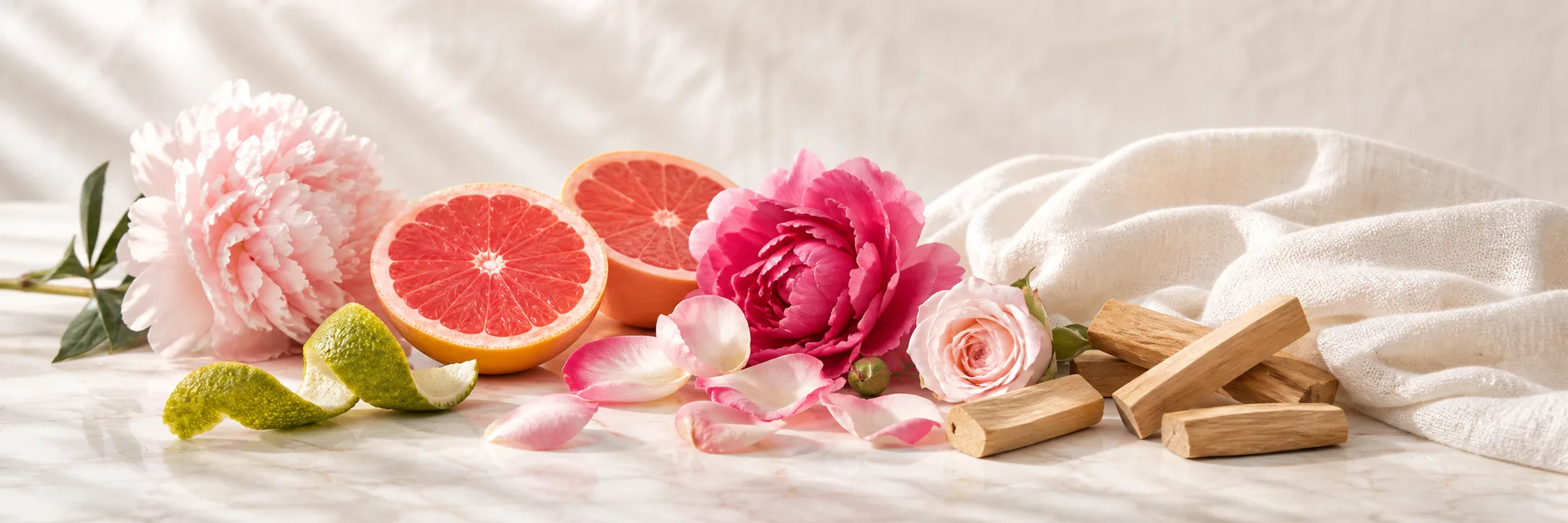
The 2015 relaunch uses bergamot and grapefruit over peony and rose, with white musk and sandalwood underneath. The original 2010 EDT carries essentially the same EDT note structure - grapefruit, bergamot, peony, rose, musk, sandalwood - which strongly suggests that the 2015 bottle is a redesign/relaunch of the same olfactory idea, even if records sometimes index the lineage differently. In use, the fragrance behaves like a gentle floral rather than a sparkling citrus perfume. Reviewers repeatedly describe a brief alcohol-citrus start that quickly cedes the stage to peony, rose, and a cool green freshness. The peony is usually framed as the lead actor: some users go so far as to call the scent almost a peony soliflore, with rose, musk, and woods functioning as contour rather than separate blocks. The base is usually experienced as clean and woody rather than creamy-sweet; even when EDP reviews mention vanilla or cedar in earlier versions, the recurring impression is dewy floral softness and a tidy, polished finish. The two real caveats are linearity and occasional medicinal sharpness. Several reviews say that the scent does not transform much once the peony arrives; it simply stays in its fresh pink-floral lane until fading. A smaller but repeated minority smell a medicinal, bitter-sour, or slightly sharp note in the opening or throughout. So the signature accord here is best described as dewy peony-rose over clean musk and pale wood: easy, pretty, and sometimes close to shampoo or laundry-clean territory, depending on skin and expectations.
Performance
Performance is consistently the weak point. 2024 skin-test review reports about four hours of wear and says the fragrance sits in a clean-laundry zone with a flat base; another reviewer says it is barely noticeable and does not last long. The original 2010 EDT is reported as soft and close, while the stronger 2011 EDP has a little more presence. That is exactly the profile the writing suggests: soft, close, and reapplication-friendly rather than enduring.
Wearing Context
This is textbook spring-to-early-summer daytime material. Users explicitly call it a spring morning scent, something for warmer weather, for mornings, for the office, or for days when one wants to feel clean and put together without smelling loudly perfumed. Even people who find it bland or overpriced still tend to describe it as easy to wear. Socially, Pivoine Flora skews “pleasant” and “ladylike” more than “memorable.” That can be a virtue if the wearer wants an unobtrusive floral for work, errands, travel, or post-shower comfort.
Comparisons & DNA
Pivoine Flora lives in the familiar designer peony-rose-clean-musk corridor. Wearers who like it are also routed toward Miss Dior Blooming Bouquet, Chloe Eau de Parfum, Chance Eau Tendre, Lanvin Eclat d’Arpege, and Miracle. Those are not exact smell-equivalents, but they do place the fragrance in the pastel daytime-floral ecosystem rather than in vintage rose, white-floral, or gourmand territory. The deltas matter. Compared with Chloe Eau de Parfum, Pivoine Flora reads lighter and less musky-soapy.
Reception
Reception is good but restrained, much like the fragrance itself. The throughline is not “everyone adores this” but “people who want exactly this kind of peony-floral are generally satisfied, and people who want more impact are not.” The praise is consistent: natural-feeling peony, friendly rose, fresh spring atmosphere, unobtrusive femininity, and an everyday wearability that makes the fragrance easy to finish. Several reviewers explicitly describe it as soothing, uncomplicated, and hard to get wrong.
Versions & Reformulation
Pivoine Flora has version overlap. The lineage includes an original 2010 EDT with the same citrus-peony-rose-musk-sandalwood structure, credited to Sidonie Lancesseur, and a 2011 EDP with a different pyramid credited to Dorothee Piot and Sidonie Lancesseur. The 2015 relaunch returned the EDT in a redesigned flacon with body products, while the EDP remained discontinued.
Acquisition Notes
The 2015 relaunch EDT was sold in a 75 ml bottle, with matching body milk, shower gel, hand cream, and soap in the line. Beyond that, current acquisition is muddied by version overlap. Available records split the line across at least a 2010 EDT, a 2011 EDP, and a 2015 relaunch page, and current-status flags do not line up neatly across all entries.
Notable Facts & Lore
- The most notable factual lore is the relaunch itself.
- L’Occitane brought Pivoine Flora back in 2015 in a redesigned bottle after an earlier 2011 collection period, effectively reaffirming peony as the line’s floral identity inside the house’s body-care ecosystem as much as in perfumery.
- Beyond that, the romance around the fragrance is wearer-made rather than officially storied: “dewy spring morning,” “rose arches,” “peony bath,” and “clean floral” are the recurring imaginative frames.