Penhaligons — Blenheim Bouquet
Essence
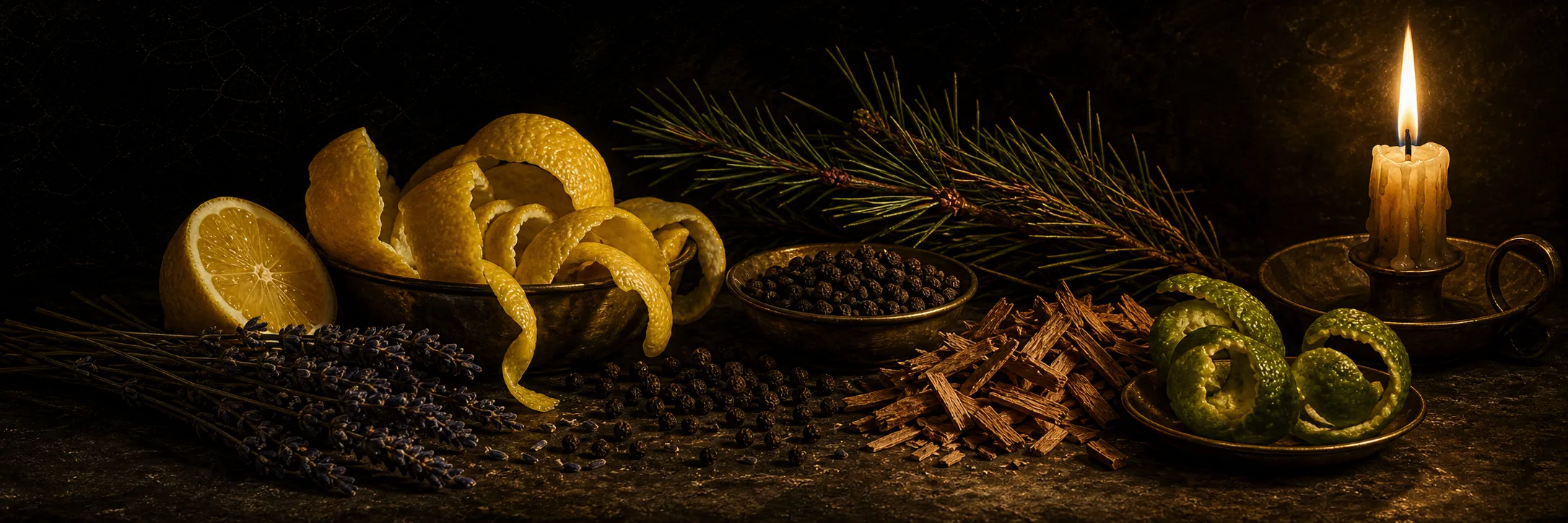
Blenheim Bouquet is the great-grandfather of the modern “fresh” masculine, a 1902 citrus-aromatic that predates the entire aquatic and sport-cologne genre yet anticipates it almost eerily. Strip away the heritage marketing and what you have is a remarkably bare, almost brutalist construction: a huge double-barrel of lemon and lime fired over dry English lavender and pine, anchored by black pepper and a thread of clean musk.
Scent Profile
The opening is the whole event for many wearers - a genuinely photorealistic lemon-and-lime accord that several long-time users compare to biting through a Lemonhead candy or to an ice-cold glass of 7UP. It is fizzy, zesty and slightly sweet (the lime supplies the sweetness), and unusually for 1902 it reads as both lemon and lime singing in unison rather than a generic “citrus.” Almost immediately the pine and lavender arrive, and this is where Blenheim Bouquet divides people. The pine is the most debated note in the composition: when it works it adds a brisk, green, outdoorsy lift; when it doesn’t, detractors call it furniture polish, floor cleaner or Christmas-tree. The lavender is dry and English rather than soft or gourmand, and a surprising number of experienced noses report thyme or a herbal-aromatic facet that isn’t on the official list (a recurring wearer discussion debates whether thyme or rosemary is hiding in the accord). Black pepper emerges in the drydown to temper the citrus and keep it from going one-dimensional, and the base settles into a soft, slightly powdery musk with a whisper of woods. It cycles through these stages very fast, the way an old-fashioned eau de cologne does - the notes work as a quick symphony rather than a slow linear march, which is both its charm and the source of its performance complaints.
Performance
This is where the 120-year-old formula shows its age, and where you should set expectations honestly. The wearers consensus is unforgiving: longevity runs roughly 1 - 3 hours for many wearers, with optimists reporting 4 - 6 and a lucky few claiming 6 - 8 hours on skin. Projection is discreet from the very first spray and collapses to a skin scent within the first hour. In practice Blenheim Bouquet behaves like an eau de cologne regardless of its EDT label - it is something you reapply, not something that announces you across a room. Notably, it performs far better on fabric than skin; multiple users report it clinging to clothing for far longer than it survives on the wrist. The atomizer is generous and produces a thick, even mist, so dose freely. If you measure value in hours of wear, this will frustrate you. If you treat it as a morning splash - the way the Edwardian gentleman it was built for would have - the brevity is part of the genre rather than a defect.
Wearing Context
Spring and summer daytime is the natural habitat: the citrus-pine-pepper structure feels bracingly alive in heat and tends to wilt in cold winter air, where it struggles to register. It is overwhelmingly a formal, suit-and-tie, daytime fragrance - board meetings, business lunches, client presentations, weddings, errands where you want to smell impeccable without making a statement. The wearers nickname is “a gentleman in a bottle.” It is perfectly unisex in character despite the masculine marketing; the lemon-lavender freshness tilts only slightly male. Pair it with tailoring and it reads as quiet authority; wear it in a hoodie and the contrast is jarring (one reviewer wryly noted the mismatch of wearing something built for “pistols at dawn on Hampstead Heath” while sitting in an empty office in front of a bank of screens).
Comparisons & DNA
Geo F. Trumper Wellington is the clearest lineage reference: both are British citrus-wood colognes, with Blenheim drier and more polished. Acqua di Parma Colonia and Dior Eau Sauvage are broader classic-citrus alternatives. Royall Lyme shares the lime brightness but feels more casual and less austere.
Reception
Revered as a British classic, but divided by short wear, pine sharpness, and heritage pricing.
Versions & Reformulation
The fragrance has been in continuous production for over 120 years and has, by Penhaligon’s own admission, undergone “a few reformulations” while the house claims to have stayed loyal to the original formula. There is no single notorious reformulation flashpoint that the wearers fixates on the way it does with, say, vintage Guerlains; rather, the general sense is of gradual IFRA-driven attenuation typical of any century-old citrus-heavy scent (citrus oils and oakmoss being the usual casualties). Some collectors note that older, late-20th-century reintroduction bottles carried that “pre-war, shuttered” delicacy, but Blenheim Bouquet has never been a vintage-hunter’s grail in the manner of discontinued classics - partly because it’s still readily available and partly because the formula’s bracing simplicity survives reformulation reasonably well. The matching shaving soap and aftershave balm are worth noting for fans who want to layer the citrus top notes and extend the experience; reviewers report the current shaving soap is good but that the old tallow version was considered superior.
Acquisition Notes
Expect luxury heritage pricing for an EDT that behaves like a cologne. Sample first if pine notes or short wear frustrate you; gift sets and travel/sample formats are the easiest entry points.
Notable Facts & Lore
- Created in 1902 by Walter Penhaligon (son of founder William Henry Penhaligon) and named for Blenheim Palace in Woodstock, Oxfordshire - the baroque ancestral seat of the Dukes of Marlborough, granted by Queen Anne to the first Duke after the 1704 Battle of Blenheim.
- It was commissioned as a bespoke fragrance; most sources name the 9th Duke of Marlborough as the patron (per Walter Penhaligon creating it “specifically for the 9th Duke of Marlborough”), while at least one account attributes the commission to Lord Randolph Churchill, Winston’s father.
- Either way the Churchill association is the fragrance’s enduring marketing engine: Winston Churchill is widely reported to have worn it, lending it a “halls of power” mystique.
- It has even turned up as set dressing - one wearer recognized it among King Edward VIII’s fragrance collection in Netflix’s The Crown.
- The house was founded by William Henry Penhaligon (1837 - 1902), a barber born in Madron, Penzance, Cornwall, who established Penhaligon’s on Jermyn Street, London in 1870 and became Court Barber and Perfumer to Queen Victoria; Blenheim Bouquet was the house’s second original creation after Hammam Bouquet (1872), and where Hammam was an orientalist statement, Blenheim was conceived as a European, eau-de-cologne - style counterpoint.