The House of Oud — Crop 2017
Essence
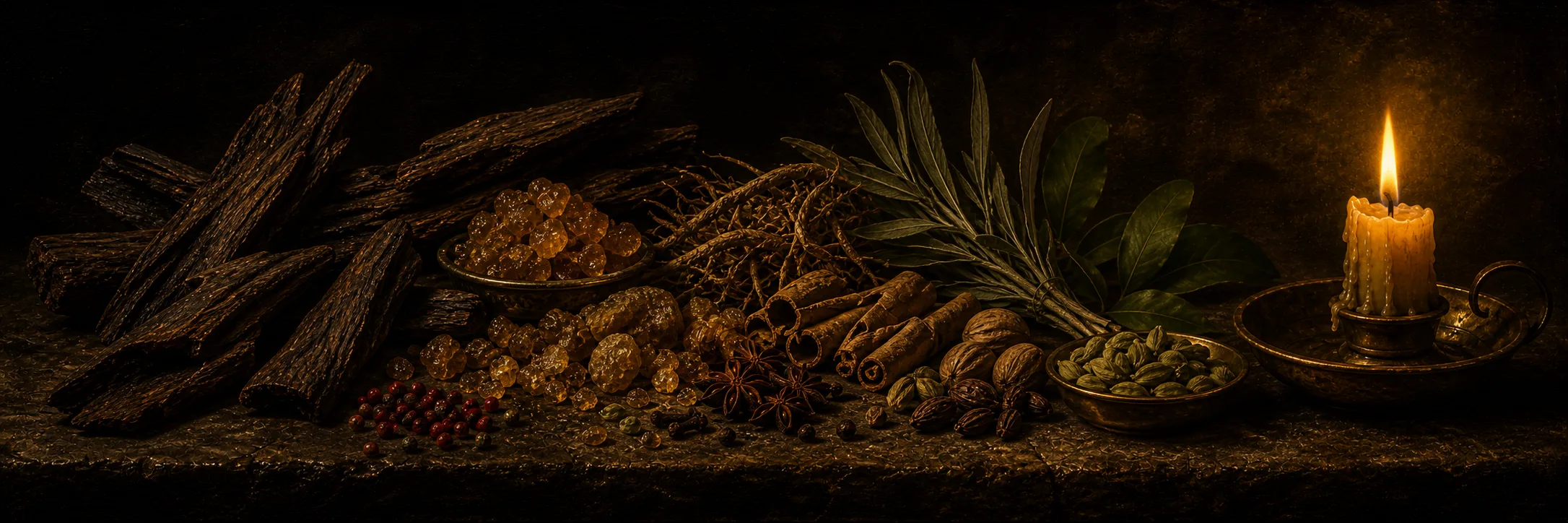
Crop 2017 is a limited annual oud study, not a plush luxury oud. Its identity is the way Irian Island oud is bent through licorice root and star anise into something bitter, resinous, tobacco-toned and cooling. It is strange, collectible and discontinued.
Scent Profile
The opening is dry and herbal rather than sweet or barnyard. Licorice and star anise create a medicinal fennel-like edge, sometimes reading as celery, wormwood or damp forest floor. The oud is woody and controlled, more structural timber than animalic headline. As it settles, the bitter top folds into resin, cured tobacco and temple-incense associations. The scent does not perform a dramatic pyramid; it slowly changes temperature, with herbal coolness giving way to dry resinous woods. The balance is the point and the risk. For some noses the licorice-anise vibration makes the oud meditative and incense-like. For others it hides the oud and leaves an odd rooty bitterness where a grand oud should be.
Performance
The available evidence points to solid wear rather than explosive projection. Crop 2017 has enough density for cool weather, but it is not a modern room-filling oud bomb. The herbal freshness may also keep it cleaner in warmer conditions than the note list suggests.
Wearing Context
This is contemplative wear: solitary evenings, art spaces, slow weekends, cold rain, or private settings where odd herbal woods are welcome. It is a poor fit for easy compliments, office safety or anyone wanting a classic rose-oud or amber-oud profile.
Comparisons & DNA
Memo Paris Shams Oud is the closest named reference for dry oud resin, though Crop 2017 is more licorice-led and sandalwood-dry. Di Ser Kyara is a conceptual rather than literal comparison: the camphorous buzz of the licorice-anise accord can suggest incense-grade wood. The negative comparison is just as important: it is not Montale-style oud force, not oud-rose, and not a plush Middle Eastern amber.
Reception
Reception is sharply split. Admirers praise originality, non-animalic oud, the licorice-star-anise pairing and the soothing, meditative mood. Detractors find the oud too quiet, the licorice too dominant, or the overall effect strange in a starchy or vegetal way. Blind buying is a bad idea unless the buyer already wants bitter herbs, dry resin and collectible oud experiments. The scent is memorable precisely because it is not broadly friendly.
Versions & Reformulation
Crop 2017 is a one-off annual Crop release, limited to 547 bottles and now discontinued. It was never meant to be a standing formula, so later reformulation is not the issue; scarcity is.
Acquisition Notes
Acquisition is collector-market territory. Expect private sales, splits or secondary listings rather than normal retail. Provenance matters because the release is limited, but there is no special batch-code lore beyond the numbered edition concept.
Notable Facts & Lore
- Andrea Casotti described oud from Irian Island in Papua New Guinea for this edition.
- The oud was paired with licorice root and star anise, explaining the scent’s unusual herbal profile.
- Only 547 bottles were produced.
- The Crop line treats each year as a distinct harvest document, not a permanent formula.