The Merchant of Venice — Imperial Emerald
Essence
Imperial Emerald (2019) is a niche white-floral Eau de Parfum Concentree from Italian house The Merchant of Venice, created by Jordi Fernandez and inspired by the peacock - a regal, powdery floral bouquet led by tuberose, lily, and orange blossom over a musky, lightly amber-vanilla base. It is as famous for its lavish peacock-feather Murano-glass presentation as for the scent, and the central wearers tension is exactly that: an extravagant, glamorous bottle wrapped around a scent many find pretty but comparatively muted and “generic” for a luxury niche white floral. It belongs to the house’s high-concentration Murano Exclusive line.
Scent Profile
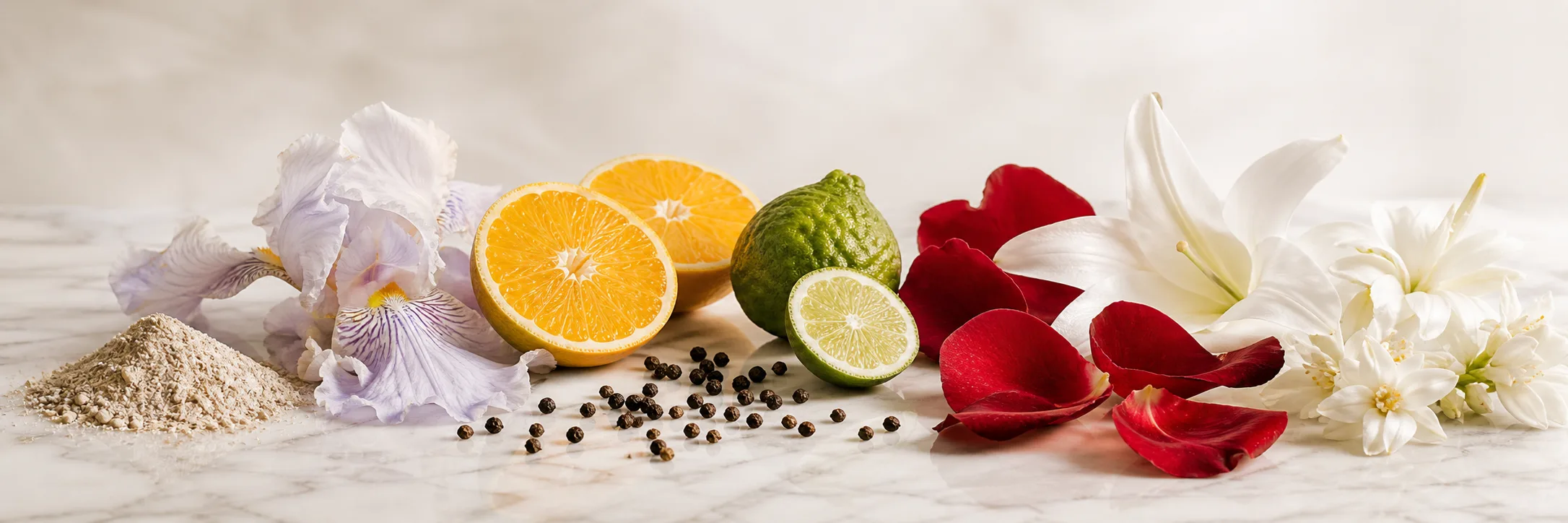
The opening is a sparkling, faceted citrus - bergamot and mandarin spiced with pink pepper - over a powdery orris (iris) shimmer. It moves into a rich, multi-flower white-floral heart: tuberose (the dominant voice for most wearers), lily, ylang-ylang, orange blossom, lily-of-the-valley, and rose. Notably, despite the heavy white-floral load, reviewers stress it is “neither indolic nor creamy” - it wears comparatively crisp, clean, and fresh rather than heady or buttery. The base is warm and soft: white musk, benzoin, vanilla, amber, and a patchouli thread that for some skins turns assertive (“a fist of patchouli, screeching patchouli”). The result is frequently described as powdery, musky, and elegant. Perceptible: tuberose, powder, clean musk, citrus lift. Submerged or polarizing: the patchouli (loud on some, invisible to others) and the sweeter amber-vanilla facets. Catalog/source note: the official EDP Concentree pyramid and wearers differ slightly from some press materials (carnation/peony appear in brand copy), but the tuberose-powder-musk character is consistent. Signature accord: powdery tuberose-and-orris over white musk.
Performance
Performance reports genuinely conflict - the single most important practical caveat for this scent. The brand and several reviewers tout it as long-lasting: wearers classifies longevity as “above-average,” and enthusiasts report 8+ hours on skin and longer on clothing with “definitely great” sillage. But a prominent, detailed wearers critique calls “the longevity and sillage quite lacklustre,” arguing the muted scent doesn’t live up to the dramatic bottle, and one blind-buyer scored it sillage strong reception, projection strong reception, longevity strong reception. The honest synthesis: performance is skin-dependent and polarizing, ranging from “powerful, 8-10 hours” to “lackluster and close-to-skin” - sample before committing at this price. Best suited to warmer climates per multiple reviewers (it wears crisp/fresh). Practical reading: apply generously, test on your own skin, and don’t assume the high “concentree” billing guarantees big projection.
Wearing Context
A spring/summer, daytime-to-evening elegant white floral for those who want a refined, powdery, “high-class/tres chic” feminine floral rather than a loud tuberose bomb. Reviewers frame it as classy, feminine, and versatile within the floral lane - good for occasions where understated elegance is wanted. It feels wrong if you want either a creamy indolic tuberose or a powerhouse statement scent (the bottle promises drama the juice doesn’t always deliver). Social-perception split: admirers find it sophisticated and “intoxicating”; detractors find it muted or, in one sharp review, “oldster”/auntie-ish powdery floral. Practical reading (limited consensus): a safe, polished floral for warm-weather daywear and refined occasions.
Comparisons & DNA
Reliable direct dupe/comparison data is thin - this is niche with modest coverage - so comparisons are best drawn by olfactory family and a few wearers/critic pointers. Escentual’s reviewer pegged it as “a sweeter version of Yves Saint Laurent Black Opium Extreme, but without the bitter coffee notes,” keying on the vanilla-amber-musk warmth. For the tuberose-white-floral heart, reviewers themselves reach for genre benchmarks they intend to compare against - Diptyque Do Son and Frederic Malle Carnal Flower (one wrote she’d test both to gauge the tuberose) - making those the natural reference points (Do Son being a lighter, more transparent tuberose; Carnal Flower a far richer, greener, more powerful one; Imperial Emerald sitting between, cleaner and powderier than both). Within the house, fans cross-shop it against Byzantium Saffron, Andalusian Soul, and Mystic Incense. DNA: a modern, powdery, musky white-floral bouquet (tuberose/orris/orange-blossom) in the “clean luxe white floral” idiom rather than the vintage indolic school. No designer clones of Imperial Emerald are documented.
Reception
Coverage is sparse and wearers/blog-based (multiple sources, plus UK retailer-blog editorial like Escentual). Sentiment is divided. Admirers: “very attractive powdery fragrance… I love it more every time,” “intoxicating florals… fresh, floral, green and sweet, very round and well-blended,” and uniformly rapturous praise for the peacock Murano bottle as a collector’s display piece. Critics zero in on a value/expectation gap: the standout wearers review calls the scent “very pretty, yet quite generic… a muted fresh and clean white floral… a fragrance for a wallflower, disguised in outrageous, glitzy packaging,” and warns that the bottle and pyramid “set certain expectations that are not met,” with lackluster performance and a price premium justified mainly by packaging. Patchouli-forward skins and lily-haters report stronger dislike. Blind-buy verdict: risky as a blind buy at full niche price - the polarized performance and “pretty-but-generic” critique mean you should sample first; buy with confidence mainly if you specifically want an elegant, clean, powdery tuberose and value the presentation.
Versions & Reformulation
Single composition, no known reformulations. It is offered as an Eau de Parfum Concentree within the Murano Exclusive Collection (a seven-fragrance high-concentration line also including Craquele, Arabesque, Liberty, Vinegia, Rococo, and Fenicia); wearers/wearers also file it under the house’s special-projects framing. No flankers documented.
Acquisition Notes
Niche luxury tier. The flagship size is 100ml EDP Concentree, historically priced around £250 (originally launched in the UK exclusively at Harrods) / €250 at the brand site; small 10ml formats exist from the house, and discounters (Maxaroma, FragranceNet, Beautinow) carry it well below boutique pricing, with grey-market listings seen far cheaper (wearer widget showed sub-$30 discounter entries, likely small sizes/decants). Decants and samples circulate, which - given the polarized performance - is the recommended way to try it first. No reliable counterfeit-prevalence or batch-code guidance surfaced; as a lower-volume niche release, mass counterfeiting is less of a concern than for designer blockbusters, but buy from the brand, Harrods/authorized stockists, or reputable discounters. Marketed by Mavive (the Vidal family’s company).
Notable Facts & Lore
- The concept is an homage to the peacock - “emerald-coloured eyes, the whoosh of a regal garment” - drawing on the bird’s cross-cultural symbolism of beauty, longevity, love, vanity, and pride, and tying to Venice’s East-West trade-route (“Mude”) heritage that defines the house.
- The elaborate packaging is the headline talking point: a peacock-feather-printed Murano-style glass bottle with a silky feather adornment and a peacock-fan box that “parts like a peacock shimmying its fan,” weighted lid included - reviewers consistently call the unboxing “a real experience” and the bottle a display object, which is central to the product’s identity and to the recurring wearers critique that the presentation outshines the scent.