4711 — 4711 Acqua Colonia Juniper Berry & Marjoram
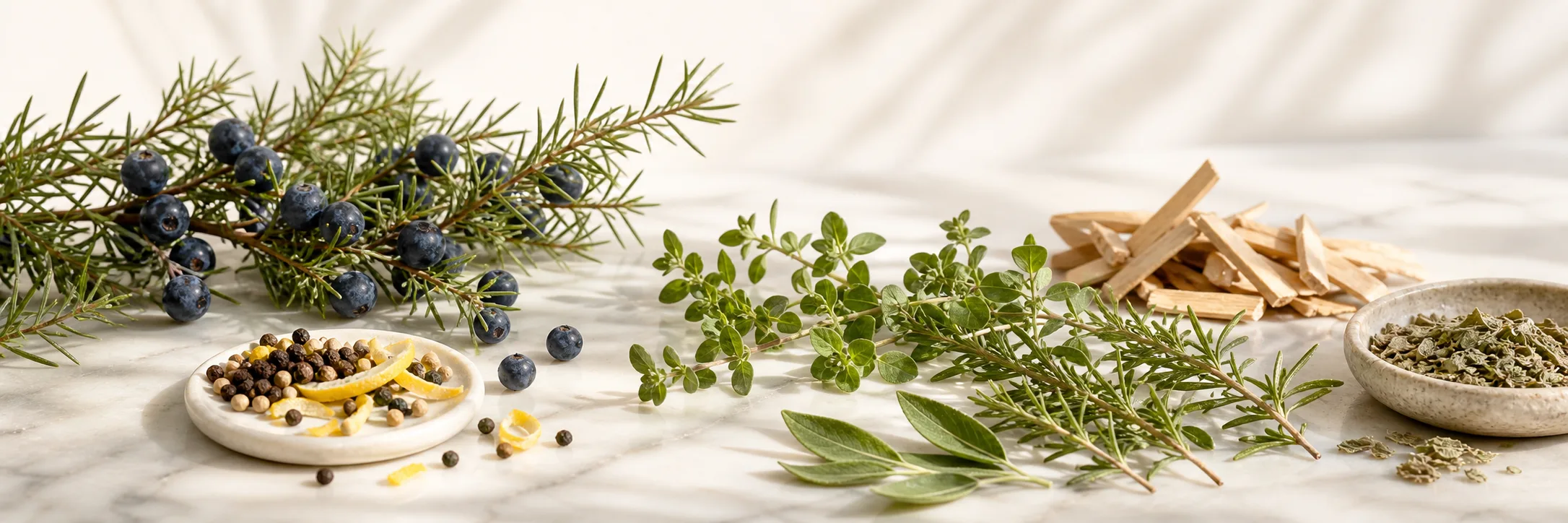
Essence
A quietly oddball Acqua Colonia release: not a gin-and-tonic juniper, and not really a classic cologne either, but a cooling herbal-spa scent built around juniper, marjoram, and an unexpectedly lemony flash. What makes it distinctive inside the 4711 line is its wellness vibe. wearers repeatedly describe it less as a social fragrance than as a calming personal refresher-something for winding down, clearing the head, or even scenting a pillow rather than impressing a room.
Scent Profile
On skin, the listed duo does not behave as literally as the name suggests. The first surprise is that several wearers report a clear lemony burst in the opening even though lemon is not in the official note list; it reads like freshly sliced citrus laid over cold herbs rather than like berries or a boozy juniper accord. Juniper is perceptible, but often in a spa-product or herbal-bath way rather than in a dry gin way. Marjoram is present from the start as an aromatic green bitterness, but it rarely announces itself as a sharp culinary herb; instead it fills out the opening into what multiple reviewers liken to unsweetened herbal lemonade or medicinal-wellness water. The first 10-20 minutes are therefore fresher and brighter than the note list implies.
The heart stays simple. This is not a complex evolving composition, but it does pivot from lemon-bright herbality into a softer, more settled marjoram-and-juniper accord after the opening fizz burns off. The juniper remains noticeable, though more as a cool green tone than as a berry note. If you are looking for deep contrast, big facets, or a surprising second act, this is not that fragrance. If you want a minimal aromatic line that shifts from citrus-herbal lift to a dry, gently spicy green hum, it does that very neatly.
In the drydown, almost everything resolves into a close, soft, herbal skin scent. Marjoram seems to outlast the juniper for many wearers, and what remains is less “berry” than a muted aromatic-herbal residue with a touch of soft woodiness. The easiest shorthand for the signature accord is unsweetened herbal lemonade crossed with spa bath salts. It is mostly linear in architecture, but not flat: the opening is brighter than the middle, the middle greener than the end, and the drydown is distinctly calmer and more personal than the start. Notes that feel truly perceptible are the herbaceous marjoram and the cool aromatic juniper effect; what stays submerged is any obvious base structure, because there really is none.
Performance
Performance is better than the stereotype of cheap eau de cologne, but it is still an eau de cologne. Projection is light to low-moderate: noticeable in the first stretch within about an arm’s length, then quickly settling into a wearer-focused aura. Skin longevity is usually around 3-4 hours in the most consistent reports, with a few wearers calling that “above average” for the format. Clothing wear is less well documented in available records, but it appears only somewhat better than skin wear rather than dramatically stronger. Heat shortens the life further; cooler spring and summer weather gives the herbal tail more room. Best strategy is generous application and unapologetic re-spraying, especially if you are using it as an after-work reset or bedtime scent rather than a day-long fragrance.
Wearing Context
This one fits spring and summer best, especially cooler mornings, shaded afternoons, and early evenings when you want something fresh but not cheerful in a citrus-cologne way. The strongest consensus is not “summer party freshie” but “private decompression scent”: after work, around the house, before bed, or on a pillow. It also suits low-stakes daytime use-errands, casual lunches, quiet office settings-because it stays unobtrusive and clean. It falls flat when you want sensuality, volume, or drama; even fans describe it as not a going-out fragrance. Socially it skews introspective more than extroverted. The effect is calm, herbal, and slightly old-world medicinal rather than sparkling or conventionally sexy, so it works best on people who enjoy the idea of smelling serene, green, and faintly therapeutic.
Comparisons & DNA
The closest internal comparison is 4711 Acqua Colonia Lemon & Ginger. Both wear as minimalist fresheners, but Juniper Berry & Marjoram reads greener, more bitter, and more spa-like, while Lemon & Ginger is louder in the citrus register and more likely to go candied or cleaner-like. If Lemon & Ginger is lemon candy or lemon cleanser, Juniper Berry & Marjoram is unsweetened herb water.
That feels right: the 4711 is gentler, simpler, and more overtly herbal-medicinal, whereas the Bvlgari tea model is usually smoother and more polished. Another useful reference point is Hermès Un Jardin en Méditerranée. One reviewer brought that fragrance up specifically when talking about the risk of “kitchen herb” perfume; the delta here is that the 4711 stays more stripped-down and more lemonade-like, without the fuller landscape effect or richer scaffolding of the Hermès.
If you come to it from other juniper fragrances, be warned that it does not seem to aim at the boozy-gin axis that often defines modern juniper perfumes. wearer chatter does associate it with juniper-focused fragrance discussions, but the actual wearing experience described by users is calmer, less alcoholic, and more wellness-oriented. No meaningful clone or dupe ecosystem surfaced in available records, which fits the fact that this is a relatively obscure, discontinued-like flanker rather than a trend-setting release. Its DNA is best understood as a two-note aromatic cologne from the Acqua Colonia school: transparent, literal enough to be readable, but abstracted into a personal-care/spa register rather than a photorealistic culinary or cocktail effect.
Reception
Reception is positive but niche. What praise it gets is very consistent: relaxing, clean, quietly distinctive, and unusually decent in longevity for a cologne. Fans like the soft medicinal-herbal character, the lack of sweetness, and the way it behaves as a personal comfort scent rather than a conventional perfume. The criticisms are equally consistent. Some users find it too simple to justify a full bottle, too timid in projection, or too specific in mood to be broadly useful. The juniper-marjoram concept can also read medicinal or “bath product” rather than perfumey. That split is important: people who judge fragrances by distinctiveness in social settings tend to underrate it; people who judge by mood effect often rate it highly.
Versions & Reformulation
Acquisition Notes
This sits in budget designer territory, not niche: the line launched as an affordable large-format cologne, and Juniper Berry & Marjoram was documented at launch in a 170 ml bottle rather than a broad concentration ladder. Current acquisition is the tricky part. Coverage is thin on specialist decant-shop inventory, though minis, decants, and secondhand distribution clearly circulate in fragrance wearers. No 4711-specific counterfeit pattern or batch-code guide surfaced in available record research for this flanker. The practical read is simple: look for sealed old stock or trusted secondary sellers, and treat any listing as a discontinued-item purchase rather than a readily replenishable bottle.
Notable Facts & Lore
- House framing at launch leaned heavily into mountain-air calm: juniper from high peaks, marjoram for balance, and a general “back into balance” message.
- What is more interesting than the official copy is how consistently wearers translated that into use.
- This is one of the few Acqua Colonia flankers that repeatedly gets described less as a fragrance wardrobe piece and more as a functional comfort object-something for unwinding, scenting the pillow, or replacing the end-of-day mental static with an herbal reset.
- This is the Acqua Colonia that some people use the way others use lavender linen spray or herbal bath products-and that is unusually specific, and unusually memorable, for a cheap eau de cologne.