4711 — 4711 Acqua Colonia Rhubarb & Clary Sage
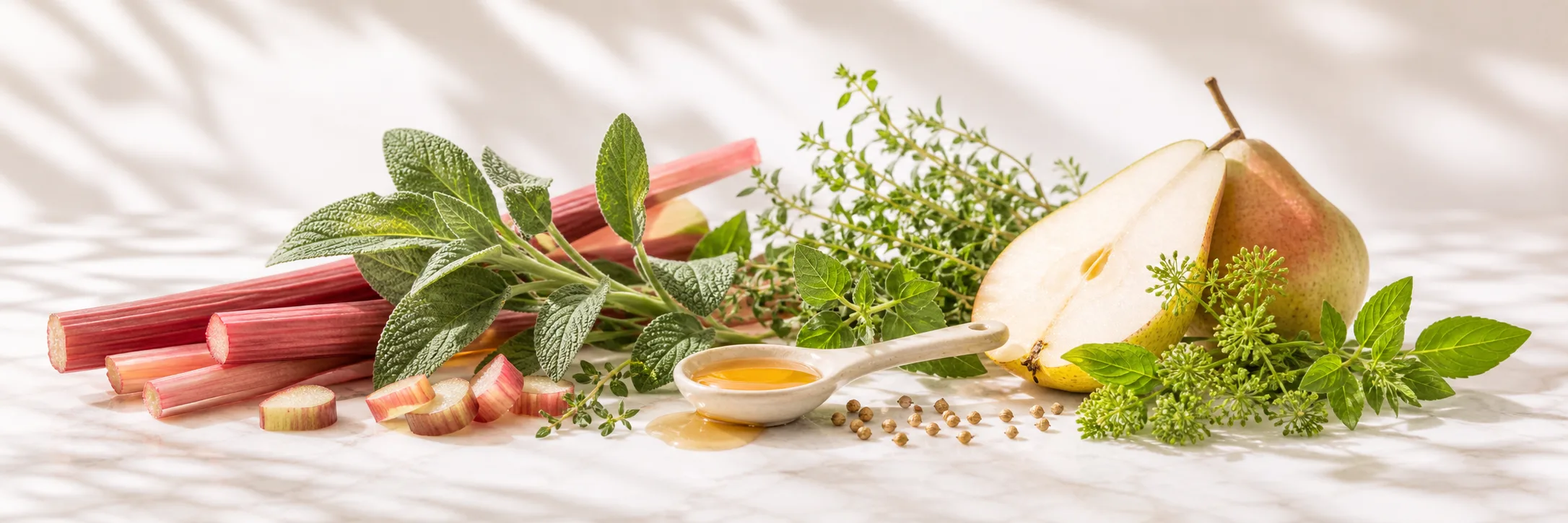
Essence
A tart-green rhubarb cologne shaded by clary sage, this is one of the Acqua Colonia line’s more unusual entries because it does not read like a standard citrus refresher. wearer descriptions consistently push it toward something more herbaceous, softly spicy, and even faintly incense-like, with a sour-fruity opening that dries into a close, calm skin scent rather than a sparkling cologne cliché. That tension between juicy rhubarb and meditative sage is what gives it character.
Scent Profile
The opening is the most vivid part: a tart, rhubarby-green snap with a summery herbal edge. The rhubarb is perceptible early, but it is often described as more bitter-sour than jammy or candy-like; this is not a plush red-fruit effect. At the same time, the sage is not loudly aromatic in the first seconds. It tends to sit just underneath the fruit, giving structure rather than announcing itself as a classic fougère herb.
The heart is where the scent becomes more interesting than its simple two-note billing suggests. In practice, the rhubarb and sage do not alternate dramatically; they braid together, with the sage adding dry lift and the rhubarb providing the tart body.
The drydown stays close. What remains is usually described as a softly sweet, fruit-leaning base with a quiet herbal or incense hum, less overtly “rhubarb” than the opening and less overtly “sage” than a literal aromatic cologne. Some wearers even mention a delicate peachy softness emerging late, but the stronger consensus is simply a subdued bitter-fruity sweetness over skin. The composition is not fully linear, but its development is compact rather than dramatic: tart herbal opening, brighter-spicier herbal heart, then a muted sweet-bitter trace. The signature accord is the tart rhubarb-plus-bright-sage pairing, especially when the sage tips toward dry incense.
Performance
Projection is usually light to low-moderate: enough for a personal scent bubble and occasional wafts, not enough to function as a room-filler. A half-meter bubble in the first stretch is a realistic expectation, sometimes less.
Heat is where it most often gets praise. In dry air it will likely feel quieter and greener; in humidity it seems to throw more tonic-like lift. Best practice is liberal spraying, especially on clothes, because even positive reviewers treat it as a scent that rewards reapplication rather than restraint.
Wearing Context
This wears best when you want freshness without obvious citrus. It suits spring and summer most naturally, especially daytime use, office settings, quick errands, or post-shower wear, and some users explicitly describe it as a morning get-going scent rather than an evening perfume. It also works as a “refresh and relax” fragrance, which is different from being merely invigorating: the sage keeps it from feeling too playful or juvenile.
Where it can fall flat is with people who expect a classical cologne effect. That split is useful: social perception seems to run from quietly unisex and earthy to softly feminine and perfume-like, depending on skin and expectation. If you want bright citrus, barbershop cleanliness, or obvious masculinity, it is the wrong Acqua Colonia. If you want something tart, adult, and low-pressure, it is exactly the kind of scent that can become a personal warm-weather staple.
Comparisons & DNA
The difference is that Hermès is generally understood as cleaner and more transparent, whereas 4711’s version has a drier, more herbal, more old-world twist because of the sage and its faint incense effect. If Hermès is rhubarb watercolor, 4711 is rhubarb over a dry aromatic sketch.
By implication, 4711 is the friendlier and less angular take: cheaper, easier, less avant-garde, and much softer in volume. It does not isolate rhubarb as sharply as those references; instead it uses rhubarb to brighten an herbal accord. That makes it feel less niche-experimental and more like a quietly eccentric daily sprayer.
Those are not exact smell-alikes, but they help triangulate the mood: summery, easy, faintly sweet, and more rounded than the note list suggests. Its DNA is basically “tart green fruit plus dry aromatic calm,” not mainstream fruity-fresh.
Reception
Reception is good but niche. The praise is very consistent: unusual rhubarb handling, a hidden-gem feel, better-than-expected quality for the price, and a freshness that is not interchangeable with generic citrus. Criticism also clusters tightly. The main complaints are weak or erratic performance, too little true cologne freshness, and a gendered skew that some wearers read as more feminine than expected. A few Reviewers also find that the sage overwhelms the rhubarb, turning the scent into a herbal or even frankincense-like composition rather than a tart fruit splash. Blind-buy status is therefore only moderate: safe if you already enjoy rhubarb notes and accept cologne limits, unsafe if you want a loud summer citrus or a literal, juicy fruit scent.
Versions & Reformulation
Single composition, no known reformulations.
Acquisition Notes
This sits firmly in budget-designer territory. In documented wearer sources, the appeal is partly value: users repeatedly describe the line as affordable, low-risk, and easy to spray generously.
Coverage is thin on decant sellers and essentially nonexistent on batch-code decoding. Counterfeit chatter is also thin; what does surface is more about availability than fakery. For older bottles, the main reassurance markers in available material are the line’s embossed “relief” glass and the splash/spray presentation noted in launch coverage. Because this is not a hyped luxury release, rarity should not automatically justify collector pricing.
Notable Facts & Lore
- Rhubarb & Clary Sage arrived in March 2010 as one of the first expansions to the five-fragrance Acqua Colonia launch set from 2009.
- In that sense, the fragrance is a pure Acqua Colonia artifact-simple name, simple contrast, implied aromatherapeutic function.
- The more interesting lore comes from the wearer.
- Among obscure Acqua Colonias, it has the reputation of being one of the “if you know, you know” picks-a scent people remember precisely because it does not behave like standard citrus Cologne.