4711 — Smoky Tonka
Essence
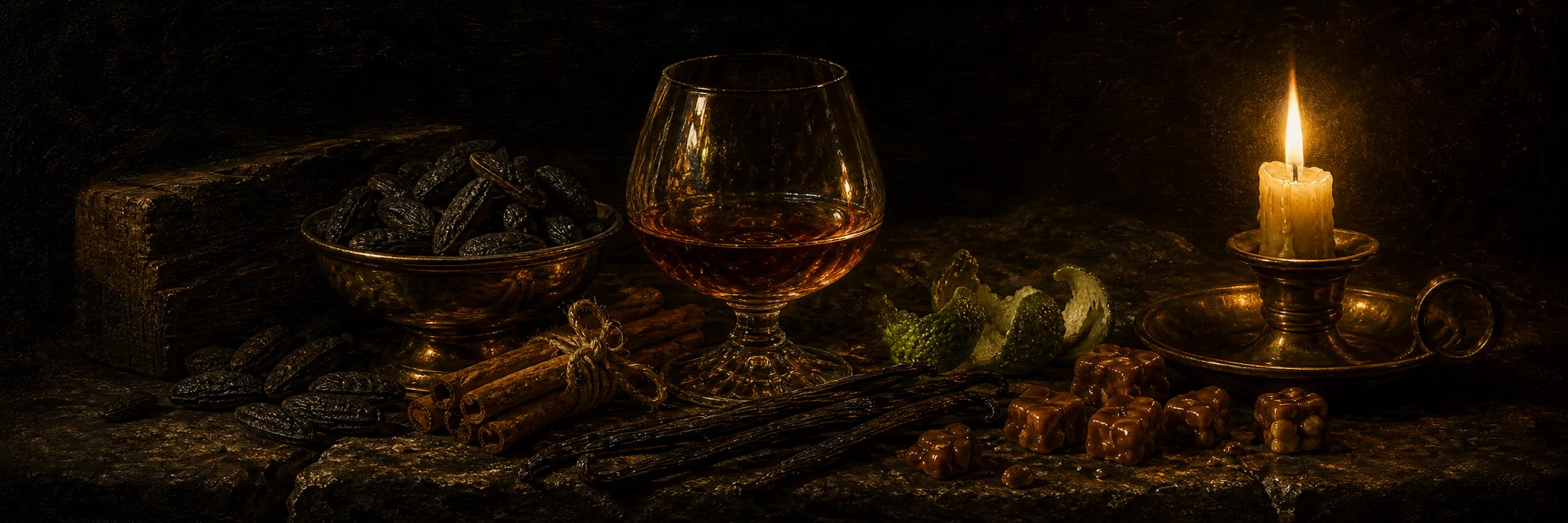
Smoky Tonka is 4711 stepping out of its cologne comfort zone and into full post-Angel’s Share gourmand territory: boozy, cinnamon-heavy, praline-sweet, and built for cold air rather than summer refreshment. What makes it distinctive is not originality so much as calibration. reviewers repeatedly describe it as the friendlier, more affordable, slightly toned-down version of the Kilian template-still rich, still cozy, but less maximalist and often easier to wear.
Scent Profile
The opening is the most characterful part of Smoky Tonka. Bergamot is present, but in wear it is rarely the star; what hits first is a boozy-spicy accord that multiple reviewers immediately connect to cognac, cinnamon, and warm sweetness. In other words, the listed citrus is perceptible, but it is more of a brightening device than a lead.
As the fragrance moves into the heart, the smoke begins to taper. That mid-stage is where the fragrance becomes less dramatic and more cuddly. It is also where the Angel’s Share comparison becomes hardest to avoid, because the profile settles into that familiar boozy-gourmand axis without much detour. The composition is not highly evolutionary. Instead, it shifts from a smoky-edged opening into a stable sweet-spicy body, then stays there with modest recalibration rather than true transformation.
The drydown softens further. Sandalwood is not a major player early, but several wearers say it emerges later as a gentle woody frame under vanilla and tonka. What remains after a few hours is a warm, edible, creamy tonka-vanilla scent with residual cinnamon and only traces of the earlier smoke. The listed smoky/oak-barrel idea matters most as an opener; the enduring identity is a sweet boozy tonka gourmand. That makes the signature accord clear: cinnamon-tonka liqueur over praline vanilla, with smoke as top-stage seasoning rather than an all-day theme.
Performance
For a 4711 release, Smoky Tonka is repeatedly described as stronger and longer-lasting than expected. The consensus read is moderate projection-noticeable in your aura, not room-dominating-with a sweeter wake in colder air.
Skin longevity appears to land around 6-8 hours for many users, sometimes a little less, sometimes more. available record clothing-specific wear data is sparse, so a hard garment number would be overconfident; still, the dense sweet-woody build strongly suggests fabric will hold it longer than skin. Behavior is heavily seasonal: multiple users explicitly tie it to winter, fireplaces, ski holidays, or colder days, and even positive reviews frame it as a fragrance for cold weather rather than year-round use. Heat is likely to make the tonka-praline core feel heavy faster. Best application strategy is restraint at first-one or two sprays, then adjust-because the sweet core can fatigue even people who otherwise enjoy the scent. Reapplication is usually not necessary unless you start very light.
Wearing Context
This is a cold-weather gourmand through and through. The imagery that recurs across sources-French Alps chalet, Christmas feelings, fireplace, ski holiday-tracks with the actual scent behavior: boozy cinnamon, sweet tonka, and creamy vanilla are most convincing in fall and winter, especially evenings, cozy indoor settings, and social occasions where a warm edible trail is welcome. It can work casually, but its natural habitat is sweater weather rather than office AC in July.
It also seems to play well in compliment culture. That social-perception skew matters: Smoky Tonka is a likeable, legible fragrance. People smell it and understand it quickly. The flip side is that it falls flat if you want austerity, freshness, or true niche weirdness. In warm or humid weather it is likely to feel too sweet, and if you are already bored by the whole cognac-cinnamon-dessert wave, it can feel redundant rather than charming.
Comparisons & DNA
The inescapable comparison is By Kilian Angel’s Share. If Angel’s Share is the lush original, Smoky Tonka is the more approachable, slightly quieter cousin.
Parfums de Marly Oajan is the next useful comparison. That suggests a delta of emphasis: Oajan reads denser, deeper, and more fully winterized; Smoky Tonka keeps a bit more lift and flexibility.
The actual lineage is clear: Smoky Tonka belongs to the post-Angel’s Share boom of boozy dessert fragrances, where cognac, cinnamon, tonka, and vanilla are the template. It does not start a trend; it is a value-conscious designer entrant into an already crowded niche-coded space. Nevertheless, because it comes from 4711-and because reviewers repeatedly express shock that 4711 made something this current-it has a mild underdog identity that more expensive rivals do not.
Reception
Reception is good but not unquestioning. The praise comes in three main buckets: first, the fragrance smells more expensive than many people expect from 4711; second, the opening is widely liked, especially if you enjoy boozy cinnamon; third, the price-to-pleasure ratio looks strong. Positive reviewers call it wintery, cozy, compliment-generating, and a real bargain at its price. Even those who prefer Angel’s Share often admit Smoky Tonka is attractive in its own right. The criticism is equally predictable. The biggest complaint is lack of originality: Angel’s Share is mentioned so often that Smoky Tonka’s identity sometimes gets swallowed by the comparison. The second complaint is sweetness overload.
Versions & Reformulation
Single composition, no known reformulations.
Acquisition Notes
Smoky Tonka sits in a “luxury-leaning designer” bracket rather than true niche.
Available record decant coverage is thin. Counterfeit prevalence also does not register in available record discussion, which usually means either the issue is minor or the line is too new / too niche-within-designer to have generated much counterfeit chatter. No batch-code decoding system surfaced in available records.
Notable Facts & Lore
- Smoky Tonka is one of the best examples of 4711’s attempt to enter a more upscale eau de parfum space.
- Perfumer Daniela Marty’s material focus was unusually explicit: she emphasizes the tonka bean’s connection both to perfumery and high-end pastry, and notes that the beans are collected after falling from the tree, framed as a more ecosystem-conscious sourcing practice.
- The release also had a small pre-launch “leak” moment in wearer discussion.
- That matters because part of Smoky Tonka’s appeal is narrative dissonance: people know 4711 from classic cheap cologne, then smell a cognac-tonka gourmand and react with disbelief.
- Several reviews explicitly stage that surprise as part of the pleasure.