4711 — 4711 Acqua Colonia Plum & Honey
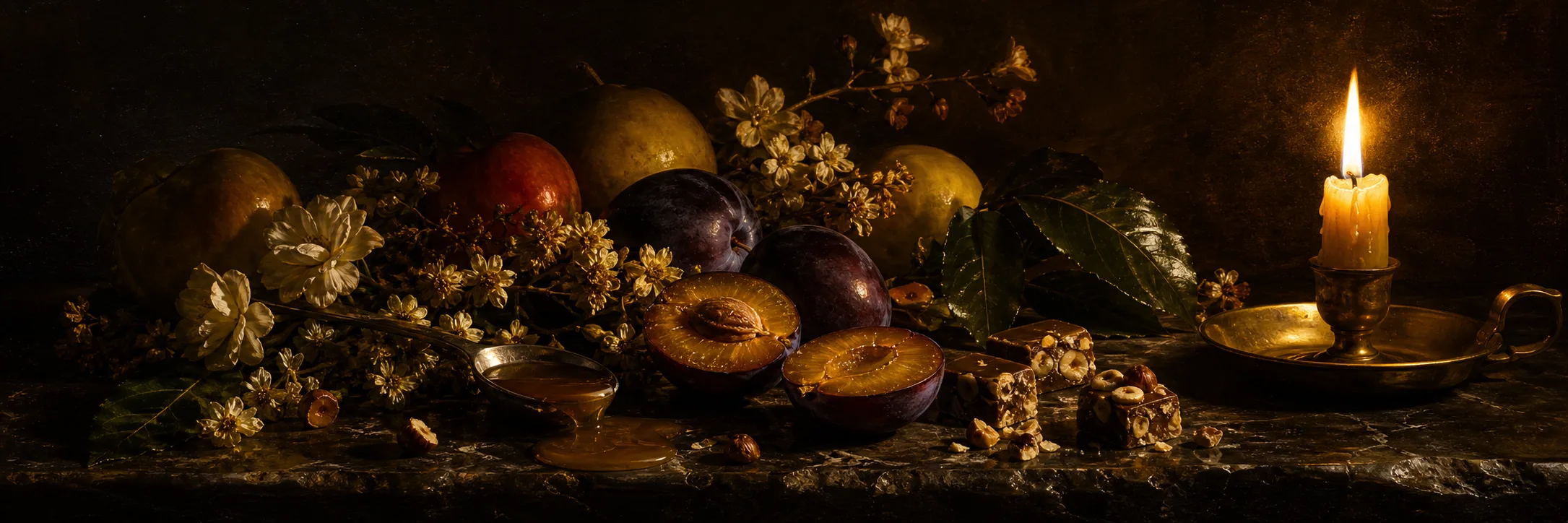
Essence
Plum & Honey is the odd one in this batch: a cooler-weather Acqua Colonia trying to translate fruit and gourmand warmth into the line’s airy cologne format. On paper it promises tart plum softened by honey, but in wear it is much less stable than that sounds. Some get sticky honey, some get almost none, and some mostly get a clean fruity-soapy scent with only a trace of either note. Its distinctiveness lies less in success than in the fact that 4711 tried to make a fall-weight fresh gourmand at all.
Scent Profile
“ Some reviewers smell a bitter-sweet, unripe, or even peach-like fruit note; others get a quick flash of pleasant plum before it vanishes. Honey is just as unstable. On some skin it dominates immediately and keeps the scent sticky-sweet; on others it is barely there, more a light sweet wash than a proper honey accord. A few wearers even report neroli-like cleanliness and grassy bitterness, which tells you how far this can drift from the note list in practice. This is not a dense purple-fruit gourmand and not a syrupy honey perfume. It is a light cologne format trying to suggest both.
By the midstage, the wearer split becomes the defining story. For honey lovers, the sweetness can linger far longer than expected and become the whole point. For others, the named accord collapses into something airy and anonymous: hotel-room freshness, synthetic fruity soap, or a thin musky cleanliness that no longer reads as either plum or honey. Drydown descriptions often mention soapy musk, vague sweetness, or a characterless freshness rather than a true gourmand base. So the signature accord is best described cautiously: tart fruit washed in translucent honeyed soap, not jam, syrup, or beeswax. It evolves more than the brighter Acqua Colonias in the sense that the fruit often disappears and the sweetness or soap stays, but it does not become more complex as it does so.
Performance
Performance is unusually inconsistent. A realistic summary is light-to-moderate projection in the opening, then a quick reduction to skin scent. On skin, most reports suggest about 2-5 hours total wear, with a notable number of wearers saying that the recognizable fruit phase is much shorter than that; clothing tends to hold a faint sweet-clean remnant a bit longer. Cool weather helps, because the honey-plum contrast reads more intentional; in heat, the fragrance can turn sticky-sour, synthetic, or simply too vague. Application wise, this is not the one to atomize blindly in warm weather. It benefits from restrained sprays first, then adjustment based on how your skin amplifies honey.
Wearing Context
Plum & Honey is best in early autumn, mild winter daytime, indoor casual wear, or situations where you want a touch of sweetness without the density of a real gourmand. It can also work as a cozy freshener-car rides, quiet weekends, errands-more than as a true seasonal statement. It falls flat if the wearer expects rich honey, plush fruity depth, or sensual evening performance. Social perception is the most polarized of this group. Some people find it friendly, clean, and gently unisex; others get “grandma,” room-spray, or generic hotel-amenity vibes. That skew matters more here than with the other four, because the note pair invites a very specific expectation that the actual scent frequently does not meet.
Comparisons & DNA
The most useful comparison is internal: Plum & Honey launched alongside 4711 Hazel & Tonka as the line’s autumnal seasonal pair, but Hazel & Tonka is the sweeter, denser, more overtly gourmand sibling, while Plum & Honey stays fresher and thinner. Several Reviewers also notice a background 4711 cleanliness or “4711 DNA,” which ties it back to 4711 Original Eau de Cologne more than the note list might suggest; Original is obviously more citrus-aromatic, but the clean-soapy backbone helps explain why Plum & Honey can read fresher than advertised. This fragrance does not seem to have inspired clones or a firm lineage; what it mostly demonstrates is the tension between a gourmand brief and 4711’s inherently cologne-like execution.
Reception
This is the most divided fragrance in the batch. The praise, when it comes, is modest but real: unusual concept for the line, affordable, occasionally stronger than expected, and interesting if you read it as a clean fruity-sweet cologne rather than a true plum-and-honey perfume. The criticism is far more consistent: plum can vanish, honey can turn sticky or fail to materialize, the scent can go synthetic or generic, and several wearers simply find it insignificant next to stronger entries in the line. Blind-buy verdict: no. This is the least reliable buy of the five unless the buyer can test first or knows they like quirky, light, fresh-leaning gourmands.
Versions & Reformulation
Single composition, released as a limited seasonal eau de cologne; no known reformulations.
Acquisition Notes
Plum & Honey belongs to the low-cost limited-edition side of the line. the available record does not document decant ecosystems, batch-code systems, or counterfeit patterns for this fragrance. Provenance therefore matters more than chasing specific presentations, especially because the scent is not universally loved enough to justify risky blind hunting.
Notable Facts & Lore
- Plum & Honey launched with Hazel & Tonka in 2014 as a cooler-weather counterpoint to the line’s usual summer-citrus identity.
- The house framed both as autumnal contrast scents, using fruit-plus-warmth pairings to translate Acqua Colonia into colder months.
- What survives in wearer memory is more ambiguous and more interesting: despite the honey note and autumn brief, Plum & Honey rarely behaves like a plush gourmand.
- Reviewers keep recasting it as a fresh hotel-bath product, a clean fruity veil, or an almost characterless musky sweetness rather than a syrupy dessert cologne.
- That mismatch between idea and execution is the real lore around the fragrance.