4711 — Echt Kölnisch Wasser Daisy
Essence
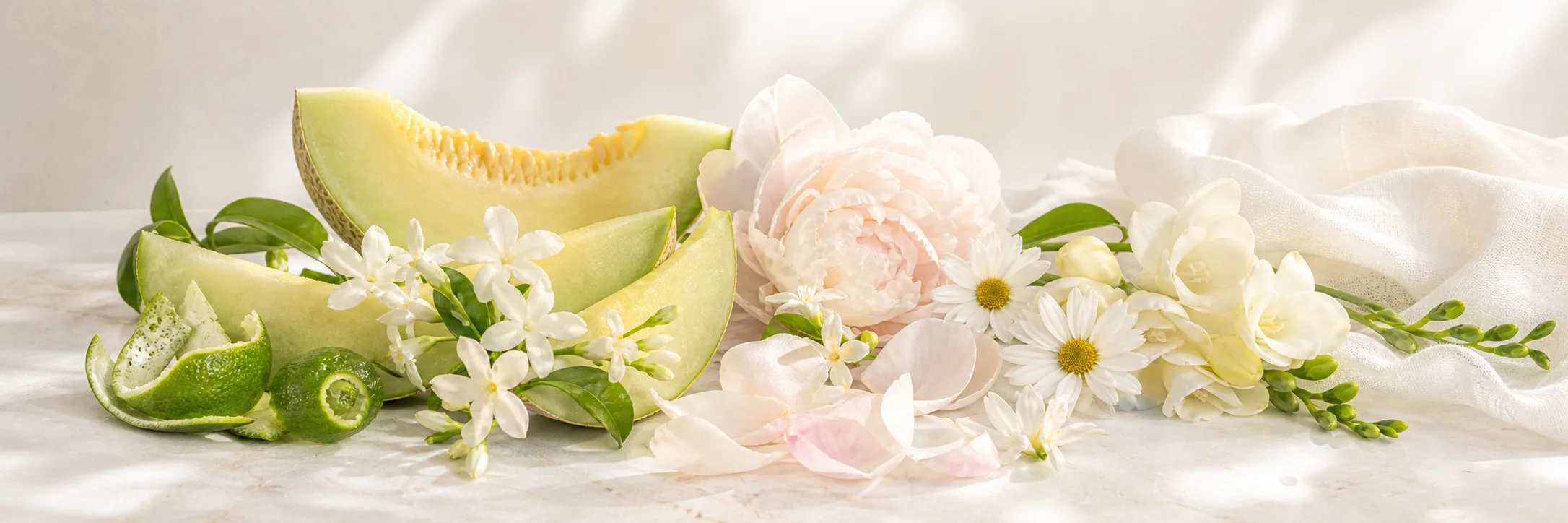
Daisy is a sheer floral-fresh cologne built around juicy melon, soft white florals, and a musky vanilla-wood drydown. What makes it distinctive is that it does not try to smell like a literal crushed daisy stem; instead, it creates the idea of innocent, breezy florality through honeydew, peony, freesia, and a clean cozy base. The result is one of the easier wears in the 4711 range: optimistic, airy, and lightly comforting rather than glamorous or assertive.
Scent Profile
Daisy opens more fruit-forward than its name suggests. The strongest repeated impression is honeydew melon, with bergamot adding brightness and freesia softening the edges. That gives the first twenty to thirty minutes a watery, juicy, lightly citrusy effect that one reviewer explicitly associates with hot and humid weather. After that, the florals move in. Peony and the abstract “daisy” effect become more noticeable, but not as a sharp green floral; instead, they read as soft, sheer, slightly powdery flowers with a dewy-clean feel. Jasmine is listed, yet detailed reviewers repeatedly say it is muted and never tries to dominate, which is probably key to why the scent stays easy rather than heady. In the drydown, the shape shifts toward white woods, musk, and a gentle vanilla note. Importantly, the vanilla is not described as cake-like or gourmand. Reviewers characterize it as creamy, cozy, and more herbal than dessert-like, which keeps the perfume in the floral-clean category rather than pushing it into fruity gourmand territory. The clearly perceptible notes are honeydew, freesia, peony, soft musks, white woods, and a mild vanilla accent. The less perceptible notes are jasmine and any truly distinct “daisy” botanical realism; daisy smells more like an impression than a literal flower note. The signature accord is watery melon and soft peony over a musky, powdery vanilla-wood base.
Performance
For an eau de cologne, Daisy performs respectably but never aggressively. the most detailed review puts actual wear around 5-6 hours while emphasizing that the fragrance stays fairly close to the skin. Another short statement also frames it as average in both longevity and sillage. That suggests light-to-moderate projection and a scent bubble designed more for the wearer and near company than for trail-making. Clothing-specific longevity is not separated clearly in the retrieved material. Because the structure is airy and difficult to overspray, this is one of those fragrances where more generous application is unlikely to create problems unless you are in an extremely scent-restricted environment.
Wearing Context
Daisy is built for daytime and ease. It looks strongest in hot weather, casual office use, errands, spring and summer lunches, after-shower wear, bedtime, and generally any moment when “pleasant and clean” matters more than personality fireworks. A reviewer explicitly calls it a perfect sleep scent, which says a lot about its social volume and texture. It falls flat if you want real floral drama, seduction, or a forceful photorealistic flower. Socially it skews wholesome, cheerful, and mildly romantic. That can be a strength if you want a fragrance that nobody is likely to object to, but it also means some wearers will experience it as too shy or too safe. The melon and vanilla do keep it from reading purely soapy, which is probably why it feels more modern than the brand’s name might imply.
Comparisons & DNA
The closest easy comparison is 4711 Rose, because both belong to the Floral Collection and share the same overall idea of modern floral freshness in the 4711 bottle. Rose is more tea-citrus and explicitly rosy; Daisy is juicier, more watery-fruity, and creamier in the base. The difference is scale and finish. J’adore is far more polished and perfume-y, while Daisy is lighter, quieter, and more melon-peony-cologne in feel. In lineage terms, Daisy matters because both wearer reviews and launch blurbs frame it as a modern twist on the original 4711 idea, translated into floral freshness rather than aromatic-citrus classicism. It does not appear to have spawned clones or a dupe wave.
Reception
Reception is positive but sparse. The praise cluster is consistent: people call it refreshing, clean, optimistic, hot-weather friendly, and easy to wear in both office and rest settings. The criticism is more polarized than the average score suggests. Blind-buy verdict: reasonably safe if you want a gentle floral-fresh cologne and understand what “shy” means; not safe if you expect projection or a vivid soliflore.
Versions & Reformulation
Single composition, no known reformulations in current Coverage.
Acquisition Notes
That low entry price is part of the fragrance’s appeal, because it makes Daisy the kind of scent you can buy for easy summer use without needing a decant first. Coverage did not produce reliable decant-market data, batch-code conventions, or release-specific counterfeit warnings.
Notable Facts & Lore
- Daisy has one of the clearer narrative frames in this batch.
- The interesting thing about the fragrance is that “daisy” is not a standard glamorous perfumery note in the way rose or jasmine are, so the scent’s success depends on illusion: melon, peony, freesia, soft woods, vanilla, and musk are used to suggest freshness, innocence, and wildflower air rather than to reproduce a literal daisy aroma.
- That is probably why the wearer splits on realism.
- Some smell the floral idea beautifully; others think the illusion turns synthetic.
- I found no meaningful celebrity tie-in, controversy, or viral trend around the release.