4711 — 4711 Magnolia Eau de Cologne
Essence
A budget floral cologne that aims less for creamy magnolia opulence than for a bright, airy, spring-breeze rendering of the flower. In wear, it lands as a clean, citrus-lit magnolia with a soft soapy edge and a cashmeran/sandalwood frame that gives it more structure than many drugstore florals. Its distinction is that it behaves like a roomy, breathable floral mist rather than a dense bouquet or a sweet shampoo bomb.
Scent Profile
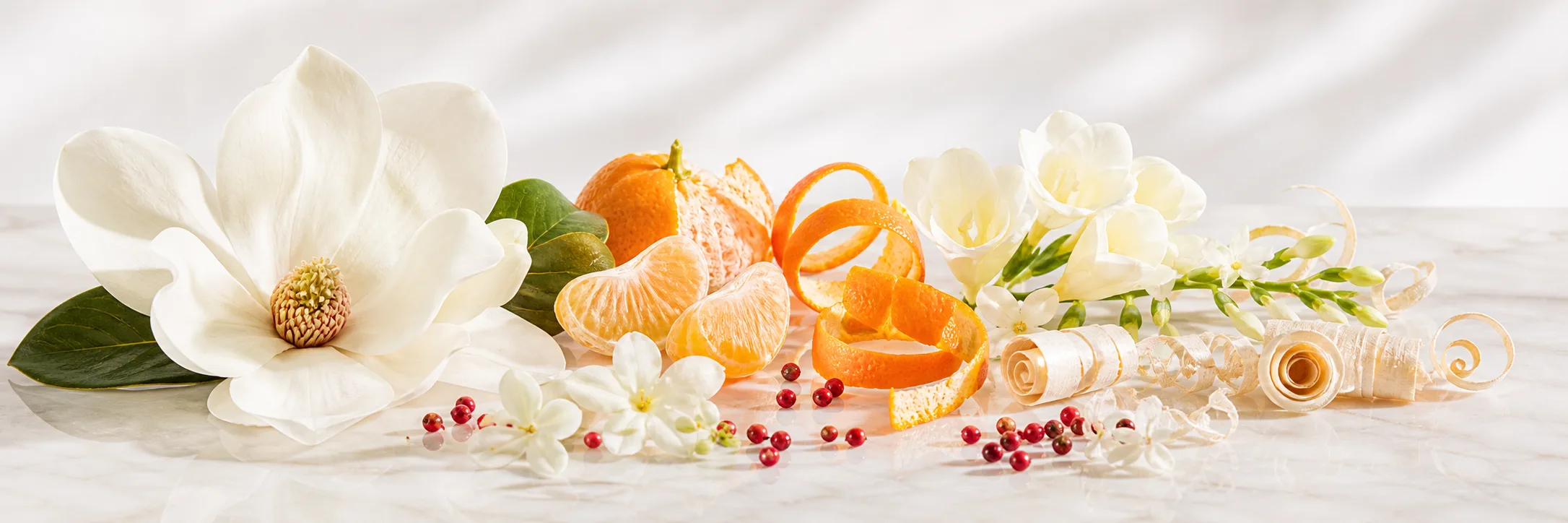
The opening is sharper than the note list might suggest. Mandarin and sweet orange read less as juicy pulp than as tart, brisk brightness, with pink pepper adding lift rather than obvious spice. Early impressions repeatedly mention freshness first and “floral” second, with a slight soapiness right from the top. If you expect an immediately creamy magnolia soliflore, this does not quite do that; it opens more like fresh air passing through citrus peel and white petals.
The heart is where the fragrance earns its name. Reviewers who like it generally find the magnolia recognizable rather than abstract, and one of the stronger positive reactions is that it really does sketch the chilly, petal-strewn feel of a flowering magnolia tree on a rainy spring day. Freesia and jasmine are support players: they keep the floral body clean and transparent, but the perfume is not especially indolic, narcotic, or creamy. The fresh-citrus tint that real magnolia can have is one of the more successful aspects here.
The drydown is where the composition divides opinion. Cashmeran becomes much more noticeable, and on some wearers that extra wood-musky texture is exactly what makes the fragrance perform above what they expect from an eau de cologne. On others, it nudges the fragrance toward shower gel, synthetic floral, or a slightly mature “pretty but old-fashioned” floral profile. Sandalwood is soft rather than creamy or lactonic; it rounds rather than transforms the scent.
Performance
For an eau de cologne, Magnolia performs a little better than the genre stereotype, but not enough to call it truly strong. The projection is light to moderate: it sits in a soft personal cloud when freshly sprayed, then becomes less convincing if trapped under layers or worn in still indoor air. More than one wearer specifically notes that it works best as an airy “cloud” application rather than a close, targeted spray.
Longevity is best described as short-to-moderate. Positive wearers compare it to a weak eau de toilette, while others experience it more as a fleeting floral refresh. Coverage does not support a hard clothing-longevity number, but skin performance appears variable enough that application style matters: a loose mist on hair, clothing, or ambient fabric seems more effective than tight skin placement.
Wearing Context
This is a spring-first fragrance. It suits early bloom season, daytime wear, offices that reward softness over statement, and situations where “smells clean, feminine, and put together” is the goal. The best social context is low-stakes, close-range wear: work, errands, a lunch date, or simply using scent as mood-lift. It is less about sensuality than about atmosphere.
Its main weakness is that it can feel too polite in static environments. One of the more useful observations is that the scent “needs to breathe”; if worn too close to the body or compressed under clothing, it loses part of what makes it appealing. That makes it less convincing for formal evening wear, cold-night use, or any setting where you want a fragrance to sit with obvious presence.
Comparisons & DNA
Within 4711’s own floral line, Magnolia sits between Jasmine Eau de Cologne and the fresher side of Rose Eau de Cologne: less specifically indolic than Jasmine, less rosy and cosmetic than Rose, and more airy than both.
Compared with Chloé Eau de Parfum, Magnolia is lighter, less rosy, less persistent, and much less polished; it offers some of the same clean-feminine everyday utility at a far lower price, but without Chloé’s diffusion or signature identity. Compared with Dior J’adore, it is much narrower and more transparent, with far less glossy fruit-floral body. Compared with CK One, which appears in its comparison orbit, Magnolia is more overtly feminine and floral, with the citrus acting as framing rather than the point of the perfume.
The more useful DNA comparison is not to a prestige magnolia so much as to the broader “fresh floral cologne” tradition. It keeps a faint relationship to the original 4711 template through its citrus lift and open, splashy manner, but its personality is decisively floral rather than aromatic-citrus. There is no clear clone ecosystem or strong evidence that it inspired copycats; its role is more as a quiet budget floral option than a trendsetter.
Reception
Reception is positive overall but modest in scale. The best reactions come from wearers who approach it as an airy seasonal floral rather than a powerhouse perfume. The criticism is just as consistent. The scent can read synthetic, shower-gel-like, too soapy, or faintly “mature” depending on skin and expectation. Cashmeran is the note most likely to bother people: some think it improves the performance and gives the scent its lift, while others think it blurs the magnolia into generic woody-floral territory. That split is the main axis of polarization. Blind-buy verdict: reasonably safe for someone who likes clean floral colognes and magnolia specifically; not safe for someone who dislikes soapy florals or expects creamy magnolia realism and strong projection.
Versions & Reformulation
Single composition, no known reformulations.
Acquisition Notes
This sits firmly in the cheap-designer tier. That makes it not just affordable but almost purpose-built for liberal use.
The common bottle size documented in Coverage is 100 ml. Coverage is thin on decant specialists, counterfeit prevalence, and batch-code decoding for this specific release, and there is no strong signal that Magnolia is a major counterfeit target.
Notable Facts & Lore
- Magnolia was added in 2020 as the fourth entry in 4711’s Floral Collection, after jasmine, lilac, and rose.
- That context matters because it explains why the fragrance behaves like an expansive floral cologne rather than a dense floriental or a soliflore extrait.
- The most useful bit of lore is practical rather than historical: wearers repeatedly treat it as a “cloud” scent.
- One reviewer even describes it as something that works best when it can float in open air or on fabric rather than sit in a tight scent bubble on skin.
- That is unusually aligned with the old eau-de-cologne idea of refreshment-through-use rather than perfume-as-projection, and it helps explain why Magnolia is liked most by people who spray freely and casually.