Comptoir Sud Pacifique — Aloha Tiare Eau de Toilette
Essence
Aloha Tiare is one of the founding-era creations of Comptoir Sud Pacifique, the French house built in 1974 on being the first importer of Tahitian monoi oil into France. It is a soliflore-style tropical white floral - tiare (Tahitian gardenia) at its center - wrapped in the creamy coconut-and-flower effect of monoi and softened by vanilla and musk. True to the house’s “eaux de voyage” philosophy, the pyramid is deliberately simple: a scented postcard of Tahiti rather than a layered abstraction, and a fragrance that inspires unusual devotion in its fans and eye-rolling in its detractors.
Scent Profile
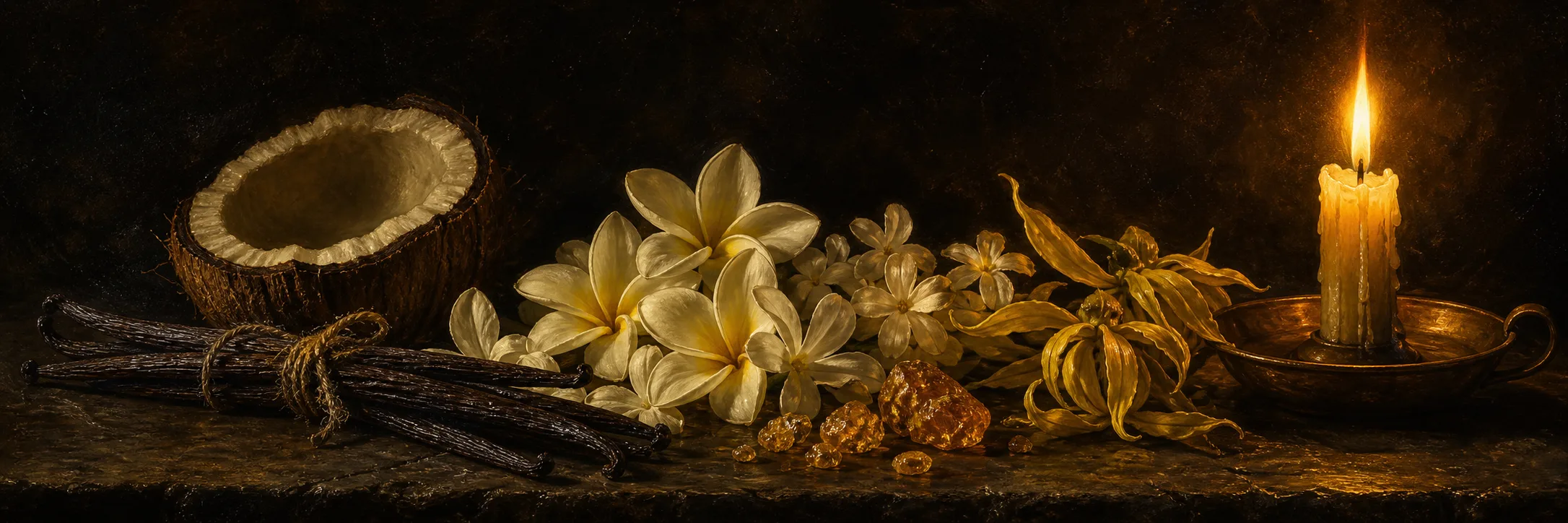
The opening is loud - most wearers recommend applying with caution - a blast of frangipani and tiare so concentrated that some describe the tiare alone as jasmine and lotus combined and doubled. That white-floral intensity can read as harsh or overwhelming for its first minutes. It then softens into the beloved monoi-style heart: creamy coconut and vanilla dust the tropical petals rather than drowning them, for a rich, almost gourmand, sun-warmed floral. Ylang-ylang adds exotic depth, while benzoin and musk anchor a sweet, faintly powdery base. The most common description is “beach vacation in a bottle” - coconut, suntan lotion, warm floral air - though detractors read the same accord as cheap, plasticky, or like children’s chewable vitamins. The fragrance is polarizing precisely because it commits fully to the tropical-monoi idea rather than softening it for a broader audience.
Performance
Performance is a genuine strength here, standing out even against the house’s general reputation for softness. Longtime wearers describe it as tenacious enough to linger on a scarf for days, and multiple reviewers warn that one spray is plenty since overspraying is a real risk. Some skins get more modest longevity, and vintage bottles are reported as especially rich, but the consensus is that this ranks among the stronger, more room-filling entries in the Comptoir Sud Pacifique catalog.
Wearing Context
This is a summer and warm-weather fragrance first - beach, vacation, sunny days - though a share of devotees deliberately reach for it in deep winter as a mood-lifting reminder of summer. It is marketed as feminine and reads that way to many, but a recurring view holds it as genuinely unisex. Its loud, heady character suits open-air and casual settings better than close quarters or formal environments, and it rewards wearers who actively love strong white florals and tropical sweetness; the tiare-averse should look elsewhere.
Comparisons & DNA
Annick Goutal Songes is the fragrance most often set against Aloha Tiare, and opinion splits sharply: some find them strikingly close, if Songes reads slightly greener and less performant, while others find no real resemblance, with Songes carrying more of a cosmetic-counter sweetness. Estee Lauder Bronze Goddess makes a useful contrast rather than a match - it is a soft, suntan-lotion coconut skin scent, where Aloha Tiare is a projecting white-floral statement. Montale Intense Tiare occupies similar territory and divides opinion on whether it improves on or simply imitates the CSP original. Within the house, Aloha Tiare is a renamed, freshened reworking of CSP’s original 1970s “Tiare,” and the separate, more floral 2010 Eau de Parfum (with added tuberose, lotus, and patchouli) is not a substitute for this sweeter, coconut-forward EDT.
Reception
Reception is love-it-or-hate-it. Aloha Tiare has a devoted following: repeat buyers report wearing it as a signature scent for seven to ten years, being stopped and asked what they’re wearing, and rating it the best value in the tropical tiare-monoi genre. Detractors find it cloying, synthetic, or dated - one dismissive assessment simply noted it “makes sense” given its 1970s release. Major fragrance critics have largely passed over it, though the discontinued original “Tiare” once drew praise from critic Victoria Frolova of Bois de Jasmin, who called it “just perfect… rich, sweet flower, with a tinge of coconut and vanilla” - while noting explicitly that she does not consider Aloha Tiare an equivalent.
Versions & Reformulation
The lineage is tangled. The fragrance began as CSP’s first scent, “Tiare,” in the mid-1970s, then was renamed and reworked into “Aloha Tiare” - described in period marketing as “more dressy, nobler and more sophisticated,” freshened with citrus-vegetal top notes. Some sources date this relaunch to 1984. A separate, more concentrated Eau de Parfum followed in 2010 with tuberose, lotus, and patchouli added to the heart. No perfumer is credited for the EDT in any reliable source. Some longtime wearers report that current bottles carry a drier, more astringent musk than older vintages.
Acquisition Notes
Aloha Tiare remains in production, sold through Comptoir Sud Pacifique’s own boutiques and e-shop and select stockists as an affordable EDT around the house’s typical full-bottle range. It is frequently found discounted well below list price, making it one of the more accessible entries into the tropical-monoi genre. Because the EDT and the 2010 Eau de Parfum diverge meaningfully in character, and current bottles are reported to differ slightly from vintage stock, buyers should confirm exactly which version they are purchasing.
Notable Facts & Lore
- Comptoir Sud Pacifique was founded in 1974 by traveling couple Pierre and Josee Fournier, France’s first importers of Tahitian monoi oil.
- “Aloha” in the name is glossed as “heavenly breath of Tiare.”
- The house’s guiding concept is the “eau de voyage” - each fragrance built as a simple, soliflore-style scented destination.
- A widely repeated piece of celebrity lore has actress Denise Richards describing it as smelling like “monoi, coconut and vanilla,” reminiscent of the beach, in a 2006 magazine feature.
- The house went dormant in the early 2000s after the Fourniers sold it in 2002, then was revived in 2011 under Valerie Pianelli.
- A frequently repeated five-star rating attributed to critic Luca Turin for a fragrance called “Tiare” in fact refers to the unrelated Ormonde Jayne Tiare, not this fragrance.