Comptoir Sud Pacifique — Vanille Ambre
Essence
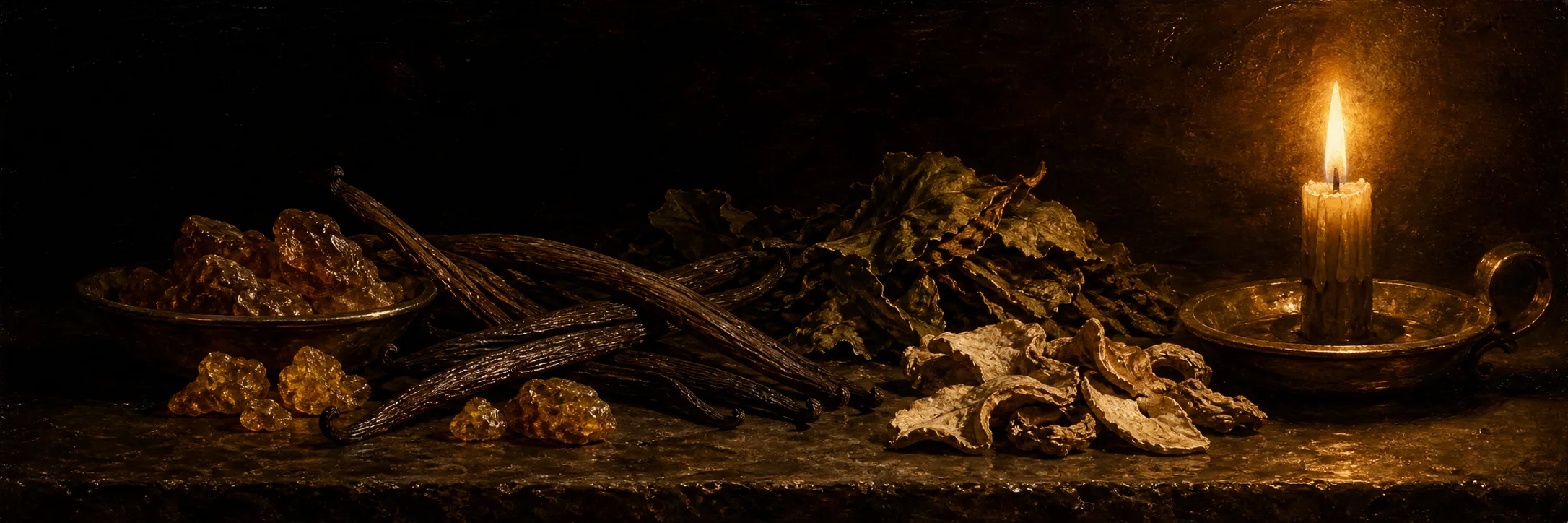
Vanille Ambre (2001, EDT) belongs to Comptoir Sud Pacifique’s long-running “Vanille” gourmand series within the house’s “Eaux de Voyage” collection. It takes the house’s signature cookie-dough vanilla and pushes it toward a warmer, more resinous register through an amber heart and a light patchouli-musk base. This isn’t a standalone masterpiece so much as one node in the house’s broader vanilla DNA - a casual, affordable, comforting vanilla-amber that many long-time wearers treat as an emotional comfort scent rather than a considered perfume.
Scent Profile
The opening is recognizably the house’s signature vanilla - sweet, doughy, almost cookie-like - though a number of wearers report a brief sharp alcohol blast first, a known trait of this house that dissipates quickly. From there, experience splits notably by skin. For many, it settles into a light, resinous amber carrying plenty of vanilla and sweetness with barely any patchouli weight - a warm, sweet hug. For others, the vanilla recedes fast and an unexpectedly woody, even smoky character takes over, described by some as burnt wood with a touch of sugar, occasionally reading as startlingly smoky. There’s also debate about an anise or spice facet, which the brand’s own copy attributes to a freshening effect. The composition runs fairly linear and stays close to the skin once the drydown settles. Its signature accord is sweet vanilla wrapped in soft amber resin, though several longtime fans of the house argue the amber here is so subtle it might as well not be present, leaving essentially the house’s base vanilla underneath.
Performance
As an EDT within an inexpensive gourmand line, performance runs moderate and notably skin-dependent. Reported longevity clusters around four to six hours, and sillage is generally modest - sometimes stronger for the first half hour before settling close to the skin. Several wearers find it benefits from layering to boost staying power, and that it performs better as a cozy skin scent than as a projector. Liberal application and reapplication should be expected for all-day wear, and the wide variance in how wearers describe the woody-versus-sweet balance hints at possible batch or era differences.
Wearing Context
This reads as a cool-weather comfort vanilla - fall and winter are its natural home, though its relatively light profile makes it wearable on cool spring and summer evenings too, and many treat it as a year-round feel-good scent. Marketed as feminine, it wears in practice as broadly unisex given how simple the vanilla-amber-musk structure is. It suits casual daytime wear, cozy at-home time, and bedtime use more than anything formal, with a social register that reads warm and approachable - smelling like sugar cookies - rather than sophisticated or seductive. This is comfort, not a statement.
Comparisons & DNA
The most useful comparisons sit within the house’s own vanilla family, which wearers consistently note shares a common doughy-vanilla core: Vanille Abricot, the line’s best-seller, built on apricot, papaya, and jackfruit over vanilla and generally sweeter and fruitier; Vanille Mokha and Vanille Cafe, both realistic sweet coffee-and-cream vanillas; Amour de Cacao, the chocolate entry; and Vanille Extreme, a sweeter, milkier straight vanilla. Vanille Ambre is the amber-and-resin-leaning member of that family. Outside the house, it’s been compared closely to Montale’s Vanilla Extasy, described by at least one reviewer as nearly identical after the drydown settles. It’s also frequently positioned against Guerlain’s Shalimar as a kind of casual, laid-back descendant - lacking Shalimar’s gravitas but also its foody-cookie heaviness, while staying candy-sweet throughout. Against a serious amber like Serge Lutens’ Ambre Sultan, wearers generally consider Vanille Ambre a much lighter, “cheapened” take where amber isn’t really the star of the show.
Reception
Reception runs warmly positive but unpretentious, with a clear minority of detractors. Fans value it as a comforting, well-priced everyday vanilla with real emotional resonance - more than one wearer describes it as a literal warm hug. The main criticisms cluster around four points: it can feel redundant if you already own another CSP vanilla, since the house’s vanillas share so much DNA; the amber underdelivers, leaving the composition feeling less complex than its name suggests; some find it reads chemical or unnatural rather than like real vanilla; and performance stays modest overall. Wearer sentiment runs roughly half positive, and no major fragrance critic has given this specific release dedicated coverage. The blind-buy verdict: safe and cheap if you want a cozy vanilla-amber and don’t already own a similar CSP scent; skip it if you’re after a refined, long-lasting, genuinely complex amber.
Versions & Reformulation
This is sold as an EDT with no formally documented reformulation, though the brand has passed through multiple ownership and relaunch phases over the years while keeping this fragrance in current production. The notable divergence in wearer descriptions - some finding it sweet-vanilla-forward, others finding it smoky and woody - may reflect batch or era differences rather than a single documented reformulation event. Modern listings also note an anise facet and updated, IFRA-compliant ingredient declarations.
Acquisition Notes
This is an affordable, accessible gourmand sold directly through the brand’s boutiques and e-shops in smaller and larger formats, often with free samples included on direct orders. It’s also widely available through discounters at low prices and has historically sold cheaply on the secondary market, with decants and travel sizes in easy circulation. There’s no significant counterfeit concern given the low price point - the bigger risk with older stock is age-related turning, which an unusually sharp, alcohol-forward or sour opening can signal.
Notable Facts & Lore
- This fragrance belongs to Comptoir Sud Pacifique’s “Eaux de Voyage” line, fitting the house’s founding identity as a Paris-based house built in 1974 by travelers Pierre and Josee Fournier after a trip to Polynesia.
- The brand describes itself as one of the first French fragrance houses to explore oceanic scents, tracing that claim to the 1993 introduction of Aqua Motu, with its broader identity centered on South Pacific and Tahitian-vanilla themes.
- The house is animal-testing-free and produces its perfume concentrates in Grasse.
- There’s no celebrity or viral lore attached to this specific release - its reputation is built as a quiet staple of the affordable vanilla-gourmand category, frequently recommended in comparisons among the house’s own vanilla lineup.