Comptoir Sud Pacifique — Princesse Muscat
Essence
Princesse Muscat is not a nutmeg perfume, and a surprising amount of its identity comes from that bait-and-switch. What emerges across reviews is a tart red-berry-and-grapefruit fruity floral that gradually turns grapey, musky, and faintly wine-like - the “muscat” in the name refers to muscat grape rather than the warm spice many buyers initially expect.
Scent Profile
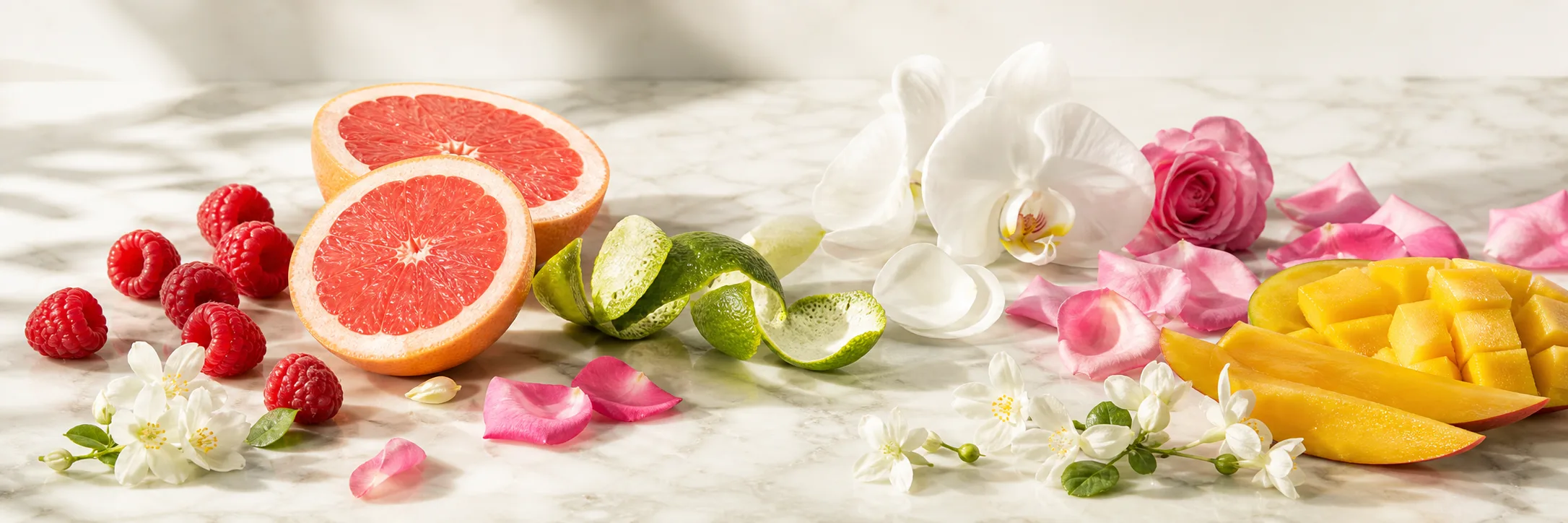
The structure runs tart berries and citrus on top, floral fruit through the heart, then grape, musk, and sandalwood in the base. The opening is the most divisive stage: some describe a cool, bitter grapefruit mixing immediately with sweet red berries into an iced-fruit-cocktail effect, while others call it sour, tart, or heavily cranberry-led - one particularly sharp account found it closer to sour celery than fruit, illustrating just how vegetal-tart the berry-citrus accord can read on certain skin. That tartness is precisely what keeps this from smelling like a typical early-2000s candy-fruit floral; several reviewers specifically note it’s less sweet and simplistic than expected, never tipping into an Escada-style sugar-water fruit basket even at its brightest. The heart stays lightly floral rather than dominant - orchid and rose are perceptible but read as background framing for the fruit rather than a full bloom, occasionally joined by a touch of jasmine. The drydown is where the name finally clicks: a distinct grape or wine impression takes over, described variously as a plump yellow-green grape, a light muscat wine, or berry chewing gum shifting into light table wine with floral musk. Development mostly stops there, with woods and musk acting as fixatives rather than adding new movement - a reasonably linear late phase once the sour opening settles. The real signature accord isn’t “muscat spice” at all, but tart berry-grapefruit resolving into grapey floral musk - unusual, not especially modern, and often liked precisely because it avoids the easy syrupy-fruity formula.
Performance
Performance reads as moderate at best, though the picture isn’t entirely one-sided. Aggregate wearer ratings point to average wear on both longevity and sillage, and the overall review set doesn’t suggest a powerhouse. There’s at least one notable exception - a wearer who found remnants still detectable the following morning, comparing that favorably to Caudalie’s Fleur de Vigne - but that reads as skin-specific upside rather than the norm. The safer expectation is moderate projection and moderate persistence. Practically, don’t judge this fragrance only on its first few minutes: if the tart grapefruit-cranberry opening feels abrasive, most accounts agree it becomes considerably more enjoyable once that sharpness burns off and the grapey-musky phase takes over.
Wearing Context
Most signals point toward spring and summer, or at least daylight and mild weather - one review even suggests sunshine is the fragrance’s best accessory. Because the fruit stays tart rather than syrupy, and the grape note reads airy rather than boozy, this suits casual daywear far more than evening seduction: brunch, warm-weather office wear, errands, and casual social settings where an unusual fruity floral is welcome but a heavier gourmand would feel wrong. It’s a poor fit for formal or cold-weather wear if you’re expecting richness from the name - the fragrance is fresher, more citrusy, and less oriental than “Muscat” implies, and buyers chasing spicy warmth will likely be disappointed.
Comparisons & DNA
The most useful comparison is Caudalie’s Fleur de Vigne - not a twin, but a genuine family resemblance, with Princesse Muscat generally judged to have better persistence. That comparison usefully frames the fragrance as vinous, grapey floral freshness rather than berry candy. Other reviews point to Escada’s Ibiza Hippie for a shared cranberry-musk-sandalwood freshness, though some find the Escada more balanced overall, and to Paco Rabanne’s Black XS, with Princesse Muscat generally considered the more interesting of the two as it shifts from berry chewing gum to light table wine. A more niche comparison places it loosely alongside Frapin 1270 for its grape-woods-spice angle. None of these are exact matches - Princesse Muscat’s real DNA is fruity-floral musk with a vinous grape inflection, not a boozy-spicy amber, and that grape illusion is its defining point of difference.
Reception
Reception is modest but more genuinely appreciative than raw numbers might first suggest, drawn from a relatively small pool of wearers, and the fragrance is explicitly discontinued today. Praise centers on originality within a crowded genre: the drydown’s grape-and-musk character, restrained sweetness, and a wine-like note that gives the whole composition something genuinely idiosyncratic. Positive reviews call it young, fresh, and pleasant rather than groundbreaking - a fragrance that wins people over once the initial sharpness passes and rose, grape, orchid, and musk move to the front. Criticism centers almost entirely on expectation mismatch: wearers who went in expecting nutmeg, oriental warmth, or a richer muscat-wine gourmand instead got sour cranberry-grapefruit fruitiness, and even fans often preface their praise by noting the name is misleading. The blind-buy verdict follows directly from that: risky if “Muscat” makes you expect spice or syrupy grape candy, much safer if a tart, wine-tinged fruity floral sounds appealing on its own terms.
Versions & Reformulation
The more relevant identity note here isn’t reformulation but naming: the fragrance has also circulated under the alternate title “Princesse Muscat / Coeur de Raisin,” with at least one account noting an even earlier name close to “Coeur de Raisin” - all pointing to the same grape-centered concept underneath different labels. Production appears to be discontinued, consistent with the catalog’s status, and no evidence of a distinct, reformulated modern edition has surfaced.
Acquisition Notes
The key acquisition fact is straightforward: this fragrance is discontinued, so acquisition today is opportunistic rather than a matter of standard retail. No reliable information exists on live sales channels, counterfeit prevalence, or batch-code details for this specific release. Because both the name and the opening tend to mislead first-time buyers, sampling matters more here than with a typical fruity floral - if you’re chasing the grape note specifically, you will find it, but only after the initial tartness passes, and never in a syrupy, candy-fruit way. Buyers hoping for nutmeg, warm spice, or a classic muscat-dessert profile should skip it entirely.
Notable Facts & Lore
- Princesse Muscat’s defining piece of lore is its own misunderstood name - it repeatedly leads people to expect nutmeg-style muscat spice, when the fragrance is really built around muscat grape and wine imagery.
- That confusion is reinforced by the fragrance’s older alternate title, “Coeur de Raisin” (“Heart of Grape”), which arguably describes the composition more honestly than its current name.