Crabtree & Evelyn — Lavender
Essence
Lavender is a clean, soliflore-leaning aromatic lavender from the British-heritage bath-and-body house, launched in 2011 as an eau de toilette and now discontinued. It pursues the “comforting apothecary” archetype of lavender — bright and herbal up top, soft and powdery underneath — rather than a barbershop fougere or a sweet gourmand-lavender. Its defining quality is restraint: it aims for aromatherapy-grade realism, with just enough tonka and musk to keep it from going medicinal.
Scent Profile
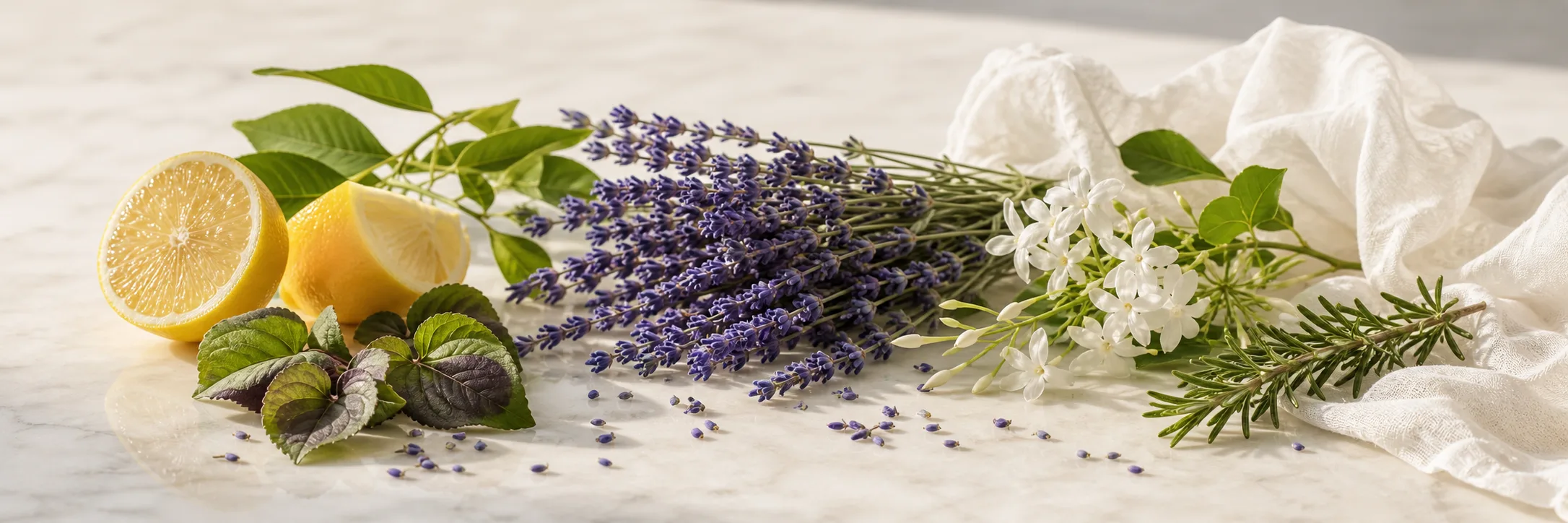
The composition follows a simple two-stage arc rather than an elaborate pyramid. It opens as a brisk, realistic lavender, made a touch crisper by an Amalfi lemon and lemon-leaf facet, occasionally tipping toward a camphoraceous, herbal sharpness in the first minutes.
As it settles, the heart submerges its violet-leaf and jasmine almost entirely, letting them act as softening agents rather than distinct florals. What remains is the lavender itself, clean and unambiguous. The drydown is the heart of the fragrance: a powdery, creamy lavender, soap-soft and never harsh, warmed underneath by tonka bean and musk that lend a quiet sweetness.
The overall effect is essentially linear — a realistic lavender that warms and powders as it dries, reading throughout as a clean, herbal lavender soap. There is deliberately little else to complicate the central note, which is the point of the composition.
Performance
This is a soft, close-wearing scent. Longevity and projection are its weakest points, staying close to the skin and fading within a few hours; there are no reliable long-wear reports. The practical approach is to spray generously and reapply through the day, treating it as a personal-comfort freshener rather than a fragrance meant to project.
Wearing Context
Lavender reads best as a spring and summer daytime scent, and doubles as a bedtime or relaxation comfort fragrance for its soothing, calming character. Soft and inoffensive, it skews casual, office-safe, and unisex-leaning-feminine — though lavender’s traditional ambiguity means some noses read it as cologne-like or masculine. It is not an evening or seductive scent.
Comparisons & DNA
The closest reference is L’Occitane’s Eau de L’Occitane, often cited as the nearest match, though crisper and tilted more masculine. Yardley English Lavender is the budget benchmark wearers compare it against, with preference split between the two. Broadly, it belongs to the realistic-lavender-soliflore family — adjacent to apothecary and English-lavender classics rather than to structured aromatic fougeres built on oakmoss and coumarin. No designer dupe relationships are documented.
Reception
Sentiment is positive but modest. Lavender fans praise its realism and the soft, creamy, soap-like drydown, with some calling it among the best lavenders they have worn. The consistent criticism is its weak performance, and a minority find the lavender too sharp or medicinal — the camp that reads it as “mosquito repellent.” The dividing line is simply lavender tolerance: those who love a clean realistic lavender embrace it, while those who find lavender harsh bounce off. As a value proposition it is low-risk for lavender lovers who find it cheaply, provided they manage expectations on longevity.
Versions & Reformulation
This release is itself a relaunch. The older Crabtree & Evelyn “Lavender Water” — a dab-on toilet water, including a 1988 floral version with vanilla — was succeeded around 2011 by this aromatic EDT in a squarer, lavender-capped bottle. Wearers who knew the original describe the newer version as weaker and softer with little longevity. Verbena and Lavender de Provence (2013) is a separate citrus-aromatic product, not a flanker of this one.
Acquisition Notes
Discontinued and no longer sold through the brand’s own channels, so availability is secondary-market only. It was an inexpensive everyday EDT; vintage “Lavender Water” bottles command higher collector prices, while matching body-care items remain cheap and common. The main acquisition risk is misidentification — several distinct C&E lavenders circulate under similar names — along with the chance of degraded vintage juice on old stock.
Notable Facts & Lore
- No fragrance-specific launch story or perfumer statement is documented for this particular release.
- Crabtree & Evelyn built its identity on classical botanical soliflores — lavender, rosewater, iris — sold primarily through its bath-and-body boutiques.
- This lavender is frequently encountered first as a hotel amenity or body-care scent rather than as a fine fragrance.
- The brand maintains several distinct lavender products, which sellers and buyers routinely confuse on the resale market.