Crabtree & Evelyn — Rosewater
Essence
Crabtree & Evelyn’s Rosewater is a clean, fresh, lightly green rose soliflore from 2011 — the perfume equivalent of a rose bush soaked by rain. Built around Rosa centifolia, the hundred-petal rose at the heart of European perfumery, it belongs to the very English tradition of soft floral toilet waters meant to be splashed on liberally. Now discontinued and genuinely missed, it has become a quiet cult favorite among rose lovers and a textbook case of a scent undone by reformulation.
Scent Profile
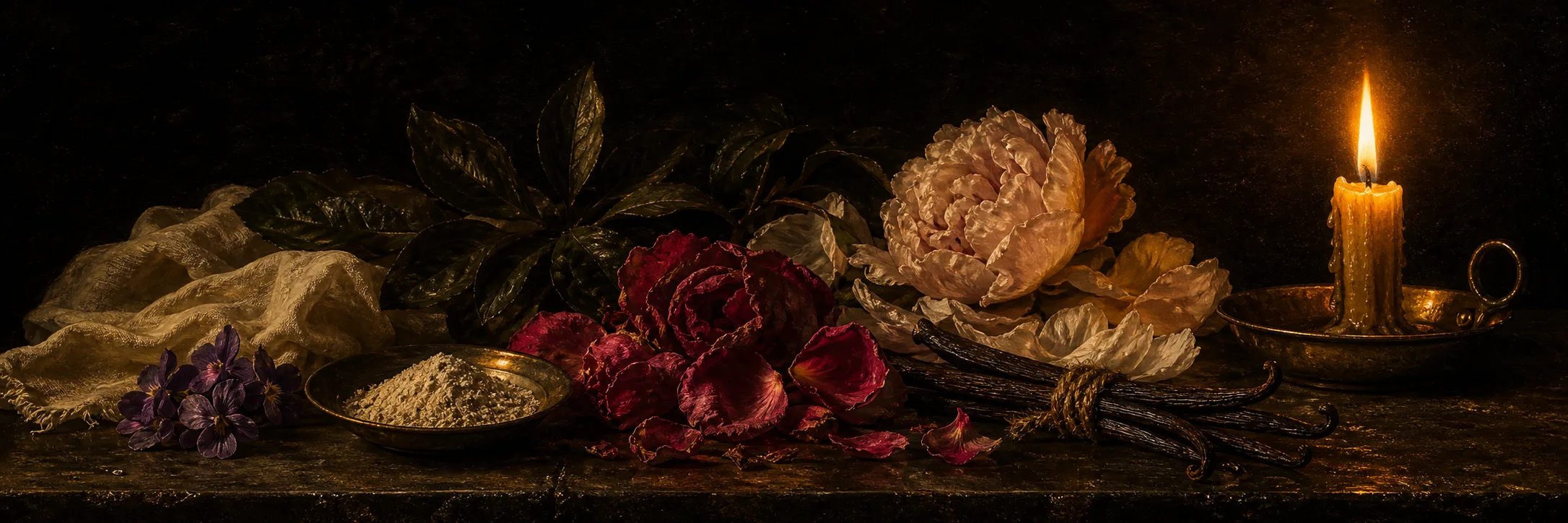
At its best, Rosewater is a natural, dewy, fresh pink rose centered on Rosa centifolia, tempered by a clean green stem-and-leaf facet and a quiet hint of violet. A supporting cast of peony, lily-of-the-valley and a touch of lilac fills out a watery, just-cut floral that reads more like a real rose bush than a perfumey abstraction.
A faint bitterness in the green opening — the stem — calms over time as sweeter, slightly powdery rosy facets come forward. The whole thing stays deliberately uncomplicated: fresh, comforting and a little powdery, never sweet or heavy.
The musk base is soft and clean, faintly amber, sitting quietly underneath; some wearers detect almost no musk at all, just a gentle clean drydown. Detractors find it can skew old-fashioned or, in the reformulated version, harsh and shampoo-like.
Performance
Performance reports diverge sharply, and the divide tracks the reformulation. The original formula could perform surprisingly well for a light rose, with some reporting all-day wear and a soft trail; the reformulated juice is widely described as a fleeting splash-on scent with limited staying power. As a light EDT designed to be reapplied generously and layered with matching body products, longevity was never its primary selling point.
Wearing Context
This is a daytime, warm-weather, casual rose — spring and summer especially, though some wear it year-round. It is the definition of an inoffensive, comforting, anytime scent: office-safe, easy, and often described as something to luxuriate in after a long soak, almost as much an at-home comfort and linen scent as a going-out perfume. It skews feminine and classic, but stays unobjectionable and wearable across ages.
Comparisons & DNA
The most useful comparison is the brand’s own Evelyn Rose — a warmer, sweeter, fruitier and more evening-leaning rose that wearers rank as a heavier cousin, with Rosewater being the lightest and breeziest of the two. Tea Rose by Perfumer’s Workshop comes up as a louder, more old-school alternative that Rosewater fans tend to find less refined. Broadly, its clean, green, dewy, natural-rose DNA places it in the same comfort-soliflore lane as the lighter Jo Malone roses.
Reception
Rosewater is affectionately regarded, especially by dedicated rose lovers, several of whom call it one of the best fresh-rose scents they have owned and lament its discontinuation. The praise is consistent: natural, clean, comforting, among the freshest and purest rose scents around. Criticism clusters on three points — that it can read dated, that it is too simple to be remarkable, and most pointedly that the reformulation diminished it, with one wearer calling the later version terrible next to the original. Its reputation lives in wearer accounts and beauty-blog coverage rather than formal criticism.
Versions & Reformulation
The reformulation is the crux of the Rosewater story. The original EDT launched in 2011, with an Eau Fraiche version also existing. It was later reformulated to widespread disappointment, with wearers pointing to degraded juice and cheaper packaging. Separately, the brand pivoted the Rosewater concept into a bath-and-body line rebranded Rosewater & Pink Peppercorn, adding pink peppercorn, rose petal, akigalawood and myrrh — a related but distinct profile. Buyers therefore face three things sharing a name: the original 2011 perfume, the inferior reformulation, and the Rosewater & Pink Peppercorn body range. The standalone perfume is discontinued.
Acquisition Notes
Acquiring Rosewater is a secondhand hunt complicated by name overlap. The perfume is discontinued and surfaces on resale platforms, but buyers must distinguish the original 2011 formula from the reformulated version and from the still-circulating Rosewater & Pink Peppercorn body products. For the best experience, target original-formula EDT bottles and confirm provenance with the seller. Given the brand’s corporate turbulence since its founders exited in 1996, an official reissue is unlikely.
Notable Facts & Lore
- Crabtree & Evelyn was founded in 1970s Massachusetts and named for John Evelyn, the 17th-century English diarist and conservationist, with the crab-apple tree as its emblem.
- The brand built much of its identity on classical English florals, including Lavender, Iris, Damask Rose and Rosewater.
- Rosewater leans on the heritage of Rosa centifolia, the hundred-petal rose, with marketing tied to rosewater’s ancient history.
- More than one wearer independently described the scent, or its matching lotion, as smelling exactly the way a Turkish delight tastes.