Guerlain — L'Heure Bleue Eau de Parfum
Essence
A classic 1912 Guerlain floral-oriental, L’Heure Bleue evokes the soft blue light of twilight. It balances sweet powdery florals (violet, heliotrope, iris) with a dry, licorice-like anisic twist and warm vanilla. The result is nostalgic and introspective: a rich “marshmallow”-sweet bouquet that feels both romantic and slightly chilly, as if wrapped in a velvet dusk haze.
Scent Profile
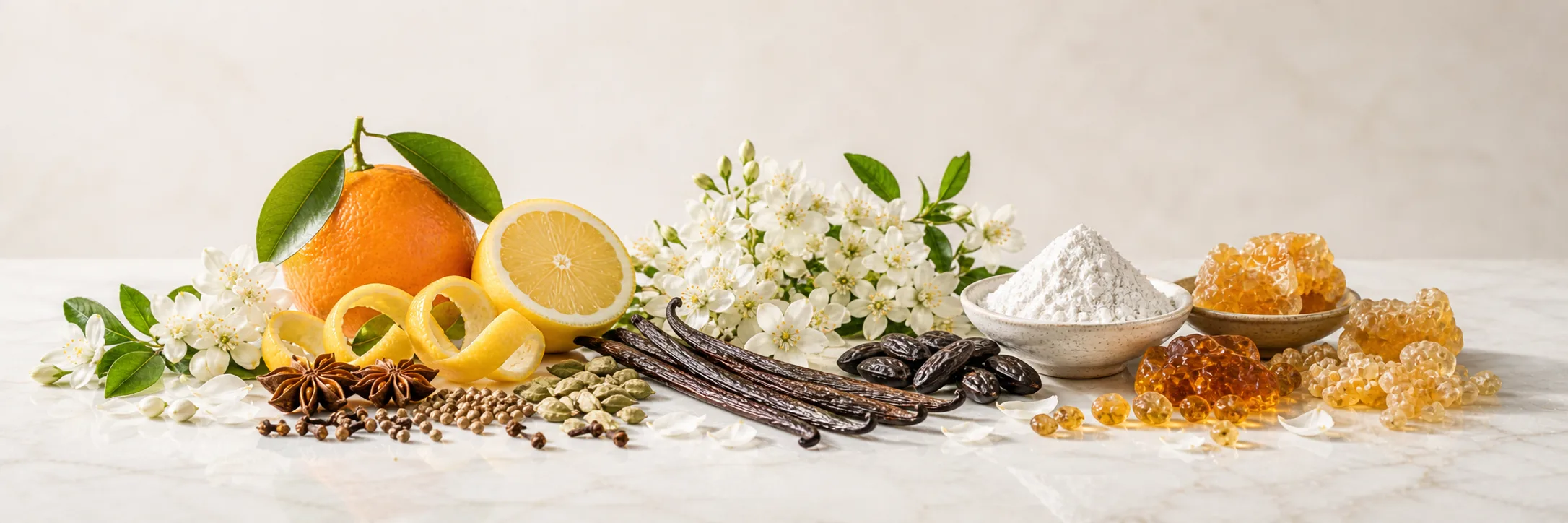
On skin, L’Heure Bleue opens with a cool, slightly sharp burst of bergamot and neroli, cut by a pronounced anise/licorice note. This unusual “bergamot-aniseed-floral” accord is often described as medicinal - like a fancy soothing cream. Within minutes a rich floral heart unfolds: soft iris, vanilla-tinted heliotrope and violet bring a sweet almond or marzipan nuance, while carnation and tuberose lend a faint spicy-waxy edge. The spicy carnation and subtle cinnamon background add warmth, but the overall impression remains dusty and powdery rather than lush. As it dries down over a few hours, the scent settles into a warm, enveloping base of vanilla, benzoin and tonka bean with a whisper of musk and sandalwood. The drydown is creamy and smooth; the signature anise-laden powder persists gently, giving a lingering “frozen twilight” feel.
Performance
L’Heure Bleue is known for lasting power and moderate-to-strong projection. Early on it can fill a room - Kevin of Now Smell This cautions that heavy application created a “disturbing chemical haze.” Moderated to a couple of sprays, though, it projects a good 2 - 3 feet for the first hour or two. Sillage is above average initially, then it softens to a close skin scent after 3 - 4 hours. On skin five to eight hours is typical; on fabric or scarves it can linger far longer. Modest application suits it best - it was never meant as an intimate whisper, and overspraying risks overwhelming the wearer with its vintage heft.
Wearing Context
L’Heure Bleue shines in fall and winter or in cool spring evenings. Its deep, powdery sweetness and slight chilliness suit dusk, candlelit indoor settings or formal affairs. Many wear it to elegant dinners, classical concerts or quiet evening outings where a mysterious aura is welcome. It can also work as a unique office scent if applied very sparingly (some call it an “office fragrance” despite its weight).
Comparisons & DNA
L’Heure Bleue is a progenitor of the powdery-floriental style. It predates but resembles Mitsouko (Guerlain 1919) in complexity, yet Mitsouko is fruitier and spicier while L’Heure Bleue is calmer and more powdery. Apres l’Ondee (Guerlain 1906) is softer iris-white floral; L’Heure Bleue adds the sweetness of heliotrope and anise. Others in the same spirit include vintage-inspired florals like Jean Patou Joy (1930) - though Joy leans sweeter flower and L’Heure Bleue is spicier - or contemporary “old-floral” fragrances like L’Artisan’s Gris Montaigne.
Reception
Enthusiasts call L’Heure Bleue a “timeless beauty,” praising its rich complexity and comforting sweetness. Wearers describe it as “alive, vibrant” and “poetry in a bottle,” with a recurring undertone of nostalgia and earth. It has a cult following among Guerlain lovers and vintage-perfume fans, who consistently praise the powdery iris-violet bouquet and the uncanny blue-hour vibe. The fragrance is genuinely polarizing, though: a vocal camp finds the anise too medicinal or the florals too old-fashioned, and Kevin of Now Smell This came away underwhelmed, calling it “sterile.” Most advice lands on trying before buying.
Versions & Reformulation
This review focuses on the Eau de Parfum (EDP). Guerlain also offers an Eau de Cologne and extrait, but all share the core composition. Traditionally, L’Heure Bleue has been produced continuously; newer batches (including Thierry Wasser’s tweaks) aim to recapture the vintage fullness. The modern EDP is regarded as quite faithful to older EDP, whereas very vintage or extrait versions can be creamier.
Acquisition Notes
L’Heure Bleue is a heritage Guerlain release (a companion to Mitsouko and Shalimar), priced at the upper end of designer fragrances. A 100 mL bottle typically runs around $150 - 200, with 50 mL and travel sizes common and an extrait in limited runs. It is sold at Guerlain boutiques, upscale department stores, and specialty perfumeries. Counterfeits are rare for a classic of this status but not impossible; buying from authorized sellers is the safe route, and Guerlain’s two-letter batch codes can date a bottle.
Notable Facts & Lore
- Jacques Guerlain created it in 1912, inspired by the “blue hour” after sunset, and said that “only this perfume is worthy” of that light.
- Perfume historians credit it as one of the first gourmand-leaning formulas, with its warm heliotrope-anise sweetness.
- Its name means “the blue hour”; it launched just before World War I and has been in continuous production since.
- Loyal fans across the decades included movie stars Jean Harlow and Ingrid Bergman.
- The original 1912 formula is preserved in the Osmotheque fragrance archive.
- Tania Sanchez quipped that Guerlain worked like a “virtual pastry chef,” a nod to the perfume’s candy-like creaminess.