Guerlain — Samsara Eau de Parfum
Essence
Samsara (1989) is a classic oriental-woody by Guerlain, famed for its rich sandalwood note. It’s an opulent, creamy floral-oriental: imagine a bouquet of white flowers (jasmine, ylang, iris) drenched in warm amber, vanilla and musk. The result is full-bodied and luxurious - dense but velvety.
Scent Profile
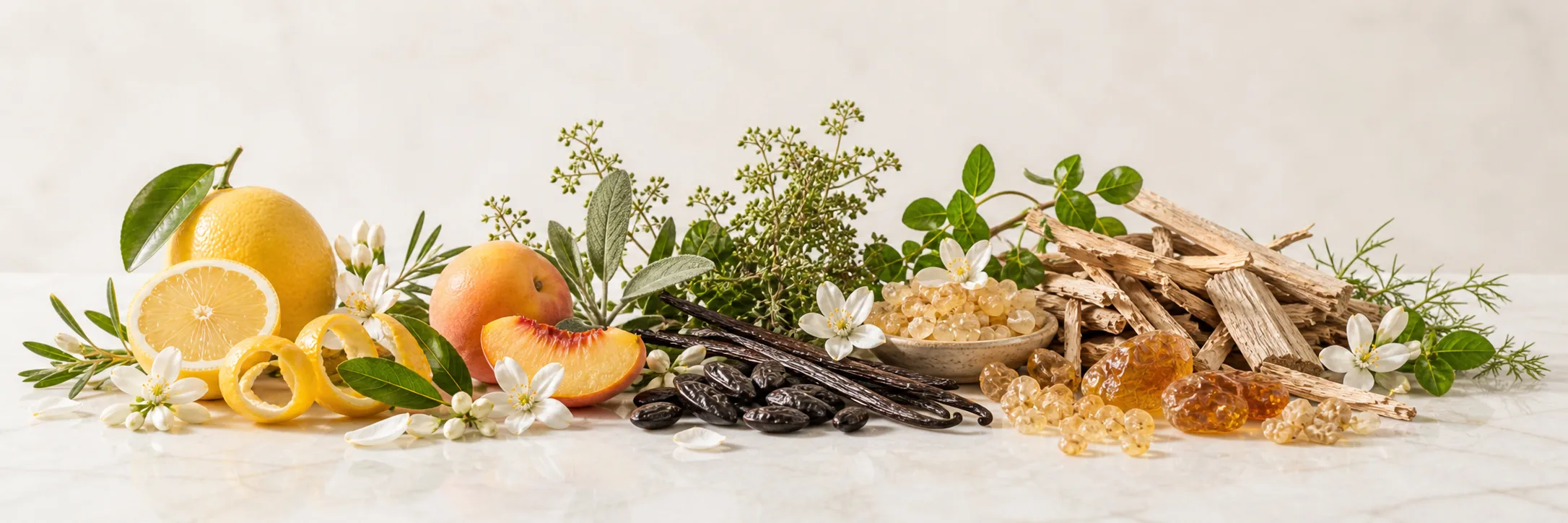
At first spray, Samsara gives a green, citrus opening (bergamot/lemon) that quickly becomes sweet and floral. Very early, peach and green notes mix with a strong hit of ylang-ylang and jasmine - these white florals make the initial impression creamy and exotic. Within minutes, the sandalwood really takes charge. This sandalwood note is not lightly woody: it’s syrupy, almost almondy and vanilla-like, forming the unmistakable core. The spice note (cinnamon or clove) is not listed officially but many sense it under the florals (the nutty ylang and iris produce a tangy sweetness). The heart is a grand bouquet: jasmine, iris, rose and narcissus float atop a base of sandalwood and tonka.
Performance
Samsara is famous for its powerhouse performance. Projection and sillage are very strong - it can fill a room when fresh on skin. Persolaise notes that even now, post-reformulation, “it’s still a force to contend with.” Many wearers report that a dab or two is enough; heavy application overwhelms. Longevity is exceptional, typically eight to ten-plus hours on skin and a full day on clothing, with the EDP holding far better than the lighter, shorter EDT. Given its strength, one spray to the wrist or chest is the sensible ceiling, and cooler seasons flatter it most.
Wearing Context
Samsara was designed as an opulent, statement scent. It is best worn in fall and winter, evenings or cooler days. Formal events, dinners, theater or festive occasions suit it well. Because of its intensity and sweetness, it is not typically a daytime office scent or casual-outdoors fragrance; although some wear it by day for a distinctive boudoir vibe.
Comparisons & DNA
Samsara is a heavy iris-floral orient, closest to Guerlain’s own Apres L’Ondee (iris-citrus) or L’Heure Bleue (powdery oriental), but more intense and sweet. Amongst classic scents, it recalls Shalimar for warmth but without the citrus top of Shalimar, and with stronger sandalwood. Outside Guerlain, the vibe is similar to the late-1980s trend of rich orients: for instance, Revlon Fire & Ice (1987) and Paloma Picasso (1984) both mix white florals and warmth, though Samsara is even more buttery. Modern closest match might be Lauder’s Youth-Dew (another jasmine-vanilla bomb) or Lancome’s Magie Noire.
Reception
Samsara is often hailed as Guerlain’s masterpiece of the 80s, praised for its creamy richness and longevity. Persolaise calls it an “assertive, immediately recognizable statement on a baroque style of perfumery,” and it has a cult following. Wearers consistently laud it as opulent and addictive - one singled out the iris and sandalwood as “exceptional, the latter the star,” calling it “creamy, enveloping and solar” in cold weather. The recurring criticism is that its power and sweetness can be too much, and a vocal camp finds it dated or “old-lady.” The EDT draws specific warnings for being weak and short-lived next to the EDP. It is genuinely divisive, and sampling first is the standard advice.
Versions & Reformulation
Samsara’s main form is the Eau de Parfum (EDP). Guerlain also released an Eau de Toilette (lighter, now rare) and later an Eau de Cologne (in 2013) and body products. The EDP itself is most discussed. Many users note that vintage Samsara (late 80s/early 90s) was even more fluid and velvety; modern Samsara EDP is slightly reformulated (sandalwood synthetic instead of natural, etc.), so today’s has a touch more brightness or dryness to it.
Acquisition Notes
As part of Guerlain’s prestige line, Samsara EDP is pricey (designer/luxury bracket). When in stores, expect ~$150 - 200 for 100 mL, with 50 mL in the $100 range.
Notable Facts & Lore
- Jean-Paul Guerlain conceived it partly as a love-story perfume, said to have first composed its core for an English lover who favored sandalwood and jasmine.
- It launched in 1989 as a comeback vehicle, with a major campaign featuring soprano Barbara Hendricks and the tagline “a sense of serenity.”
- Its name means “cycle of life” in Sanskrit, and the oriental theme was chosen to evoke India; the iconic red bottle was inspired by Buddhist reliquaries.
- Author Michael Edwards records its origin in Perfume Legends, noting the sandalwood-jasmine pairing looked obvious only in hindsight.
- It is credited with helping revive sandalwood and sophisticated oriental style in the late-80s market.