Ormonde Jayne — Orris Noir
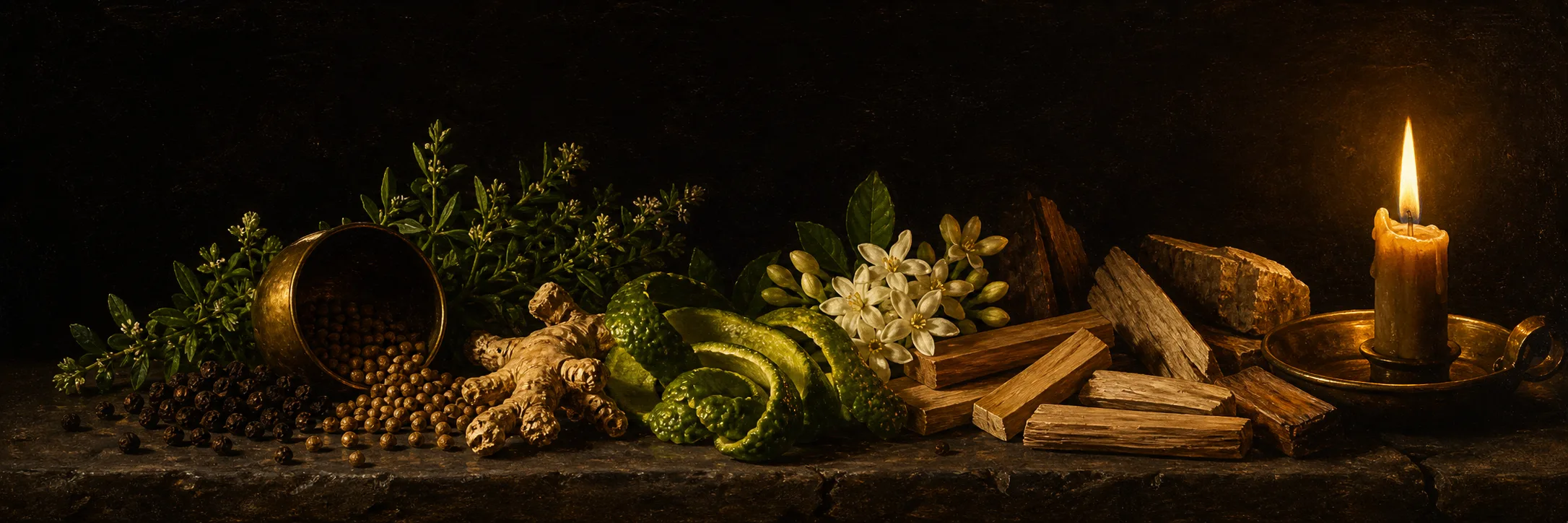
Essence
Orris Noir is a 2006 Ormonde Jayne eau de parfum, composed for founder Linda Pilkington by Geza Schoen, and it is famous mostly for subverting its own name. Marketed as a “dark, spicy Oriental… not for shrinking violets,” it turns out to be neither especially dark nor especially iris-driven. What it actually is: a light, gauzy, soft-spice floriental — peppery, davana-creamy, lemony, with incense and myrrh — rendered in the house’s translucent, layered style. The gap between the dramatic name and the airy scent is the theme of nearly every review of it.
Scent Profile
The opening is peppery, lemony-green and herbal-spicy: pink pepper and coriander over a bright bergamot, with davana (a form of artemisia) lending a sweet, fruity, slightly boozy creaminess that many single out as the most distinctive feature.
The heart is a soft, sheer floral — a cool, doughy iris that some perceive clearly and others barely at all, fizzy jasmine sambac, and warm allspice-like pimento and bay. Nothing here is heavy; the florals stay translucent.
The base is a smooth, smoky-but-light myrrh and incense over guaiac wood, Chinese cedar and patchouli, with a faint Iso E Super radiance. Bois de Jasmin described it as “luminous and weightless, like silk, rather than wool,” and Persolaise noted it puts on a little weight in the later stages. The throughline is the davana-pepper creaminess; the iris and the promised darkness remain subtle accents, and the drydown usually lands as a sheer, sweet jasmine-woody-musk skin scent.
Performance
Performance is moderate and refined rather than loud. Detailed wear reports describe it settling into a creamy lemony skin scent within a few hours, with jasmine taking over later and total longevity around eight hours from a generous application. Projection becomes a little fuller in the late stages, but sillage stays intimate and close to the skin in the typical Ormonde Jayne manner. It was offered in EDP at roughly 25% oils and a higher Made-to-Measure parfum near 30%, so the concentration affects how much presence you get.
Wearing Context
This is a sophisticated, transseasonal unisex scent that leans toward cooler weather and evening thanks to its spicy-incense-myrrh warmth, though its lightness keeps it wearable on mild days too — one reviewer saved it for winter on the founder’s “packs a punch” warning, then found it worked fine on an overcast summer day in the UK. It reads as refined and a cut above casual, with Cafleurebon’s Ida Meister praising its soothing, restful drydown and everyday wearability. It genuinely reads unisex, and will only disappoint someone expecting a bold statement “noir” or a powdery iris soliflore.
Comparisons & DNA
Tania Sanchez filed it in “Perfumes: The A–Z Guide” as a “peppery cedar.” Its soft, hazy resinous-floral character is often likened to Dior Bois d’Argent and The Different Company Jasmin de Nuit, while its dense myrrh texture recalls Annick Goutal Myrrhe Ardente. The sweet-spicy benzoin-patchouli facet has been connected to the drydown of Chanel Coromandel. Within Ormonde Jayne it shares the house’s cedar-and-pepper backbone with Ormonde Woman and Frangipani. Its misleading name is frequently compared to Le Labo’s habit of naming scents after an absent or downplayed ingredient, as in Rose 31.
Reception
Orris Noir is polarizing and much-debated. The dominant view is that it is lovely, smooth, well-blended and quintessentially Ormonde Jayne, but misleadingly named and, to several critics, a touch underwhelming. Tania Sanchez gave the harshest notable verdict, a dismissive two-star review calling it “lemon and pepper with an oily-woody background, slightly chemical and faceless, a rare misstep for the excellent Ormonde Jayne line.” Bloggers including Bois de Jasmin, Persolaise and Cafleurebon are warmer, praising its silken weightlessness and craftsmanship. Wearers split sharply on whether the iris is present at all and whether it is “noir,” and the recurring criticisms are the name-versus-reality gap, modest sillage and, for detractors, a faceless quality. Given that divide and the intimate performance, sampling first is the sensible path; lovers of soft spicy-resinous florientals are the natural audience.
Versions & Reformulation
Orris Noir came in two concentrations: a standard Eau de Parfum around 25% oils and a higher Made-to-Measure parfum near 30%. Some wearers report that an early formulation had a more prominent iris than later batches, suggesting a perceived drift toward the lighter, less iris-forward profile most describe — though this is an observation rather than a documented reformulation. The original is now listed as discontinued, and the house has also presented an Orris Noir within a “Black Gold” relaunch context. Treat the early-versus-later iris difference as a credible but unconfirmed batch variation.
Acquisition Notes
This sits in the high-end niche tier, historically sold in 50 ml and 120 ml bottles and as a Made-to-Measure parfum, alongside matching bath, body and candle products. With the original discontinued or relaunched, availability fluctuates between Ormonde Jayne’s own channels and authorized stockists. The house advertises at least 30% pure oil per bottle, phthalate-free and hand-poured in its London laboratory. Given the polarization, samples and decants are the smart entry point; buy from Ormonde Jayne directly or authorized niche retailers to ensure authenticity.
Notable Facts & Lore
- The fragrance’s stated inspiration is personal: founder Linda Pilkington grows black iris in her own garden among violets, agapanthus and bluebells.
- The name nods to the Black Iris of Amman, the royal symbol of the Kings of Jordan and the country’s national flower.
- Like all Ormonde Jayne fragrances of its era, it was created in collaboration with perfumer Geza Schoen.
- It has become a go-to case study in fragrance writing for the “misleading name” phenomenon, the running joke being that it is neither orris nor noir.
- Many argue that, under a different name, it would have been better received as the soft spicy-resinous floriental it actually is.