Pierre Cardin — Choc de Cardin
Essence
Choc de Cardin is a great chypre hiding in plain sight on French supermarket shelves. Built by Francoise Caron - credited for it across every serious source - it is an oddity: a chypre that is simultaneously soapy-clean and quietly animalic, dry rather than plush. The name means “shock,” not chocolate (a confusion that has tripped up buyers expecting a gourmand), and the shock the 1981 buyer was meant to register was the bold three-intertwined-circles flacon wrapped around a deeply traditional chypre. It carries a “forgotten masterpiece” reputation attributed to Luca Turin, the load-bearing reason connoisseurs seek it out.
Scent Profile
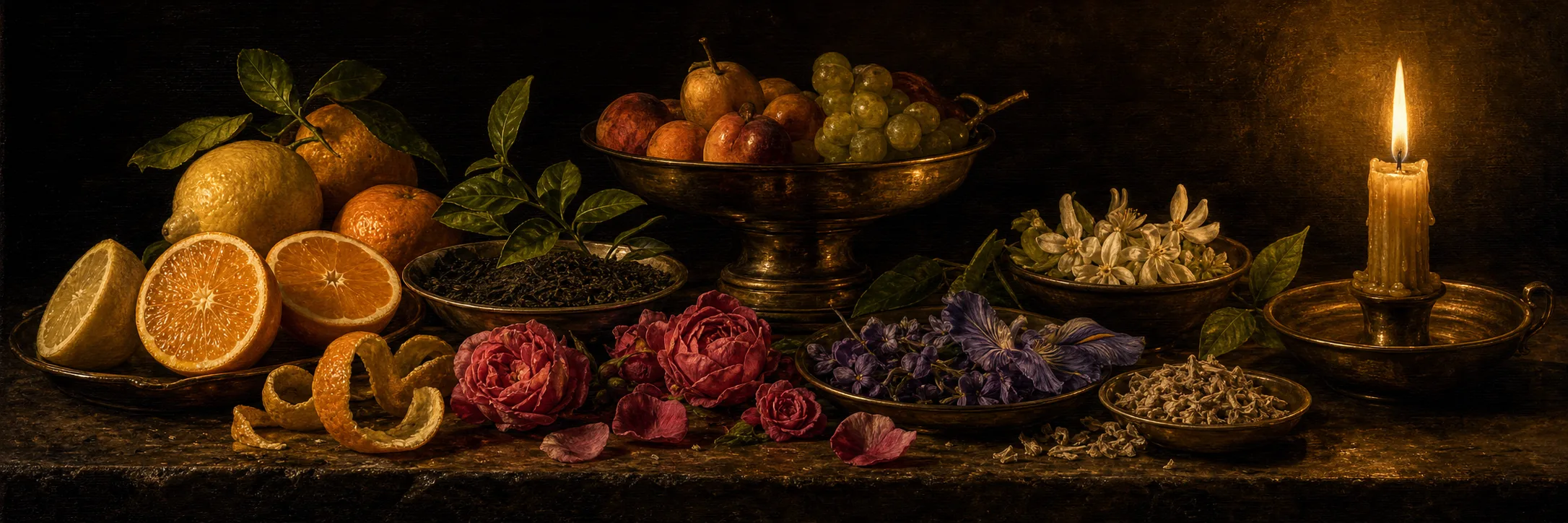
The arc is the classic chypre trajectory, cologne into mossy drydown, executed with unusual restraint. It opens sharp and green - bergamot, lemon, a soapy aldehydic cool - reading, as Now Smell This’s Angela put it, “cool and refreshing and not overly citrus.”
The famous twist arrives quickly: a skanky thread of civet, plus a coriander-like facet several reviewers detect, curdles up under the freshness, landing the fragrance somewhere between just-showered and slightly unwashed bathrobe. The florals - lily-of-the-valley, a cool orris, jasmine, a touch of honey - are present but recessive, easy to miss unless you smell for them.
What dominates is oakmoss, and it dominates hard: bitter and stinging rather than the rounded forest-floor moss of plusher chypres. Sandalwood and civet cushion the drydown, but the texture stays dry and sheer - cold, almost, yet dirty and clean at once. It is a chypre that whispers its skank rather than shouting it.
Performance
Reports diverge sharply, and the divergence tracks formulation and bottle age. Well-preserved vintage can show excellent tenacity, around twelve hours with memorable sillage, while later or oxidized batches can drop to a skin scent in one to two hours. The modern French-supermarket version is lighter and quieter but still recognizably itself. This is never a projection monster; sillage is moderate at best, and the current formula in particular rewards leaning in rather than announcing itself across a room.
Wearing Context
A cool-weather-optional chypre that several wearers actually reach for in heat - the green-citrus-moss austerity reads as refreshing. It skews sophisticated and slightly serious, but the lighter modern version is an easy daytime and office wear rather than an occasion scent. Despite the feminine marketing it reads strongly unisex, especially in the oakmoss-civet-sandalwood drydown, with many male wearers comfortable in it. Best understood as a connoisseur’s everyday chypre.
Comparisons & DNA
Genealogically this is a daylight chypre in the lineage of Edmond Roudnitska’s Diorella and Le Parfum de Therese - a citrus cologne given a shadowy chypre mantle. Its frequent “closest cousin” is vintage Ivoire de Balmain, though Ivoire is grassier and more vetiver while Choc runs more balsamic. Estee Lauder Knowing shares the warm honeyed chypre drydown, while Etro Shaal Nur sits near it in the dry-fresh-dirty register. Against the genre’s plush heavyweights like Rochas Femme and Bal a Versailles, Choc deliberately inverts expectations: those are warm and thick, Choc is cold and sheer.
Reception
This is the rare drugstore-priced scent with genuine highbrow endorsement, the “forgotten masterpiece” framing attributed to Turin doing much of the reputational work. Sentiment is strongly positive among chypre lovers but genuinely polarized otherwise, because the oakmoss intensity is a love-it-or-recoil proposition. Detractors call it one of the strangest perfumes they have smelled, report cumin-like or herbal impressions from the moss, and warn it is not a safe blind buy. Admirers rank it among the best chypres ever made. The throughline in the praise is the word the marketing chose - class: a supermarket cheapie that never smelled cheap.
Versions & Reformulation
The 1981 original was followed by a 1990 flanker, Choc de Cardin Eau Tonique (fresher and fruitier, with clary sage, mango, lychee, and leather), and in 2012 by a separate floral-fruity reinterpretation, Miss Choc - a different fragrance, not a reformulation. The core Choc has cycled through distributors over the decades, with the earliest runs generally held to be the most complex and long-lasting. That gloom is contested, though: several long-term wearers insist the current French-supermarket version is basically the same fragrance, only lighter. The vintage-superiority narrative is real but probably overstated, and at current prices the modern version is a low-risk way to experience the structure.
Acquisition Notes
Discontinued from mainstream international distribution decades ago, but uniquely easy to acquire: the modern formulation is still sold cheaply in France, including at large hypermarkets, typically well under thirty euros for 75 to 100 ml. Vintage taller-flacon bottles surface regularly on the secondary market, often inexpensively, though the usual top-note-degradation caveat applies to anything decades old. The practical move is to buy the cheap current French version first to learn the structure - and verify you are getting Choc or Choc Eau Tonique rather than the unrelated Miss Choc.
Notable Facts & Lore
- The “forgotten masterpiece of Francoise Caron” tag attributed to Turin has become the fragrance’s calling card, even though its exact source in the Guide is debated.
- “Choc” means shock, not chocolate - a confusion that reportedly led Anglophone buyers to expect a Cadbury-scented treat.
- The official Pierre Cardin narrative begins the brand’s feminine perfume history with Choc in 1981, quietly erasing earlier releases like Cardin de Pierre Cardin (1975).
- The three-intertwined-circles bottle is a Serge Mansau design, with two merging circles forming the flacon and the third as the stopper.
- Perfumer Francoise Caron is not to be confused with the house of Caron; she also created Ca Sent Beau.